
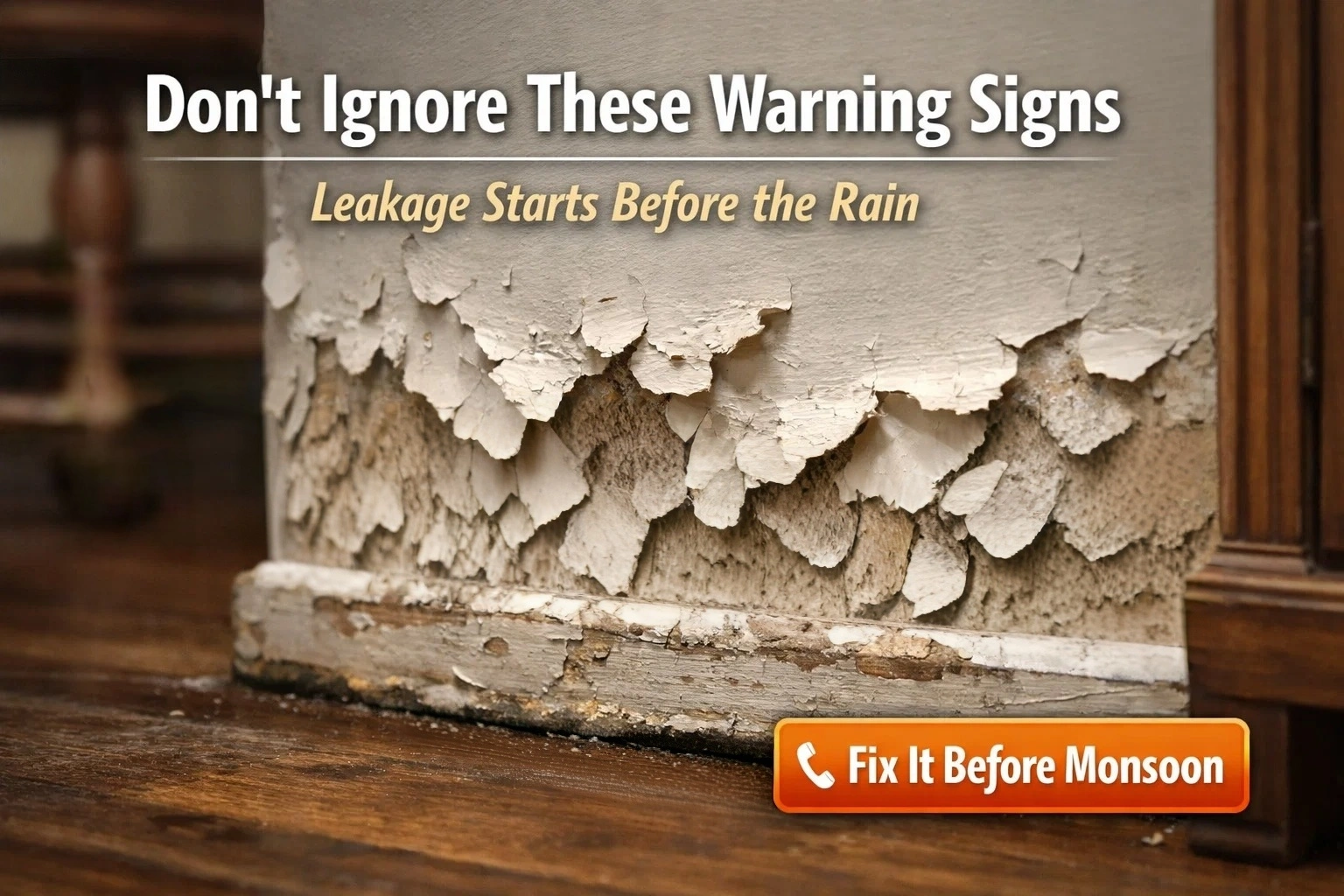
If you’ve lived in Bangalore long enough, you know how fast a sunny afternoon can turn into a sudden downpour. While that first rain smells great, it often brings a hidden headache: that slow, creeping dampness on your walls or a ceiling that starts to “sweat.” Most of us wait until we see an actual leak before we think about waterproofing. But in a city with such heavy rains, waiting for the drip is a risky move. Those tiny bubbles in your paint or that faint musty smell in your wardrobe are early signs your house needs waterproofing in Bangalore right now. Whether you’re in an old family home or a new flat in Whitefield, catching these signs early saves you from a massive repair bill later. At Aqua Blue Waterproofing, we help you spot these troubles and fix them before the monsoon really kicks in. One-Minute Summary Early Detection: Look for efflorescence (white powder), musty smells, and hairline cracks in external plaster before June. Bangalore Context: Rapid temperature shifts and high water tables in lake-bed areas (like HSR or Bellandur) accelerate seepage. Best Time to Act: February to May is the ideal window for treatments. The Cost of Delay: Ignoring small damp patches can lead to TMT bar corrosion and 3x higher repair costs later. Expert Help: Aqua Blue Waterproofing provides specialized solutions tailored to Bangalore’s unique soil and weather conditions. Table of Contents Why Bangalore Houses Face Pre-Monsoon Leakage Top Signs Your House Needs Waterproofing How to Identify & Test for Leakage The Right Time for Waterproofing Prevention Strategies The Risks of Ignoring Signs Why Choose Aqua Blue Waterproofing FAQs 📞 Need an Expert Inspection? Don’t wait for the deluge. Call Aqua Blue Waterproofing at +91 88920 26121 for a professional site audit today! Why Do Houses in Bangalore Face Leakage Problems Before Monsoon? Bangalore’s geography and rapid urbanization play a massive role in building health. According to recent CREDAI insights, nearly 35–40% of urban homes in Tier-1 Indian cities face moisture-related issues. Thermal Expansion & Contraction Bangalore experiences significant diurnal temperature variations- hot afternoons followed by cool evenings. This causes building materials to expand and contract, leading to hairline cracks in the exterior plaster. When the pre-monsoon showers hit in May, these cracks act as straws, sucking water into the walls via capillary action. The “Lake Bed” Factor Many new developments in areas like HSR Layout, Bellandur, and Horamavu are built on or near reclaimed seasonal lake beds. This results in a high water table. Without a proper “Damp Proof Course” (DPC), ground moisture rises through the foundation, leading to damp walls before monsoon even starts. What Are the Top Signs Your House Needs Waterproofing in Bangalore? Early water seepage signs in walls are subtle. Here is what you need to look for: Damp Walls Before Monsoon Appear If you see dark patches or “sweating” walls even when it isn’t raining, your wall is likely retaining moisture from the previous season or the ground. This is a primary indicator that your external shield has failed. Peeling Paint & Bubbling Plaster When water gets trapped between the masonry and the paint film, it turns into vapor. This pressure causes the paint to “bubble” or flake off. If you see white, salty powder (efflorescence) on the surface, your bricks are literally leaching minerals due to water saturation. Musty Smell or Mold Growth When Bangalore’s humidity gets trapped in your walls, it creates the perfect spot for mold to grow. If your cupboards or wall corners smell like wet cardboard, it’s not just a bad odor- it’s a health risk. You need to get those areas waterproofed right away. Cracks on Terrace or External Walls A crack as thin as a credit card is enough to compromise a 2,000 sq. ft. terrace. In Bangalore’s independent houses, the “parapet wall joint” is the most common failure point. How to Know & Identify Leakage Problems in Your House? Identifying the source is 80% of the fix. Here is how you can play detective: Visual Inspection & The “Touch Test” Walk through your home during the day. Feel the walls in the corners and behind furniture. If the wall feels significantly colder or “clammy” compared to interior partition walls, you have a seepage issue. Simple Water Testing Method For terraces, plug the drain pipes and flood the area with 2 inches of water for 24 hours. Check the ceiling below. If dampness appears, your terrace membrane is compromised. This is a crucial step for how to identify leakage problems in house Bangalore residents should perform every March. When Is the Right Time to Do Waterproofing in Bangalore Homes? The absolute best time for when to do waterproofing in house is between February and May. Substrate Dryness: Waterproofing chemicals (like crystalline or bitumen membranes) require a bone-dry surface to bond. Curing Time: Modern polymers need specific temperature windows to cure. Applying them during the rainy season is often a waste of money as the moisture prevents a proper seal. How to Prevent Leakage Before Monsoon in Bangalore? Prevention is significantly cheaper than a structural overhaul. 1. Terrace & Roof Waterproofing The roof is often the most vulnerable point for seepage. Deep Clean: Clear away silt and moss so you can spot hidden damage. Repair & Seal: Use polymer-modified mortar to patch cracks. Apply Membranes: Coat the surface with a liquid-applied or sheet membrane to create a continuous, water-tight shield over the slab. 2. Exterior Wall Protection Wind-driven rain can easily penetrate porous walls or hairline fractures. Flexible Fillers: Use high-elasticity fillers for wall cracks to ensure they stay sealed even as the building shifts. Protective Coatings: A fresh layer of water-resistant paint acts as an essential raincoat for your home’s facade. 3. Gutter & Drainage Maintenance Waterlogging is a major issue in Bangalore; ensuring a clear exit path for rainwater is vital. Unclog Gutters: Remove leaves and debris from roof drains and vertical pipes. Verify Outflow: Ensure your internal drainage connects smoothly to the

Expert Waterproofing for New Construction in Bangalore: Complete Guide to Prevent Future Leaks
Building a home or a commercial complex in Bangalore is a massive milestone. However, many property owners face a heartbreaking reality: within just two years of completion, damp patches appear on pristine ceilings or salt deposits (efflorescence) ruin expensive interior paint. The culprit is almost always a lack of proper waterproofing for new construction in Bangalore during the initial building phases. In this comprehensive guide, we will walk you through the essential stages of protecting your structure from the ground up. Whether you are a property developer, an architect, or a first-time homeowner, understanding these preventive steps from the experts at Aqua Blue Waterproofing will save you from structural damage and the high cost of future repairs. Need Expert Advice? Call Aqua Blue Waterproofing at +91 88920 26121 Table of Contents Importance of New Construction Waterproofing (2026 Reality) Common Mistakes Builders Make in New Projects The Step-by-Step Waterproofing Stages When to Schedule Waterproofing During Construction Best Waterproofing Methods for Bangalore’s Climate The Real Risks of Skipping Protection Reliable Services Across Bangalore (Location Focus) Why Choose Aqua Blue Waterproofing FAQs for Builders & Homeowners Why Is Waterproofing for New Construction in Bangalore Important? (2026 Reality Check) Bangalore’s geography and climate present unique challenges for buildings. With the city experiencing rapid thermal expansion due to rising summer temperatures followed by intense, sudden monsoon downpours, concrete structures undergo significant stress. Concrete is naturally porous. On a microscopic level, it contains thousands of tiny capillaries. When it rains heavily in areas like Whitefield or Yelahanka, water enters these pores. The Bangalore Climate Impact: The cycle of heat and rain causes micro-cracks in concrete. Without a barrier, rainwater seeps into these cracks, leading to steel reinforcement corrosion. Structural Risks: Once water reaches the TMT bars inside your pillars and slabs, they begin to rust and expand. This expansion creates internal pressure, leading to “spalling” where chunks of concrete actually fall off. Health and Aesthetics: According to current industry reports, nearly 30–40% of new buildings in Bangalore report seepage issues within the first three years. This leads to toxic mold growth, affecting indoor air quality and causing respiratory issues for residents. Investing in waterproofing for new construction in Bangalore today is a fraction of the cost of future “break-and-fix” repairs. Preventive measures typically cost significantly less than reactive repairs, which often involve breaking tiles and re-doing expensive interiors. What Are the Common Mistakes Builders Make in New Construction Waterproofing? Even experienced contractors sometimes overlook critical details in the rush to meet deadlines. How to prevent leakage in new building construction starts with avoiding these four pitfalls: Skipping Foundation Protection: Many assume soil moisture won’t rise, but capillary action can pull water up into your ground-floor walls. This is known as “Rising Damp.” Using Cheap Cement-Only Coatings: Standard cement paint or basic slurry is not flexible. As a new building “settles” into the ground over the first 24 months, tiny movements occur. A rigid coating will crack along with the building. Ignoring Curing Time: Waterproofing chemicals need specific durations to bond. If a contractor applies a second coat or lays tiles before the first layer is fully cured, the chemical bond fails. No Slope Planning on Terraces: If water doesn’t flow naturally toward the drain pipes, even the most expensive chemical will fail under “ponding” water. Standing water is the greatest enemy of any roof. What Are the Waterproofing Stages in New Build Process? (Step-by-Step Guide) Effective waterproofing is not a single event; it is a multi-stage process integrated into the construction timeline. Stage 1: Foundation Waterproofing This is your first line of defense. We apply bituminous coatings or specialized foundation waterproofing membranes to the footings and retaining walls. This prevents moisture from the Bangalore soil, which can stay damp for months after the monsoon—from traveling up through the brickwork and ruining your ground-floor skirting. Stage 2: Basement Waterproofing Basements are under constant hydrostatic pressure from groundwater. We use crystalline waterproofing or heavy-duty membranes to ensure the basement remains bone-dry. In 2026, with more people using basements for home offices and theaters, this stage is non-negotiable. Stage 3: Bathroom & Wet Areas (Internal) Before the tiles are laid, we treat the “sunken slabs” of bathrooms and balconies. We pay special attention to “pipe penetrations” (where plumbing goes through the floor). Nearly 70% of bathroom leaks happen at the floor-wall joint, so we reinforce these areas with waterproof tapes or fiber mesh. Stage 4: Terrace Waterproofing The terrace bears the brunt of the sun and rain. We apply UV-resistant polymer-modified coatings or Polyurethane (PU) systems. These coatings are elastic; they stretch during the hot Bangalore afternoons and contract at night without tearing. When Should You Do Waterproofing During Construction in Bangalore? Timing is everything. Waterproofing is a stage-based process, not a finishing touch you apply at the end. Phase 1 (Foundation): Immediately after the concrete footings have cured but before backfilling the soil. Phase 2 (Slabs): Once the RCC (Reinforced Cement Concrete) slab is cast, it is wise to add integral waterproofing compounds into the concrete mix itself. Phase 3 (Internal Wet Areas): After the basic plumbing lines are fixed and pressure-tested, but before the final floor screed or tiling. Phase 4 (External Walls): Before the final coat of exterior paint, using elastomeric primers. Phase 5 (Terrace): After the parapet walls are built but before any decorative finishing. Which Is the Best Waterproofing Method for New Construction? While there are various methods, the best waterproofing method for new construction in 2026 involves advanced polymers that offer high elasticity. Comparison of Popular Methods Feature Cementitious Coating Bituminous Membrane Polymer-Modified / PU Durability Low to Medium Medium Very High Flexibility Rigid (Can Crack) Moderate High (Elastic) Lifespan 3–5 Years 5–8 Years 10–15+ Years UV Resistance Poor Needs Protection Excellent For Bangalore’s specific weather- where we see 30°C in the day and 18°C at night, we recommend Polymer-modified coatings or Polyurethane (PU). They act like a “rubber skin” over your building. Read More On: Polymer vs Traditional Waterproofing in Bangalore:
Polymer Roof Coating in Bangalore: Monsoon-Proof Solution for Leak-Free Roofs
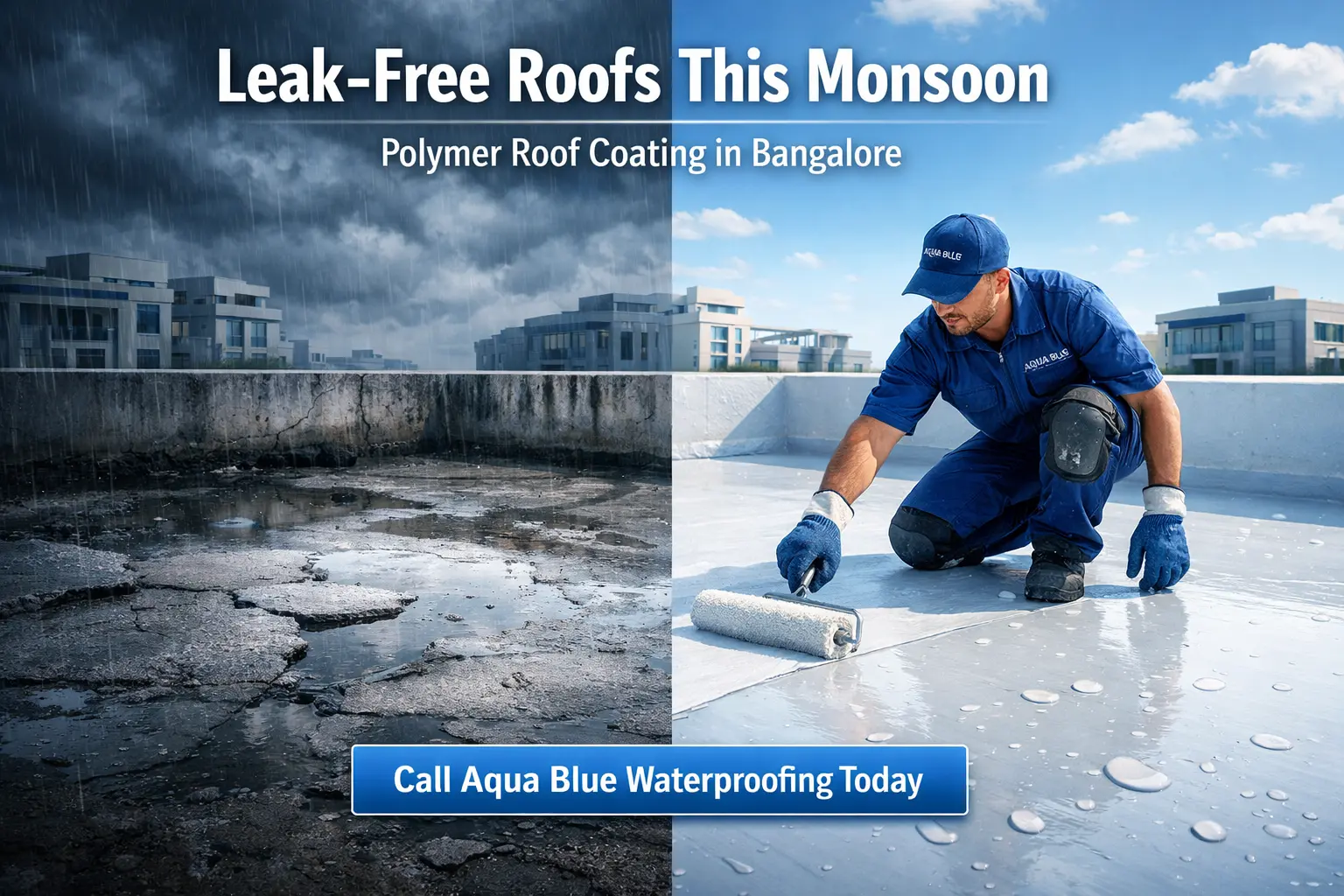
Every monsoon, the same leakage problem? If you are a homeowner in Indiranagar, Koramangala, or Jayanagar, you know this frustration all too well. The clouds gather over the Garden City, the heavy Bangalore downpour begins, and within hours, familiar damp patches appear on your ceiling. Many residents rely on temporary patches or basic white cement, only to find the leaks returning with a vengeance every June. At Aqua Blue Waterproofing, we help you break this cycle. This guide is for every homeowner, RWA member, and facility manager ready to break the cycle. We’re diving into why polymer roof coating in Bangalore is now the gold standard for permanent waterproofing, specifically designed to withstand the city’s punishing cycle of afternoon heat followed by heavy monsoon rain. Stop the seepage before the next storm hits! 📞 Call Aqua Blue Waterproofing Today: 88920 26121 One-Minute Summary: The Problem: Bangalore’s extreme temperature shifts (hot days, cold rainy evenings) cause concrete roofs to expand and contract, creating cracks that traditional “rigid” waterproofing cannot handle. The Solution: Polymer roof coating in Bangalore provides a liquid-applied, seamless membrane with 300% elasticity. It stretches with your building instead of cracking. Key Benefits: It bridges cracks up to 2mm, reflects UV rays to cool your home by 3°C to 5°C, and lasts 10-15 years. The Verdict: Unlike temporary bitumen or cement patches, polymer coatings offer a permanent, lightweight, and ponding-water-resistant shield perfect for the 2026 monsoon season. Table of Contents What is Polymer Roof Coating & How Does It Work? The Bangalore Leakage Crisis: Why It Happens How to Stop Roof Leakage Permanently Types of Roof Waterproofing Used in Bangalore The Science-Backed Benefits of Polymer Coating Why Polymer Works Best for Bangalore Monsoons Polymer vs. Traditional Waterproofing: A Detailed Comparison Where to Find Reliable Waterproofing Services in Bangalore Why Choose Aqua Blue Waterproofing? Frequently Asked Questions (FAQs) What is Polymer Roof Coating & How Does It Work? Polymer roof coating is a liquid-applied membrane that, once cured, transforms into a seamless, rubber-like waterproof shield. Unlike traditional methods that merely sit on top of your concrete, a high-quality polymer system chemically bonds to the substrate, creating a monolithic barrier. A Seamless Waterproof Layer Since it starts as a liquid, this coating flows into every tiny crack and invisible pore on your roof. Once dry, there are no joints or seams, which are usually the first points of failure in traditional felt or sheet-based waterproofing systems. In a city like Bangalore, where dust and debris often clog roof joints, a seamless finish is non-negotiable. Flexibility vs. Rigid Systems The primary reason roofs leak is movement. Traditional cementitious coatings are rigid. When Bangalore’s sun heats your roof to 35°C in the afternoon and then a sudden 4 PM rain cools it to 20°C, the concrete expands and contracts rapidly. This “thermal shock” causes rigid coatings to snap. Polymer coatings are highly stretchable (often over 300%), allowing them to stretch and contract with the building without breaking the seal. Why Do Roofs in Bangalore Develop Leakage Problems Frequently? If you live in an older bungalow in Jayanagar or a modern high-rise in Whitefield, you aren’t alone. Bangalore’s geography and rapid construction pace contribute to specific structural vulnerabilities. Thermal Expansion and Contraction Bangalore experiences high diurnal temperature variation. The constant “breathing” of the concrete slab creates fatigue. Over time, these micro-movements lead to structural cracks that traditional paints simply cannot hide or bridge. The Legacy of “Brick Bat Coba” Many older homes in Bangalore used Brick Bat Coba (placing broken bricks over the slab). While this was standard 20 years ago, it is now known as a “water reservoir.” Once water enters the gaps between the bricks, it stays trapped, slowly corroding the TMT bars (reinforcement steel) and causing the ceiling to peel from the inside. Intense Monsoon Bursts In 2026, we are seeing more concentrated rainfall. Instead of light drizzles, Bangalore now faces intense bursts of heavy rain. This puts immense “hydrostatic pressure” on your roof, forcing water through the tiniest imperfections in your terrace floor. How to Stop Roof Leakage Permanently Most roof leakage solutions fail because they only fix the surface, not the root cause. To truly protect your home, you must move from temporary patches to a professional polymer roof coating in Bangalore. Our 4-Step Permanent Fix: Inspection: Using moisture sensors to find hidden leaks and cracks. Preparation: Deep cleaning the roof surface to ensure a perfect bond. Sealing: Filling structural gaps with high-strength polymer fillers. Coating: Applying a 2–3 layer seamless, waterproof shield. This professional approach is how to stop roof leakage for the long term, providing a durable shield that lasts for a decade, not just one monsoon. What Are the Types of Roof Waterproofing Used in Bangalore? Choosing the right material is half the battle. Here is a breakdown of what is commonly available: Cement-based (Cementitious): These are budget-friendly but lack flexibility. They are best for internal wet areas like bathrooms or basement walls, but they rarely survive the direct sun exposure of a terrace. Bituminous Coatings: Often known as “tar felt” or “hot-applied bitumen.” These are highly sensitive to UV rays and can become a sticky mess in summer or crack in winter. Polymer-Modified Acrylic/Polyurethane: The premium choice. It combines the chemical strength of advanced polymers with the ease of liquid application. It offers the highest resistance to UV, rain, and foot traffic. What Are the Benefits of Polymer Roof Coating for Homes? Investing in polymer roof coating in Bangalore offers multi-dimensional advantages: Crack-Bridging Ability: High-grade polymers can bridge existing cracks up to 2mm wide. This means the coating acts like a “skin” that stays whole even if the “bone” (the concrete) develops a small fracture. Solar Reflectivity: Most polymer coatings are white or light-grey. By reflecting up to 85% of solar radiation, they reduce the surface temperature of your roof. This can lower your indoor temperature by 3°C to 5°C, significantly reducing your AC electricity bills. Non-Toxic and Eco-Friendly: Unlike solvent-based tars, modern
Polymer vs Traditional Waterproofing in Bangalore: Which Wins for Monsoon Protection?
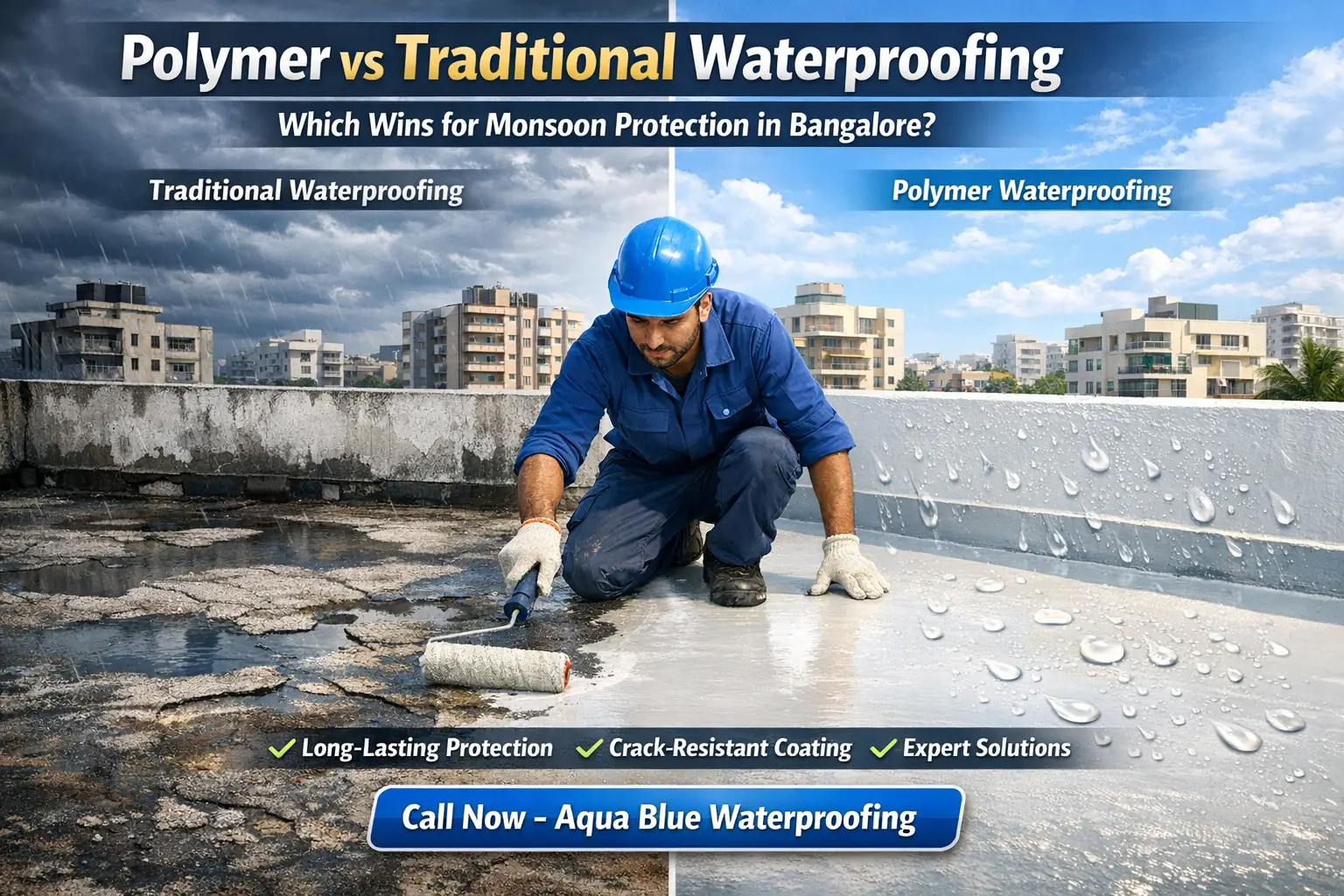
The Bangalore monsoon is a test of structural endurance. As the city gears up for an average annual rainfall of 900–1000 mm, homeowners in established neighborhoods like Indiranagar and Koramangala are often met with the same recurring nightmare: damp patches on ceilings and bubbling paint. The common misconception is that a quick coat of cement-based “chuna” will fix the problem. But because Bangalore’s weather swings between heavy downpours and high humidity, your home needs a much stronger, more flexible solution to stay dry. This guide is essential for Indiranagar/Koramangala homeowners looking to protect their legacy properties and Commercial Facility Managers responsible for high-value assets. We will dive deep into the debate of polymer vs traditional waterproofing in Bangalore to determine which method offers the ultimate shield against the 2026 monsoon season. Protect Your Property Today! Don’t wait for the first leak to appear. Call Aqua Blue Waterproofing at +91 88920 26121 for a professional site assessment. One-Minute Summary The Problem: Bangalore’s thermal expansion causes rigid traditional waterproofing (like Brick Bat Coba) to crack. The Solution: Comparing polymer vs traditional waterproofing in Bangalore shows that polymer systems are the superior choice due to their 300% elasticity, which bridges cracks even as the building moves. Cost vs. Value: While traditional methods are cheaper initially, they often fail within 3 years. Polymer systems offer a 10-year peace of mind. Verdict: For long-term monsoon protection, choosing professional polymer-based waterproofing in Bangalore is the undisputed winner for 2026 Table of Contents Why Bangalore Homes Need Monsoon Protection How Polymer Waterproofing Works Durability: Polymer vs. Traditional Comparison Table: Feature Breakdown The Best Method for Terrace Waterproofing Real Success Stories: Reviews from Bangalore Homeowners Choosing the Right Contractor Frequently Asked Questions (FAQs) What is Waterproofing & Why Do Bangalore Homes Need It During Monsoon? Waterproofing is the process of making a structure water-resistant so that it remains unaffected by water under specified conditions. In Bangalore, the need is critical due to the “Urban Heat Island” effect and subsequent heavy rains. Common Monsoon Issues in Bangalore Terrace Cracks: The intense afternoon sun expands concrete slabs; the sudden evening rain cools them rapidly, leading to structural cracks. Seepage: In older Koramangala bungalows, water seeps through porous brickwork and aged external walls. Basement Leakage: Rising water tables in areas like Sarjapur can lead to hydrostatic pressure, pushing water through basement floors. Using the best waterproofing method for monsoon in Bangalore isn’t just about aesthetics; it’s about maintaining the structural integrity of your home. How Does Polymer Waterproofing Work in Real Projects? At Aqua Blue Waterproofing, we follow a precision-driven process to ensure a liquid waterproofing membrane behaves like a seamless “second skin” over your roof. The Aqua Blue Application Process Surface Preparation: We use high-pressure washers to remove fungus and loose debris. A clean surface is non-negotiable for bonding. Primer Coat: A specialized polymer-modified primer is applied to penetrate deep into the concrete pores. Liquid Waterproofing Membrane: We apply high-grade acrylic or polyurethane polymers. Unlike rigid cement, this stays flexible. Multi-layer Coating: Two or three coats are applied to achieve the required thickness for maximum protection. The result is a flexible coating that can withstand the vibration of nearby traffic and the expansion of the building without snapping. This is the core reason why the polymer vs traditional waterproofing in Bangalore debate is shifting toward modern solutions. How Durable is Polymer Waterproofing Compared to Traditional Methods? When discussing polymer vs traditional waterproofing in Bangalore, durability is the primary differentiator. Polymer vs. Traditional Lifespan Traditional Methods: Techniques like Brick Bat Coba or simple cementitious coatings are rigid. They are prone to “hollow” sounds and hairline fractures within 24 months. Polymer Systems: These systems are UV-resistant and remain elastic. A high-quality polymer application can easily last 5 to 10+ years with minimal maintenance. This makes polymer waterproofing durability the most cost-effective choice in the long run. Polymer vs Cement Waterproofing: What’s the Real Difference? Feature Polymer Waterproofing Traditional Cementitious Flexibility High (Elastomeric) Low (Brittle) Crack Resistance Bridges cracks up to 2mm Cracks alongside the slab Lifespan 8–12 Years 2–4 Years Weight on Slab Negligible Heavy (especially Coba) Curing Time Fast (24–48 hours) Slow (needs 7 days ponding) Which Waterproofing is Best for Terrace in Bangalore Homes? The terrace is your building’s first line of defense. In flat rooftops typical of Indiranagar apartments, water often stagnates. Polymer is the best waterproofing method for terrace in Bangalore because it creates a monolithic (seamless) layer. Traditional methods often fail at the “corners” or rainwater pipe joints. Polymer liquid flows into these gaps, sealing them permanently. Whether you have a mosaic tile roof or a concrete slab, polymer adapters provide a watertight seal. Why Do Bangalore Property Owners Prefer Polymer Waterproofing Today? In Bangalore, more property owners are choosing polymer because it saves money in the long run. Even if the upfront cost of polymer vs traditional waterproofing in Bangalore is a bit higher, you won’t have to spend every year on repainting or fixing damp walls. Additionally, these modern coatings act like a shield against the sun, keeping your top-floor rooms up to 5°C cooler during the hot summer months. Real Success Stories: Keeping Bangalore Homes Dry Nothing speaks louder than the experience of local homeowners who have already survived a Bangalore monsoon with our protection. Here is what our clients are saying on Google: • “No seepage even after heavy rain.” “The waterproofing work on my walls and terrace was completed smoothly, and the results have been excellent. Even after heavy rain, there are no seepage issues at all. I really appreciate their professionalism, quick response, and transparent pricing.” — Leela • “Extremely satisfied with the terrace work.” “Aqua Blue team has waterproofed our terrace; that was an extremely and highly satisfied work done by the team.” — Divya • “The best solution and perfect execution.” “They suggested the best solution and executed perfectly. The terrace is now leak-free and the team was very cooperative. Good service.” — Manohar How to Choose the
Polymer-Based Waterproofing in Bangalore: Complete Guide to Leak-Free Homes (2026)
Imagine waking up to a beautiful Bangalore morning, only to find a stubborn damp patch spreading across your freshly painted ceiling. For many residents in areas like Indiranagar, Whitefield, or Sarjapur, this isn’t just a nightmare, it’s a recurring reality. Whether it’s relentless terrace leakage or rising moisture in basements, water ingress can silently compromise your building’s structural integrity and your family’s health. A lot of people think a quick “cement patch” will fix a leak, but in 2026, that’s just not enough. Our buildings are changing, and our weather is getting tougher. That’s why polymer-based waterproofing is now the best way to protect your home in Bangalore. In this guide, we’ll explain why this modern method is so much better than the old ways, how the pros do it, and what it actually costs this year. At Aqua Blue Waterproofing, we don’t just “plug holes”; we engineer seamless barriers using advanced chemical technology to ensure your home stays dry, no matter how heavy the monsoon gets. Expert Solution: Don’t let a small leak become a structural disaster. Call Aqua Blue Waterproofing today at +91 88920 26121 for a professional site audit! Table of Contents What is Polymer Waterproofing? The Aqua Blue Professional Process Key Benefits for Long-Term Protection Polymer vs. Cement Waterproofing Application Areas in Bangalore Homes Advanced Polymer Technologies Cost of Waterproofing in Bangalore (2026) Why Choose Aqua Blue Waterproofing? Frequently Asked Questions One-Minute Summary In 2026, polymer-based waterproofing is the primary choice for Bangalore residents due to its ability to stretch and seal cracks that traditional cement cannot. Professional application follows a strict 4-step process: Assessment, Design, Precision Coating, and Validation. With costs ranging from ₹80 to ₹300 per sq. ft. depending on the technology, it offers a 15-year ROI. Aqua Blue Waterproofing specializes in these high-tech solutions, ensuring terraces and basements across Bangalore remain leak-free through every season. What is Polymer Waterproofing & Why is It Ideal for Bangalore Climate? At its core, polymer waterproofing is a high-performance liquid membrane that dries into a flexible, rubber-like shield. Unlike traditional rigid materials, these polymers (usually acrylic or polyurethane-based) are designed to “breathe” while remaining 100% watertight. Adapting to the Bangalore Environment Bangalore’s weather is quite unique. We often have hot, sunny afternoons followed by sudden, heavy rain. This constant change from hot to cold makes concrete expand and shrink quickly. Traditional methods, like “Brick Bat Coba” or simple cement mixes, are very stiff. Because they can’t bend, they easily crack under this stress. Polymer-based waterproofing in Bangalore is the perfect fix because it is elastic. It acts like a flexible shield that stretches along with your building. This ensures that tiny hairline cracks stay sealed and never turn into big, messy leaks. How Does Polymer Waterproofing Work? (The Professional Process) A common mistake in the industry is treating waterproofing like a paint job. At Aqua Blue Waterproofing, we follow a rigorous four-step engineering protocol to ensure a lifetime of protection. Step 1: Technical Assessment We begin with a deep dive into the “health” of your structure. Our experts check for substrate compatibility and use moisture meters to detect hidden dampness within the slab. This ensures the polymer bonds at a molecular level. Step 2: System Design & Polymer Selection Not all leaks are equal. Depending on whether you have a high-traffic terrace or a high-pressure basement, we select between PU (Polyurethane), Acrylic, or Hybrid systems. We plan the precise thickness required to handle 2026 weather extremes. Step 3: Precision Application This is the most critical phase. We mechanically clean the surface to a “bone-dry” state, apply a specialized primer to seal pores, and then build the membrane in multiple cross-directional layers. This creates a seamless, joint-free barrier. Step 4: Performance Validation We don’t just walk away. We conduct adhesion tests and coverage inspections to ensure every millimeter of your surface is protected. What Are the Key Benefits of Polymer Waterproofing? Seamless & Flexible: Because it is applied as a liquid, there are no joints or seams the primary failure points in sheet membranes. Crack Resistance: Advanced polymers can bridge cracks up to 2mm wide, moving with the structure. Weather Resistance: These systems are UV-stable, meaning the harsh Bangalore sun won’t make the coating brittle or yellow over time. Long-Term Performance: While local “chuna” treatments fail in a year, a professional polymer system often lasts 10–15+ years. Which is Better: Polymer vs. Cement Waterproofing for Bangalore Properties? When comparing polymer vs. cement waterproofing, the difference lies in flexibility. Cementitious systems are excellent for “wet areas” like bathrooms but are too rigid for external terraces. Polymer systems offer the elastic “memory” needed for roofs. In the 2026 market, hybrid “polymer-modified cementitious” systems are gaining ground for providing the best of both worlds: the strength of cement with the flexibility of plastic. Where is Polymer-Based Waterproofing Used in Bangalore Homes? Terrace Protection Solutions The terrace faces the brunt of the heat and rain. Polymer-based waterproofing for terraces in Bangalore prevents water from pooling in micro-depressions, protecting the rebar inside your concrete from rusting. Basement Leakage Solutions Basements in areas like Bellandur or Hebbal often face high groundwater pressure. Polymer waterproofing for basement leakage acts as a powerful barrier against “capillary action,” where water is sucked up through the floor like a sponge. What is the Cost of Polymer-Based Waterproofing in Bangalore (2026)? Based on current 2026 market data in Bangalore, prices vary based on the technology used and the condition of the surface: Waterproofing Type Estimated Cost (per sq. ft.) Best For Acrylic Polymer Coating ₹35 – ₹80 Exterior walls & minor cracks Fibre-Reinforced Polymer ₹80 – ₹140 Standard residential terraces Premium PU (Polyurethane) ₹150 – ₹300 High-end villas & critical areas Note: These prices include labor and high-quality materials from brands like Zydex, Fosroc, or Sika. Why Choose Aqua Blue Waterproofing Bangalore? When you search for polymer-based waterproofing in Bangalore, you need a partner with proven local expertise. Chemistry Experts: We don’t just apply chemicals; we understand polymer

How to Prevent Water Tank Leakage in Bangalore Apartments
For many residents in Silicon Valley, the dream of high-rise living is often dampened, literally by the sight of yellowing patches on the ceiling. Apartment Water Tank Leakage Prevention in Bangalore is not just a maintenance task; it is a structural necessity. Many buildings constructed during the rapid expansion before 2010 are now seeing their original waterproofing membranes fail, leading to severe apartment leakage problems that threaten the building’s skeletal integrity. This comprehensive guide, brought to you by Aqua Blue Waterproofing, provides the technical roadmap for Apartment Association Members (AOA/RWA) and homeowners to secure their water storage systems permanently. Call Aqua Blue Waterproofing Today for a Professional Inspection: 88920 26121 One-Minute Summary The Problem: Bangalore’s heavy monsoons and aging RCC (concrete) tanks lead to cracks and seepage. The Signs: Look for damp ceilings on top floors, efflorescence (white powder), and sudden water loss. Prevention: Move beyond simple cement patches. Use Crystalline or Epoxy food-grade coatings. The Expert Solution: Aqua Blue Waterproofing provides specialized, 7-step industrial-grade sealing for residential complexes. Table of Contents Why Do Water Tanks Leak in Bangalore Apartments? Early Signs of Leakage to Watch For Maintenance Checklist for Apartment Associations Top Technical Methods for Leak Prevention Why Choose Aqua Blue Waterproofing? FAQs Why Do Water Tanks Leak in Bangalore Apartments? Understanding the “why” is the first step in effective Apartment Water Tank Leakage Prevention in Bangalore. Most Bangalore apartments rely on massive RCC (Reinforced Cement Concrete) tanks, which are susceptible to specific environmental and structural stressors. What construction issues cause water tank leakage? In the rush of Bangalore’s real estate boom, many tanks were constructed with poor curing, leading to shrinkage cracks. Furthermore, the cold joints where the floor of the tank meets the wall are naturally weak points. If the original builder used substandard waterproofing chemicals, the concrete eventually becomes porous, allowing water to “sweat” through the structure. How does Bangalore weather affect water tanks? Bangalore’s climate features significant temperature swings between day and night. This causes thermal expansion and contraction in concrete. During the monsoon, increased hydrostatic pressure from external groundwater can also press against underground tanks, forcing water through hairline fractures. What Are the Early Signs of Water Tank Leakage in Apartments? Identifying how to detect water leakage in water tanks early can save an association lakhs in structural repair costs. Damp Patches: Check the ceilings of the topmost flats. If there is bubbling paint or moisture, the overhead tank is likely compromised. Efflorescence: Look for a white, powdery substance on the external walls of the tank. This is salt being carried out of the concrete by escaping water. Algae Growth: Green streaks on the outside of a concrete tank are a “smoking gun” for active seepage. Sudden Water Loss: If the pump is running more frequently than usual without increased consumption, you have a hidden leak. How Can Apartment Associations Maintain Water Tanks Properly? Proactive Apartment Water Tank Leakage Prevention in Bangalore requires a disciplined maintenance schedule. The RWA Maintenance Checklist Bi-Annual Inspections: Don’t wait for a leak. Inspect the internal and external surfaces every 6 months. Professional Cleaning: Hire certified cleaners who use high-pressure washers but avoid abrasive tools that strip existing coatings. Check Plumbing Joints: Often, the leak isn’t in the concrete but at the rusted inlet or outlet pipe sleeves. Monitor the Water Table: For underground tanks, ensure the surrounding area has proper drainage to prevent external pressure buildup. What Are the Best Methods for Water Tank Leak Prevention? Modern technology offers far better solutions than traditional “Pudlo” or basic bitumen. To effectively prevent water tank leakage, we recommend three primary methods: Crystalline Waterproofing This is a reactive technology. When applied, the chemicals penetrate deep into the concrete pores and react with moisture to grow insoluble crystals. These crystals block the micro-cracks permanently. Cementitious Flexible Coatings These are two-component coatings that provide a “skin” over the concrete. They are excellent for tanks because they can bridge small cracks that develop due to building vibrations. Epoxy or PU (Polyurethane) Coatings For high-end results, Aqua Blue Waterproofing uses food-grade epoxy linings. These create a smooth, glass-like finish that is 100% waterproof and prevents fungal growth, making the water safer for residents. How Does Aqua Blue Waterproofing Prevent Tank Leakage in Bangalore? When you hire Aqua Blue Waterproofing, you aren’t just getting a patch job; you are getting a structural shield. Our process is designed for the high-density environment of Bangalore complexes. Step 1: Digital Moisture Testing: We use sensors to find hidden leak paths. Step 2: V-Groove Crack Filling: We cut cracks into a “V” shape and inject high-strength polymer-modified mortar. Step 3: Surface Sanitization: Ensuring no algae or bacteria is trapped under the new coating. Step 4: Multi-Layer Coating: Application of food-grade, ISI-certified waterproof membranes. Step 5: Ponding Test: We fill the tank and monitor it for 48 hours to guarantee a zero-leak result. Frequently Asked Questions 1. What is the best way to prevent water tank leakage in apartments? A: A combination of crystalline waterproofing and a food-grade epoxy inner lining is the gold standard for long-term protection. 2. How often should apartment water tanks be waterproofed? A: Standard concrete tanks should be professionally inspected every year and typically require a full waterproofing “refresh” every 7 to 10 years. 3. Is waterproofing safe for drinking water tanks? A: Yes, provided you use food-grade (Health-Safe) certified materials. Aqua Blue Waterproofing exclusively uses non-toxic, VOC-free coatings for potable water. 4. Who provides apartment water tank waterproofing services in Bangalore? A: Aqua Blue Waterproofing specializes in RWA and large-scale apartment projects across Bangalore, including Whitefield, Sarjapur, and JP Nagar. 5. How can residents detect water leakage in water tanks early? A: Residents can early detect water tank leakage by checking for damp patches or bubbling paint on top-floor ceilings and monitoring for “sweating” walls or moisture inside the building’s lift shaft. Additionally, looking for white powdery salt deposits (efflorescence) or green algae on the tank’s exterior are clear signs that water is seeping
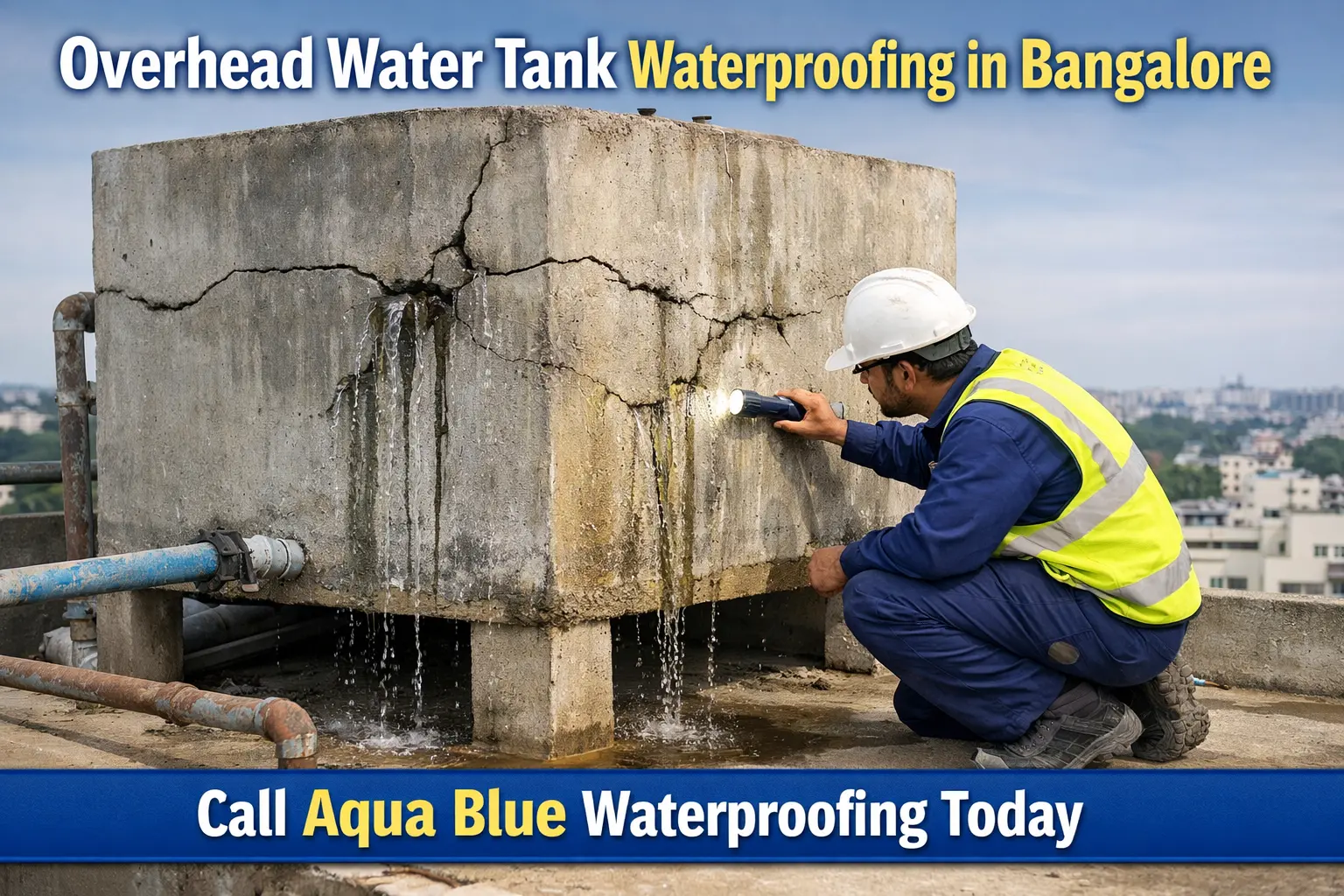
Overhead Water Tank Leak Repair & Waterproofing in Bangalore
Imagine waking up to damp patches on your ceiling or realizing your expensive water tanker delivery is draining away through a silent, invisible leak. In Bangalore’s 2026 water crisis, every drop lost is a financial drain. With over 1.3 million aging homes in districts like Whitefield and Jayanagar, structural tank leakage is a top maintenance crisis. Whether you are a “tanker-dependent” homeowner or an Apartment Owners’ Association (AOA) member, understanding Overhead Water Tank Waterproofing in Bangalore is vital. At Aqua Blue Waterproofing, we specialize in identifying these hidden vulnerabilities. This guide covers the root causes of leakage and the professional fixes our experts use to keep your property structurally sound. 📞 Protect Your Home Today! Call Aqua Blue Waterproofing: 88920 26121 Table of Contents Why Overhead Tanks Leak in Bangalore: Root Causes The Hidden Risks of Ignoring Tank Leakage Modern Leak Repair Methods: Beyond Traditional Cement Best Waterproofing Materials for 2026 Professional 6-Step Execution Process Why Experts Matter: The Aqua Blue Advantage Cost Analysis & Maintenance Tips Frequently Asked Questions (FAQs) One-Minute Summary: The Essentials The Problem: Thermal expansion, aging RCC (Reinforced Cement Concrete), and 2026’s erratic monsoon cycles cause structural cracks in Bangalore’s water tanks. The Fix: Modern engineering utilizes PU Injection Grouting to seal deep cracks and Food-Grade Epoxy or Cementitious coatings to provide a 100% watertight internal lining. The Safety Factor: All materials used must be VOC-free and non-toxic to ensure drinking water remains uncontaminated. The Result: A waterproofed tank reduces dependence on expensive tankers and prevents structural corrosion of the building. What Causes Overhead Water Tank Leakage in Bangalore Homes? In a city like Bangalore, where the temperature can fluctuate significantly between day and night, concrete undergoes constant stress. This is the primary driver of Overhead Water Tank Waterproofing in Bangalore needs. Why Do RCC Overhead Tanks Crack Over Time? Most tanks in Bangalore are made of RCC. Concrete is naturally porous and prone to structural shrinkage. Temperature Variation: The intense afternoon sun causes the concrete to expand, while the cool evening air causes it to contract. This cycle eventually leads to hairline fractures. Poor Initial Plastering: If the original construction used sub-standard cement-to-sand ratios, the tank walls become brittle. Foundation Settlement: Slight shifts in the building’s foundation can cause stress at the “cold joints”—the junction where the tank wall meets the floor. Why Are Apartment Overhead Tank Leakage Problems Common? Apartment overhead tank leakage problems are a nightmare for Resident Welfare Associations (RWAs). Hydrostatic Pressure: Massive tanks in high-rises hold thousands of liters, exerting immense pressure on the bottom slab. Aging Infrastructure: Many complexes built during the early 2000s tech boom in Electronic City or Hebbal are now seeing their original waterproof membranes fail. Vibrations: Constant pumping and building vibrations can widen existing micro-cracks over time. Why Is Overhead Tank Leakage a Serious Problem? Ignoring a small “sweating” patch on your tank wall is a recipe for disaster. 1. Severe Structural Corrosion When water leaks through a crack, it eventually reaches the internal steel reinforcement (TMT bars). Water + Oxygen + Steel = Rust. As steel rusts, it expands up to four times its original volume, causing the concrete to “spall” or break off. This compromises the safety of the entire pillar supporting the tank. 2. Health and Contamination Risks Cracks aren’t a one-way street. While water leaks out, pollutants like dust, insects, and even sewage-contaminated groundwater (in sumps) can leak in. This leads to the growth of harmful algae and E. coli bacteria, making your “potable” water dangerous. 3. The “Tanker Drain” Effect In 2026, a 6,000-liter water tanker in Bangalore can cost upwards of ₹1,200 to ₹2,500 during peak summer. If your tank has a 10% seepage rate, you are effectively throwing away thousands of rupees every month. What Are the Best Overhead Water Tank Leak Repair Methods? If you are researching how to fix overhead water tank leakage in Bangalore, you must distinguish between a “temporary patch” and a “structural fix.” Crack Injection Repair (PU Grouting) For deep, active leaks, surface coating is useless. We use Polyurethane (PU) Injection Grouting. How it works: We drill holes along the crack and inject a hydrophobic resin under high pressure. The Result: The resin reacts with water inside the crack, expanding into a dense, flexible foam that seals the leak through the entire 6-inch or 9-inch wall thickness. Crystalline Waterproofing This is an “active” technology. The chemicals react with the moisture in the concrete to grow insoluble crystals inside the pores. This essentially turns the concrete itself into a waterproof barrier. Food-Grade Epoxy Tank Coating Epoxy provides a smooth, glass-like finish that is 100% impermeable. It is ideal for internal lining because it is easy to clean and prevents algae from sticking to the walls. Which Waterproofing Materials Are Best for Water Tanks? Choosing the right material is vital for health. You cannot use the same bitumen or coal-tar used on a roof inside a water tank. Material Application Benefit 2-Component Cementitious Standard RCC Tanks Flexible, Breathable, UV Resistant PU Grouting Resin Structural Cracks Stops active pressure leaks instantly Food-Grade Epoxy Drinking Water Tanks Non-toxic, Algae-resistant, Durable Crystalline Slurry New or Old Concrete Becomes a permanent part of the slab Aqua Blue Waterproofing only uses ISI-certified, Food-Grade materials ensuring that your water remains safe for drinking, cooking, and bathing. How Professional Overhead Water Tank Waterproofing Is Done in Bangalore At Aqua Blue Waterproofing, our process is what sets us apart. We follow a strict 6-step engineering protocol: Advanced Inspection: We use moisture meters to map out “silent” seepage zones that aren’t visible to the naked eye. Mechanical Cleaning: Using high-pressure water jets and wire brushes, we remove every trace of algae and old, failing coatings. V-Groove Treatment: Every crack is widened into a ‘V’ shape to allow for deep-penetrating repair mortars. Pressure Grouting: We inject PU resin into the structural core to bridge the gap between internal and external surfaces. Layered Coating: We apply two to three coats of a flexible waterproof membrane,
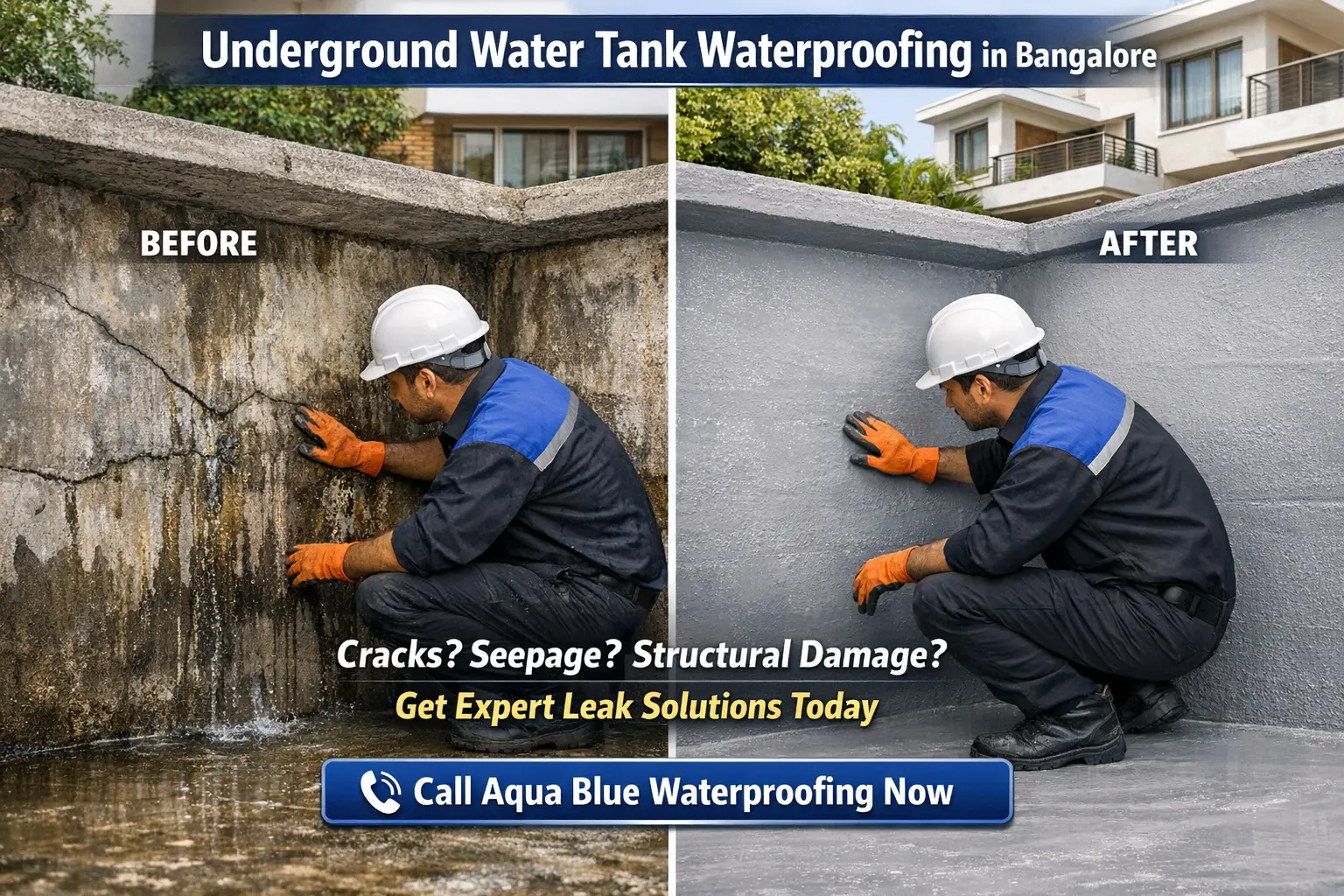
Underground Water Tank Waterproofing in Bangalore: Causes & Fixes
Is your underground sump tank causing damp walls, sudden water loss, or a persistent foul smell in your tap water? In a city like Bangalore, where we rely heavily on stored sub-soil and Cauvery water, a leaking sump isn’t just a plumbing issue, it’s a structural threat. With the recent monsoon shifts and the city’s high water table in areas like Sarjapur, Whitefield, and Hebbal, Underground Water Tank Waterproofing in Bangalore has become a critical necessity for property longevity. This comprehensive guide by Aqua Blue Waterproofing is designed for independent villa owners, Apartment Association (AOA) members, and facility managers who need to understand why tanks fail and how to fix them permanently using modern, food-grade technology. 📞 Need an Expert Inspection? Call Aqua Blue Waterproofing: 88920 26121 Table of Contents 1-Minute Summary: The Essentials Why Do Underground Water Tanks Leak in Bangalore? Early Warning Signs of Seepage How to Fix Underground Water Tank Leakage Step-by-Step Material Science: Cementitious vs. Bituminous The Structural Risk: Why Leaks Damage Foundations Choosing the Right Expert in Bangalore Frequently Asked Questions (FAQ) Conclusion 1-Minute Summary: The Problem: Bangalore sumps primarily leak due to negative hydrostatic pressure from high groundwater or structural cracks caused by the city’s varied soil types. The Solution: Professional repair involves pressure injection grouting followed by a 2-component polymer-modified cementitious coating. Safety First: Only “Food-Grade” certified materials should be used. Avoid Bituminous (tar) coatings for drinking water as they are toxic. 2026 Pricing: Expect to pay between ₹40 to ₹75 per sq. ft. for professional services in Bangalore. The Bottom Line: Aqua Blue Waterproofing offers high-performance, non-toxic solutions to stop seepage and protect your building’s foundation. Why Do Underground Water Tanks Leak in Bangalore? Understanding what causes underground water tank leakage is the first step toward a permanent fix. In Bangalore, the reasons are often a combination of environmental factors and aging infrastructure. The Role of Soil Settlement Bangalore’s geography is a mix of hard rock and loose red clay. In areas like Electronic City or North Bangalore, the soil often “settles” over a period of 5–10 years. This minor shifting exerts immense mechanical stress on concrete sumps, leading to structural hair-line cracks. Even a 1mm crack can allow thousands of liters of water to escape or-worse, allow contaminated groundwater to enter. Understanding Hydrostatic Pressure During the monsoon, the water table rises significantly. This creates negative hydrostatic pressure, where the water in the surrounding soil pushes against the external walls of your tank. If your sump lacks a proper external waterproof membrane, this pressure forces groundwater, minerals, and bacteria through the concrete’s capillary pores. Vulnerability of Construction Joints Most sumps built 10–20 years ago were constructed using traditional masonry or RCC without modern additives. “Cold joints”—where the floor slab meets the wall are notorious for failing. Without a flexible water-stop or crystalline admixture, these joints naturally separate over time. Early Warning Signs of Underground Tank Seepage Problems in Bangalore Don’t wait for your foundation to weaken. Keep a lookout for these underground tank seepage problems Bangalore residents frequently face: Sudden Water Loss: If you fill your tank at night and find it significantly lower by morning despite no usage, you have an active leak. Discolored or “Earth-Smelling” Water: If your Cauvery water looks muddy or smells like wet soil, it’s a sign that groundwater is infiltrating your sump through cracks. Efflorescence (White Salt Deposits): If you see white, powdery deposits on the walls outside or near your sump, it indicates that water is leaching minerals out of the concrete. Dampness in Adjacent Rooms: Basement walls or ground-floor rooms near the sump showing peeling paint or mold are classic signs of a failing water tank. How to Fix Underground Water Tank Leakage in Bangalore Step-by-Step When you ask how to fix underground water tank leakage in Bangalore, the answer is never just “apply some cement.” At Aqua Blue Waterproofing, we follow a rigorous 5-step engineering process: 1. Professional Inspection & Moisture Mapping We begin by draining the tank and drying the surface. Using thermal imaging or moisture meters, we identify exactly where the “active” leaks are occurring. 2. Surface Preparation & Crack Treatment The surface must be cleaned of all algae, old paint, and loose plaster. We “V-groove” the cracks, widening them slightly to ensure the repair material can penetrate deeply. 3. Pressure Injection Grouting For deep structural cracks, we use polyurethane or cementitious grout. This material is injected under high pressure into the crack, where it expands to seal the void through the entire thickness of the wall. 4. Applying Waterproofing Materials for Underground Tanks We apply multiple layers of Polymer-Modified Cementitious Coating. Unlike local “putty,” these coatings are flexible, meaning they can bridge small future cracks without breaking the waterproof seal. 5. Curing and Testing The tank is kept moist for 3–5 days to allow the chemicals to react and bond with the concrete. Finally, we conduct a “pond test” by filling the tank and monitoring the levels for 24–48 hours. Cementitious vs. Bituminous Underground Tank Waterproofing – Which Is Better? When comparing cementitious vs bituminous underground tank waterproofing, the winner for drinking water is clear. Aqua Blue Waterproofing strictly recommends Polymer-modified Cementitious coatings for all residential sumps in Bangalore. The Structural Risk: Why Leaks Damage Foundations Many property owners ignore a small leak to save on repair costs, but the long-term damage is far more expensive. Soil Erosion: Leaking water washes away the “fines” in the soil beneath your house, creating hollow voids that lead to foundation sinking. Rebar Corrosion: Once water reaches the steel reinforcement bars (rebar) inside your concrete, the steel rusts and expands, causing the concrete to “spall” or explode from the inside. Contamination: Seepage doesn’t just go out; it comes in. Pesticides, sewage from nearby drain lines, and soil bacteria can contaminate your drinking water. Why Hire Water Tank Leak Repair Experts in Bangalore Instead of DIY? While DIY videos are popular, water tank leak repair experts Bangalore like Aqua Blue bring tools you
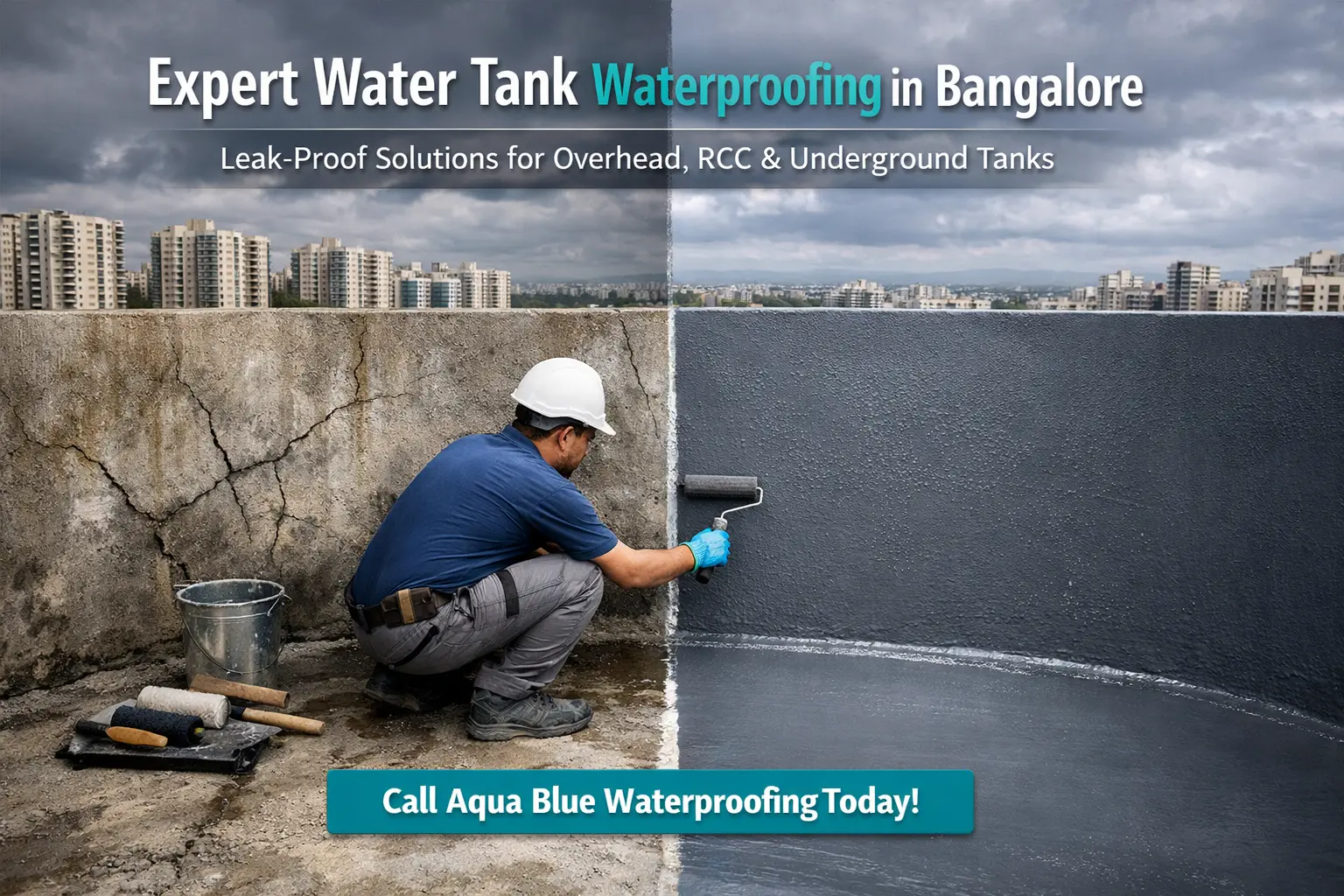
Expert Water Tank Waterproofing in Bangalore for All Types of Tanks
One-Minute Read Summary The Problem: Bangalore’s ~970mm annual rainfall and extreme temperature shifts cause RCC tanks to expand and crack. With the city’s massive vertical housing growth (accounting for 16% of India’s residential sales), leaking tanks have become a top structural threat. The Risks: Beyond water wastage, leaks lead to structural rust, damp ceilings, and health hazards like algae and foul odors in drinking water. The Solutions: Crystalline Technology: Best for deep structural sealing in concrete. PU/Epoxy Membranes: Best for flexible, seamless, and food-safe internal lining. Cementitious 2K: Ideal for standard overhead tanks. Introduction: In a city like Bangalore where buildings depend heavily on stored water, leaking tanks are becoming a common structural issue. With increasing rainfall and aging RCC structures, many homeowners and apartment associations are searching for reliable Water Tank Waterproofing in Bangalore to stop seepage permanently. This guide is designed to provide independent homeowners, property managers, and residents with a clear roadmap for Water Tank Waterproofing in Bangalore. Whether the problem is an overhead tank crack, underground sump leakage, or damp ceilings caused by tank seepage, professional waterproofing is essential to protect both the building structure and water quality. Stop the Seepage Today! Call Aqua Blue Waterproofing for a Professional Inspection: 88920 26121 Table of Contents Why Water Tank Leakage is Increasing in Bangalore Signs Your Water Tank Needs Waterproofing Common Causes of Water Tank Leakage in Bangalore Types of Water Tanks We Waterproof Best Waterproofing Methods for the Bangalore Climate Why Choose Aqua Blue Waterproofing Services? Climate Impact on Bangalore Water Storage Frequently Asked Questions Why Water Tank Waterproofing in Bangalore is Essential ? Bangalore’s real estate landscape has changed drastically. Data from MagicBricks 2025 shows a growing demand for vertical housing, but many of these structures are now entering a phase where original waterproofing is failing. Water Tank Waterproofing in Bangalore is becoming a top search trend as aging RCC (Reinforced Cement Concrete) tanks in 15–20-year-old buildings begin to develop cracks. The combination of Bangalore’s specific climate, intense monsoon humidity followed by heat expansion cycles puts immense stress on concrete. Furthermore, the high mineral content in local water supplies often triggers chemical reactions with the concrete, weakening the structure from the inside out. What Are the Signs Your Water Tank Needs Waterproofing? Early detection can save lakhs in structural repairs. If you notice any of these signs your water tank needs waterproofing, it is time to act: Damp patches: Visible moisture on the walls or ceiling directly below an overhead tank. Rust Stains: Brownish streaks on the concrete, indicating that water has reached the internal steel reinforcement. Efflorescence: White, powdery salt deposits on the exterior surface of the tank. Reduced Water Levels: Noticing that the tank empties faster than usual without increased usage. Algae and Odor: Sunlight penetrating through micro-cracks can trigger algae growth, leading to a foul smell in your drinking water. What Are the Common Causes of Water Tank Leakage in Bangalore? Understanding the Common Causes of Water Tank Leakage in Bangalore helps in choosing a permanent fix rather than a temporary patch. Thermal Expansion: Bangalore’s temperature fluctuations cause concrete to expand and contract, leading to hairline fractures. Hydrostatic Pressure: In underground sumps, the pressure from the surrounding soil—especially during heavy rains—forces water through the concrete pores. Poor Construction Joints: Many older apartments in Bangalore suburbs were built with gaps in the construction joints that eventually give way. Hard Water Corrosion: The chemical makeup of Bangalore’s water can slowly degrade the internal lining of RCC tanks. What Types of Water Tanks Do We Waterproof in Bangalore? At Aqua Blue Waterproofing, we categorize our solutions based on the tank’s location and usage to ensure the most effective Water Tank Waterproofing in Bangalore. Overhead Tank Waterproofing Most independent homes and apartments rely on RCC overhead tanks. These are exposed to direct sunlight and rain. We use UV-resistant, food-grade coatings to ensure the water stays safe and the structure stays dry. RCC Tank Waterproofing Reinforced concrete tanks require deep-penetrating crystalline treatments. These chemicals travel into the capillary tracts of the concrete to block water flow at a molecular level. Underground Tank Waterproofing Bangalore Underground sumps face external soil pressure. Our underground tank waterproofing Bangalore service includes negative-side pressure grouting and heavy-duty epoxy linings to prevent groundwater contamination. Which Waterproofing Methods Work Best for Water Tanks in Bangalore Climate? Not all chemicals are equal. Based on current industry standards for 2026, we utilize: Crystalline Waterproofing: Best for RCC tanks as it becomes an integral part of the concrete. Cementitious Coating: A two-component flexible coating ideal for internal linings. Epoxy/PU Coating: Provides a high-strength, chemical-resistant barrier for industrial tanks. Method Best For Durability Food Safe? Crystalline New/Old RCC Tanks High (10+ years) Yes Cementitious Overhead Tanks Moderate (5-7 years) Yes Epoxy Lining Industrial/Sumps High (8+ years) Yes (Grade specific) Professional Water Tank Waterproofing Process in Bangalore Stopping seepage in Bangalore’s RCC tanks requires a systematic approach rather than a simple cement patch. At Aqua Blue Waterproofing, we follow a 6-step engineering process to ensure your drinking water stays safe and your structure stays dry. Our Step-by-Step Leak-Proof Solution: 1.Structural Inspection: We identify active seepage points and moisture levels using thermal mapping or moisture meters. 2. Crack Identification: Hairline fractures and weak construction joints are “V-grooved” for deep-level repair. 3. Surface Preparation: The concrete is mechanically cleaned to remove algae, debris, and loose particles for a strong bond. 4. PU Resin Injection: For deep structural cracks, we inject Polyurethane (PU) resin that expands to plug leaks through the entire wall thickness. 5. Food-Grade Coating: We apply 2–3 layers of non-toxic, food-grade epoxy or cementitious coating certified for drinking water safety. 6. Curing & Testing: After a 72-hour curing period, we perform a hydrostatic “pond test” to guarantee 100% waterproofing. Stop the seepage before it damages your foundation! 📞 Call Aqua Blue Waterproofing: 88920 26121 Why Choose Aqua Blue Waterproofing Water Tank Services Bangalore? In a city of high-rises and independent villas, your water tank is your lifeline.

Long-Lasting Swimming Pool Waterproofing in Bangalore – Materials, Methods & Maintenance
One-Minute Read Summary Swimming pools in Bangalore face two big enemies: heavy rain and changing temperatures. These cause the concrete to crack and leak. To save your pool (and your money), you need more than just tiles, you need a professional waterproof shield. Aqua Blue Waterproofing uses modern methods like PU Membranes and Crystalline tech to keep your pool leak-free for over 13 years. Introduction: Imagine your luxury villa in Sarjapur or your penthouse in Whitefield losing thousands of liters of water every month, not to evaporation, but to invisible structural cracks. In Bangalore, the dream of a private pool often meets the harsh reality of soil movement and intense monsoons. Many homeowners mistakenly believe that high-quality tiles are enough to stop water. In reality, tiles are just the “skin” , the true protection is the invisible “shield” beneath them. This guide is a must-read for Villa Owners, Apartment Committees (RWAs), and Hotels/Clubs across the city. We will explore the specialized swimming pool waterproofing methods Bangalore requires to withstand the city’s unique environmental pressures, ensuring your asset doesn’t become a structural liability. 📞 Is your pool losing water? Speak to an expert now! Call Aqua Blue Waterproofing at 88920 26121 Table of Contents Vulnerability of Bangalore Pools Types of Pool Waterproofing in Bangalore Step-by-Step Waterproofing Process Cementitious vs. Membrane Systems Lifespan & Durability Expectations Choosing the Right Method for Your Pool Reliable Pool Waterproofing Services in Bangalore Why Choose Aqua Blue Waterproofing? Expert Maintenance Practices FAQs What Makes Swimming Pools in Bangalore More Vulnerable to Water Damage? In 2026, Bangalore’s real estate market continues to boom, with CREDAI Karnataka reporting steady growth in villa communities. However, these structures face a silent enemy: Hydrostatic Pressure. With an average annual rainfall of ~970 mm (as per IMD data), the soil surrounding your pool becomes saturated during the monsoon. This wet soil expands and exerts massive pressure on the pool walls from the outside. If the swimming pool waterproofing methods in Bangalore used during construction weren’t specialized for this pressure, you’ll see: Tile Detachment: Water seeping behind tiles causes them to “pop” or crack. Pump Room Dampness: Moisture traveling through the concrete into electrical areas. Structural Seepage: Water reaching the steel rebar, causing rust and weakening the entire foundation. What Are the Different Types of Pool Waterproofing Used in Bangalore? There is no “one size fits all.” Professionals use various pool waterproofing materials & methods depending on the pool’s location (rooftop vs. ground-level). 1. Polyurethane (PU) & Polyurea Membranes The most flexible option. These are liquid-applied coatings that turn into a seamless, rubber-like sheet. Best For: Rooftop pools in apartments like those in Electronic City where building vibration is high. 2. Crystalline Treatment A chemical that penetrates deep into the concrete and grows crystals to block micro-pores. Best For: New RCC pool constructions. It makes the concrete itself waterproof. 3. Two-Component Cementitious Waterproofing A mix of specialized cement and polymers. Best For: Standard residential pools; it’s breathable and provides great adhesion for tiles. Method Durability 2026 Cost Range (₹/sq. ft.) Best Use Case PU Membrane 12-15 Years ₹160 – ₹300 Rooftop / Luxury Villas Cementitious 5-8 Years ₹75 – ₹110 Ground-level / Budget Crystalline Lifetime ₹150 – ₹320 Structural New-builds How Is Swimming Pool Waterproofing Done Step by Step in Bangalore? A pool is only as good as the swimming pool waterproofing process step by step followed by the technical team. Structural Inspection: We map invisible leaks using moisture meters. Crack Injection: Any structural cracks are injected with high-pressure resins. Surface Preparation: Grinding the concrete to ensure the material bonds at a molecular level. Application: Applying the waterproof layers (primer + 2 coats of membrane). Flood Testing: Filling the pool for 72 hours to verify a 100% seal before tiling. Curing: Allowing the chemicals to set. Skipping this is the #1 reason for failure in Bangalore’s humid climate. Cementitious vs. Membrane Waterproofing for Pools – Which Is Better for Bangalore Conditions? While both are popular swimming pool waterproofing methods in Bangalore, the winner depends on “Elasticity.” Cementitious is rigid. If the ground shifts slightly in Sarjapur, a cementitious layer might crack. Membrane (PU) is elastomeric. It can stretch to bridge a 2mm crack, making it the best swimming pool waterproofing method for Bangalore’s soil movement. How Long Does Pool Waterproofing Last in Bangalore Climate? The lifespan of your waterproofing is directly tied to the pool waterproofing materials & methods used. Cementitious Systems: Typically last 5–8 years. Membrane Systems (PU): Expect 8–15 years of leak-free performance. Crystalline: Provides permanent, structural-level protection, but often requires a secondary aesthetic coat. How to Choose Swimming Pool Waterproofing Method in Bangalore? Use this quick decision checklist: Pool Age: For older pools with cracks, choose Membrane/Injection systems. Usage: High-usage hotel pools need Epoxy or Polyurea for chemical resistance. Budget: If you want a 10-year ROI, invest in PU Membranes. If you are on a tight budget for a ground pool, Cementitious is sufficient. Where Can You Get Reliable Pool Waterproofing Services in Bangalore? Aqua Blue Waterproofing provides specialized services across the city’s major hubs: North Bangalore: Yelahanka & Sahakar Nagar. East Bangalore: Whitefield & Sarjapur. South Bangalore: JP Nagar & Bannerghatta Road. We offer an on-site technical audit where we explain exactly which swimming pool waterproofing methods Bangalore pool owners should prioritize based on their specific site conditions. Why Aqua Blue Waterproofing Swimming Pool Waterproofing Services Stand Out We have successfully waterproofed over 200 pools in Bangalore with a 99% success rate. Quality Standards: We only use industrial brands like Fosroc, Sika, and Zydex. Expert Team: Our technicians are trained in high-pressure injection grouting. Transparent Pricing: No hidden “monsoon surcharges.” You pay for the area treated. 📞 Call Aqua Blue Waterproofing Today! 88920 26121 What Maintenance Practices Prevent Future Pool Leakage? Annual Inspection: Look for hollow tiles or cracked grout lines. Chemical Balance: High chlorine levels can erode standard waterproofing over time. Sealant Checks: Re-seal pipe inlets every 24 months to prevent “junction leaks.” FAQ’s: Q1: What