
Building a home or a commercial complex in Bangalore is a massive milestone. However, many property owners face a heartbreaking reality: within just two years of completion, damp patches appear on pristine ceilings or salt deposits (efflorescence) ruin expensive interior paint. The culprit is almost always a lack of proper waterproofing for new construction in Bangalore during the initial building phases.
In this comprehensive guide, we will walk you through the essential stages of protecting your structure from the ground up. Whether you are a property developer, an architect, or a first-time homeowner, understanding these preventive steps from the experts at Aqua Blue Waterproofing will save you from structural damage and the high cost of future repairs.
Need Expert Advice? Call Aqua Blue Waterproofing at +91 88920 26121
Table of Contents
-
Importance of New Construction Waterproofing (2026 Reality)
-
Common Mistakes Builders Make in New Projects
-
The Step-by-Step Waterproofing Stages
-
When to Schedule Waterproofing During Construction
-
Best Waterproofing Methods for Bangalore’s Climate
-
The Real Risks of Skipping Protection
-
Reliable Services Across Bangalore (Location Focus)
-
Why Choose Aqua Blue Waterproofing
-
FAQs for Builders & Homeowners
Why Is Waterproofing for New Construction in Bangalore Important? (2026 Reality Check)
Bangalore’s geography and climate present unique challenges for buildings. With the city experiencing rapid thermal expansion due to rising summer temperatures followed by intense, sudden monsoon downpours, concrete structures undergo significant stress.
Concrete is naturally porous. On a microscopic level, it contains thousands of tiny capillaries. When it rains heavily in areas like Whitefield or Yelahanka, water enters these pores.
-
The Bangalore Climate Impact: The cycle of heat and rain causes micro-cracks in concrete. Without a barrier, rainwater seeps into these cracks, leading to steel reinforcement corrosion.
-
Structural Risks: Once water reaches the TMT bars inside your pillars and slabs, they begin to rust and expand. This expansion creates internal pressure, leading to “spalling” where chunks of concrete actually fall off.
-
Health and Aesthetics: According to current industry reports, nearly 30–40% of new buildings in Bangalore report seepage issues within the first three years. This leads to toxic mold growth, affecting indoor air quality and causing respiratory issues for residents.
Investing in waterproofing for new construction in Bangalore today is a fraction of the cost of future “break-and-fix” repairs. Preventive measures typically cost significantly less than reactive repairs, which often involve breaking tiles and re-doing expensive interiors.
What Are the Common Mistakes Builders Make in New Construction Waterproofing?
Even experienced contractors sometimes overlook critical details in the rush to meet deadlines. How to prevent leakage in new building construction starts with avoiding these four pitfalls:
-
Skipping Foundation Protection: Many assume soil moisture won’t rise, but capillary action can pull water up into your ground-floor walls. This is known as “Rising Damp.”
-
Using Cheap Cement-Only Coatings: Standard cement paint or basic slurry is not flexible. As a new building “settles” into the ground over the first 24 months, tiny movements occur. A rigid coating will crack along with the building.
-
Ignoring Curing Time: Waterproofing chemicals need specific durations to bond. If a contractor applies a second coat or lays tiles before the first layer is fully cured, the chemical bond fails.
-
No Slope Planning on Terraces: If water doesn’t flow naturally toward the drain pipes, even the most expensive chemical will fail under “ponding” water. Standing water is the greatest enemy of any roof.
What Are the Waterproofing Stages in New Build Process? (Step-by-Step Guide)
Effective waterproofing is not a single event; it is a multi-stage process integrated into the construction timeline.
Stage 1: Foundation Waterproofing
This is your first line of defense. We apply bituminous coatings or specialized foundation waterproofing membranes to the footings and retaining walls. This prevents moisture from the Bangalore soil, which can stay damp for months after the monsoon—from traveling up through the brickwork and ruining your ground-floor skirting.
Stage 2: Basement Waterproofing
Basements are under constant hydrostatic pressure from groundwater. We use crystalline waterproofing or heavy-duty membranes to ensure the basement remains bone-dry. In 2026, with more people using basements for home offices and theaters, this stage is non-negotiable.
Stage 3: Bathroom & Wet Areas (Internal)
Before the tiles are laid, we treat the “sunken slabs” of bathrooms and balconies. We pay special attention to “pipe penetrations” (where plumbing goes through the floor). Nearly 70% of bathroom leaks happen at the floor-wall joint, so we reinforce these areas with waterproof tapes or fiber mesh.
Stage 4: Terrace Waterproofing
The terrace bears the brunt of the sun and rain. We apply UV-resistant polymer-modified coatings or Polyurethane (PU) systems. These coatings are elastic; they stretch during the hot Bangalore afternoons and contract at night without tearing.
When Should You Do Waterproofing During Construction in Bangalore?
Timing is everything. Waterproofing is a stage-based process, not a finishing touch you apply at the end.
-
Phase 1 (Foundation): Immediately after the concrete footings have cured but before backfilling the soil.
-
Phase 2 (Slabs): Once the RCC (Reinforced Cement Concrete) slab is cast, it is wise to add integral waterproofing compounds into the concrete mix itself.
-
Phase 3 (Internal Wet Areas): After the basic plumbing lines are fixed and pressure-tested, but before the final floor screed or tiling.
-
Phase 4 (External Walls): Before the final coat of exterior paint, using elastomeric primers.
-
Phase 5 (Terrace): After the parapet walls are built but before any decorative finishing.
Which Is the Best Waterproofing Method for New Construction?
While there are various methods, the best waterproofing method for new construction in 2026 involves advanced polymers that offer high elasticity.
Comparison of Popular Methods
| Feature | Cementitious Coating | Bituminous Membrane | Polymer-Modified / PU |
| Durability | Low to Medium | Medium | Very High |
| Flexibility | Rigid (Can Crack) | Moderate | High (Elastic) |
| Lifespan | 3–5 Years | 5–8 Years | 10–15+ Years |
| UV Resistance | Poor | Needs Protection | Excellent |
For Bangalore’s specific weather- where we see 30°C in the day and 18°C at night, we recommend Polymer-modified coatings or Polyurethane (PU). They act like a “rubber skin” over your building.
Read More On: Polymer vs Traditional Waterproofing in Bangalore: Which Wins for Monsoon Protection?
How Does Waterproofing Work in New Construction? (Real Process Explained)
At Aqua Blue Waterproofing, we follow a rigorous process to ensure the treatment lasts as long as the building:
-
Surface Preparation: We don’t just “paint” over dust. We clean the concrete to remove “laitance” (a weak layer of cement dust) using mechanical grinders.
-
Crack Filling: Any shrinkage cracks are widened into a “V” shape and filled with specialized polymer mortar or epoxy.
-
Filleting: We create a “coving” or “fillet” at the 90-degree angle where the wall meets the floor. This prevents the waterproofing layer from snapping at the sharp corner.
-
Primer Application: A deep-penetrating primer is applied to ensure the main coating bonds at a molecular level with the concrete.
-
Multi-Layer Coating: We apply two to three coats in a cross-directional pattern to ensure 100% coverage with no pinholes.
What Happens If You Skip Waterproofing During Construction? (Real Risks)
The risks are not just aesthetic; they are financial and structural:
-
Ceiling Seepage: Once a slab is saturated, water will find the lowest point and drip, often over expensive furniture or electrical fittings.
-
Steel Corrosion: Rusting steel expands to 2-3 times its original size, causing the concrete to crack from the inside out. This is known as “Concrete Cancer.”
-
Property Devaluation: A house with visible dampness loses 15-20% of its market value instantly.
-
Health Hazards: Mold spores in wet walls are a leading cause of asthma and allergies in children.
Where to Find Reliable Waterproofing Services for New Building in Bangalore?
Finding a contractor who understands local conditions is vital. Whether you are building in:
-
Indiranagar or Koramangala: High-density areas where shared walls need special protection.
-
Whitefield or Sarjapur: Areas with varying soil moisture levels that require robust foundation and basement work.
-
Jayanagar or JP Nagar: Older neighborhoods where new builds must ensure they don’t cause seepage in neighboring properties.
Aqua Blue Waterproofing provides localized expertise, ensuring that the materials used are compatible with the specific water quality and weather patterns of your neighborhood.
Why Choose Aqua Blue Waterproofing for New Construction Projects?
We believe in transparency and professional execution.
-
Site Inspection: We conduct a thorough risk assessment of your site before suggesting a solution.
-
Material Quality: We use only industry-leading brands like Zydex, Fosroc, and Sika.
-
Warranty Backed: Our new construction projects come with a long-term durability assurance.
-
Skilled Workforce: Our team is trained in the specific application of modern chemicals, not just traditional “cement-shakti” methods.
What Do Builders & Homeowners Ask? (FAQ’s)
Q1: What is the best time to do waterproofing in new construction?
A: It must be done at multiple stages-foundation, slab casting, and before final finishing (tiling/plastering).
Q2: Is waterproofing necessary during construction or after?
A: Always during construction. It is easier and 3 times cheaper to prevent a leak than to fix one.
Q3: Which areas need waterproofing in a new building?
A: The “Big Five”: Foundations, Basements, Bathrooms, Balconies, and the Terrace.
Q4: How long does waterproofing last in new construction?
A: High-quality polymer systems typically last 10–15 years, while crystalline systems can last the lifetime of the concrete.
Q5: What is the cost of waterproofing for new construction in Bangalore?
A: While costs vary based on the area (terrace vs. bathroom) and the chemical used, standard preventive treatments are a very small percentage (usually less than 1%) of the total construction cost.
Conclusion: Build Smart Today, Stay Leak-Free Tomorrow
The secret to a long-lasting building isn’t just the quality of the bricks or the beauty of the paint, it’s the protection you can’t see. By prioritizing waterproofing for new construction in Bangalore, you are choosing peace of mind over future headaches.
Don’t wait for the first damp patch to appear. Take action while your building is still in the “skeletal” phase to ensure a dry, healthy, and structurally sound home for the next generation.
Are you ready to protect your new project?
Contact Aqua Blue Waterproofing Today!
 Email: waterproofingaquablue@gmail.com – Send us your leakage photos or site details for expert review
🌐 Visit our Google My Business listing
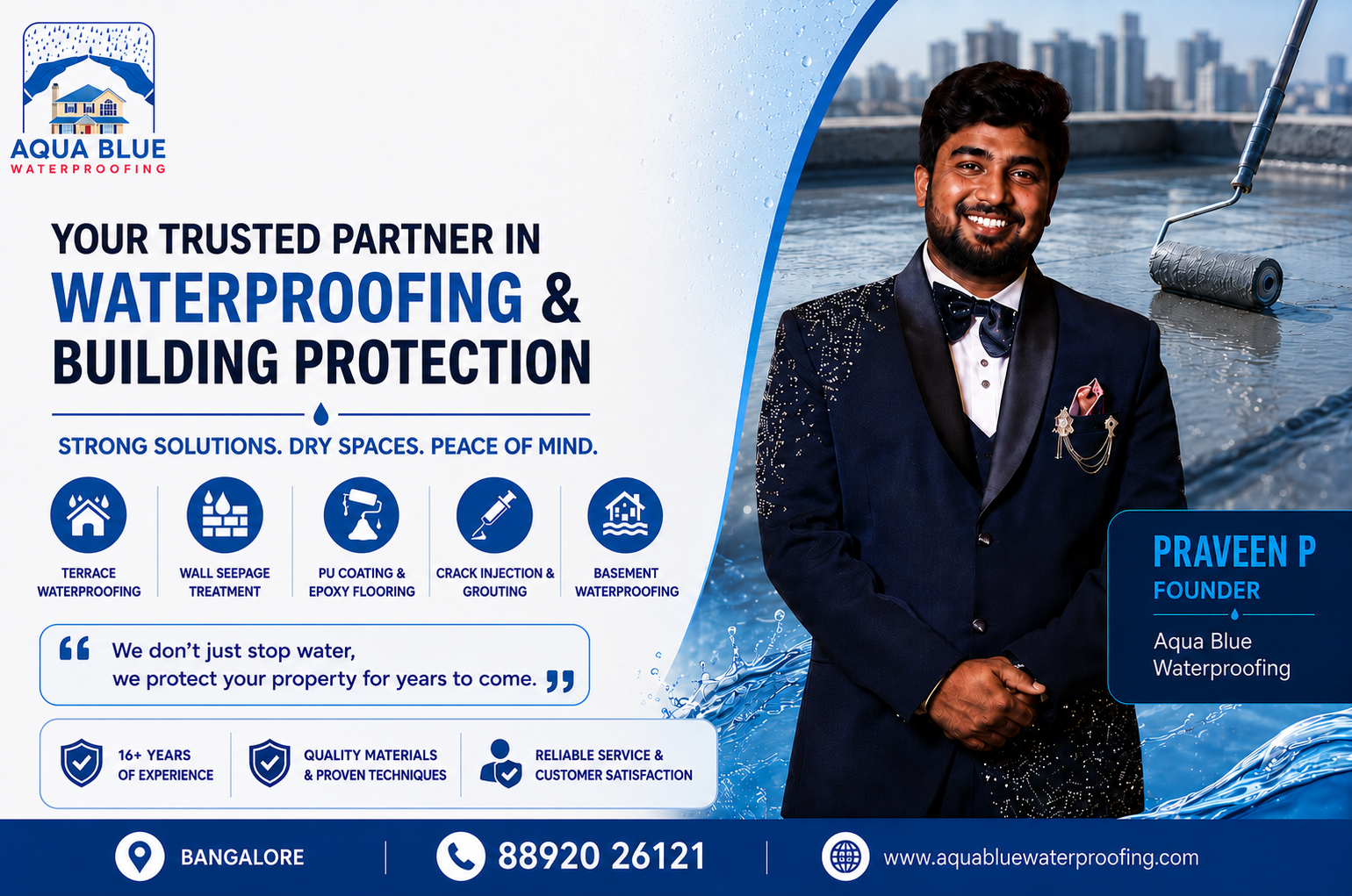
PRAVEEN P is the Founder of Aqua Blue Waterproofing and a Waterproofing Technical Specialist with over 16 years of industry experience. Since establishing the company in 2014, he has helped homeowners and businesses across Bangalore solve leakage and seepage issues through reliable, long-lasting waterproofing solutions and expert guidance.