
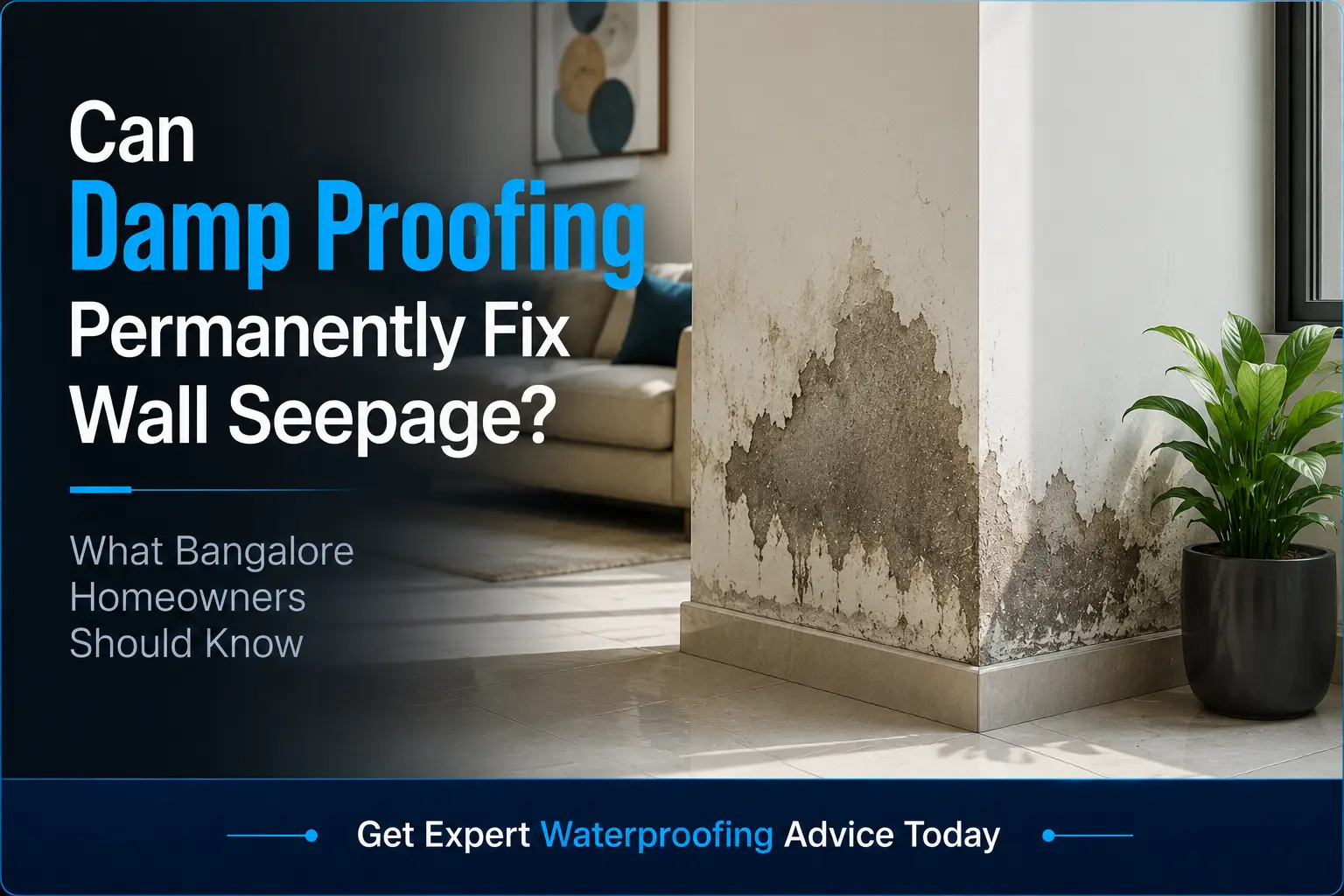
Imagine this scenario: You recently got damp proofing done to fix those annoying moist patches on your brickwork. A few months later or right after the first heavy monsoon downpour, you notice the exact same damp patches, peeling paint, or wall seepage returning in the exact same spots. Naturally, you start wondering whether the treatment actually solved the problem or merely covered up the symptoms for a short time. This confusion is incredibly common for Bangalore homeowners managing independent houses, older villas, or apartments with heavily exposed exterior walls. Our city’s unique weather cycle characterized by heavy monsoon rainfall, high humidity, and intense water pressure on external walls means that generic fixes quickly fall apart. Many residents mistake damp proofing for a complete waterproofing cure, only to watch their hard-earned money wash away during the next big storm. Can damp proofing permanently fix wall seepage? The truth is that many property owners, independent house owners, villa owners, and Resident Welfare Association (RWA) members invest in the wrong treatment because they do not know how water behaves inside masonry. This comprehensive guide will help you understand when damp proofing works, exactly why it fails against active leaks, and how to choose the right wall seepage treatment Bangalore homes need to stay dry permanently. 📞 Call Aqua Blue Waterproofing Today at +91-88920 26121 for a Professional Site Inspection. 1-Minute Summary The choice between damp proofing and waterproofing comes down to water pressure. Damp proofing acts as a basic horizontal barrier designed strictly to stop shallow, capillary-action moisture (rising damp) under zero water pressure. Waterproofing utilizes heavy-duty, flexible membranes to actively seal out heavy rainwater, standing water, and intense hydrostatic pressure during severe monsoons. While damp proofing works well to stop ground moisture from climbing up your foundations, it cannot fix active wall leaks. For true monsoon protection and long-term asset preservation in Bangalore, professional waterproofing is the definitive choice. Table of Contents Can Damp Proofing Permanently Fix Wall Seepage? Why Damp Proofing Fails in Many Bangalore Homes 5 Signs Your Home Needs Waterproofing Instead of Damp Proofing What Is the Best Solution for Different Types of Wall Seepage? What Do Aqua Blue Waterproofing Experts Recommend After Site Inspection? Can Damp Proofing and Waterproofing Be Used Together? What Happens If You Choose the Wrong Solution? Before You Spend Money, Ask These 5 Questions Why Bangalore Homes Need a Different Approach Than Other Cities Frequently Asked Questions Final Verdict: Is Damp Proofing Enough? Can Damp Proofing Permanently Fix Wall Seepage? The short answer is: Sometimes, but only under very specific conditions. Damp proofing is designed solely to keep out shallow ground moisture where there is no active water pressure. It works brilliantly as a barrier to block rising damp at the base of your home. However, if your wall seepage is caused by driving rain, leaking pipes, terrace run-off, or structural cracks, damp proofing cannot fix it. Active water intrusion requires an engineered waterproofing membrane that can withstand continuous, shifting liquid water pressure. Why Damp Proofing Fails in Many Bangalore Homes To protect your property, it helps to understand why a standard damp barrier is simply not enough to stop severe wall seepage. Heavy Monsoon Rain Creates Water Pressure When non-stop rain beats against your walls, water collects on the masonry surface. This creates lateral water pressure that easily pushes right through thin damp-proofing paints and primers. Exterior Wall Cracks Let Water Enter As buildings settle over time, tiny structural cracks open up on your exterior plaster. Damp proofing compounds are rigid and cannot stretch; when a new crack forms, the damp proof barrier snaps, allowing rainwater to enter directly. Old Buildings Already Have Moisture Damage In established Bangalore neighborhoods, decades of seasonal rain leave deep moisture pockets trapped inside old brick walls. A basic surface coating cannot clear out this deep saturation and will quickly bubble off the wall. Damp Proofing Cannot Seal Active Water Leaks Think of damp proofing like a light windcheater jacket, it resists a damp breeze or light mist. Active seepage is like a high-pressure water hose. Without a heavy-duty waterproof shield, the water will force its way through. 5 Signs Your Home Needs Waterproofing Instead of Damp Proofing If you notice even two of these warning signs on your property, skip the basic damp coatings and contact a specialized waterproofing contractor in Bangalore immediately: Water dripping from walls: Active, moving water droplets or wet run-off marks on your plaster. Peeling paint every monsoon: Paint finishes that blister, flake, and fall off like clockwork every rainy season. White salt deposits: Powdery white stains (efflorescence) blooming across your brick masonry or grout lines. Damp patches getting bigger: Discolored wall halos that slowly expand across your rooms after a storm. Mold smell: A persistent, musty odor or visible black mold spores spreading across your lower or upper walls. What Is the Best Solution for Different Types of Wall Seepage? Understanding the overall structural variance is essential to avoid wasting money on temporary repairs. For a comprehensive breakdown of how these principles apply to roofs, sumps, and bathrooms, read our ultimate comparison: Waterproofing vs Damp Proofing in Bangalore: Which Solution Does Your Home Really Need? This comparison matrix shows exactly which treatment fits your specific structural issues: Problem Type Damp Proofing Waterproofing Rising Damp (Ground Moisture) ✅ Highly Effective Optional Exterior Wall Seepage ❌ Fails ✅ Mandatory Terrace & Roof Leakage ❌ Fails ✅ Mandatory Basement Seepage ❌ Fails ✅ Mandatory Hairline Structural Cracks ❌ Fails ✅ Mandatory What Do Aqua Blue Waterproofing Experts Recommend After Site Inspection? At Aqua Blue Waterproofing Bangalore, we believe in a people-first approach that fixes the root problem rather than just painting over it. Our certified team follows a meticulous diagnostic inspection process before recommending any solution: Moisture Meter Testing: We use professional digital meters to map out the exact percentage of hidden wetness inside your walls. Crack Mapping: Our team identifies structural versus thermal cracks on your building’s exterior. Root Cause Analysis:
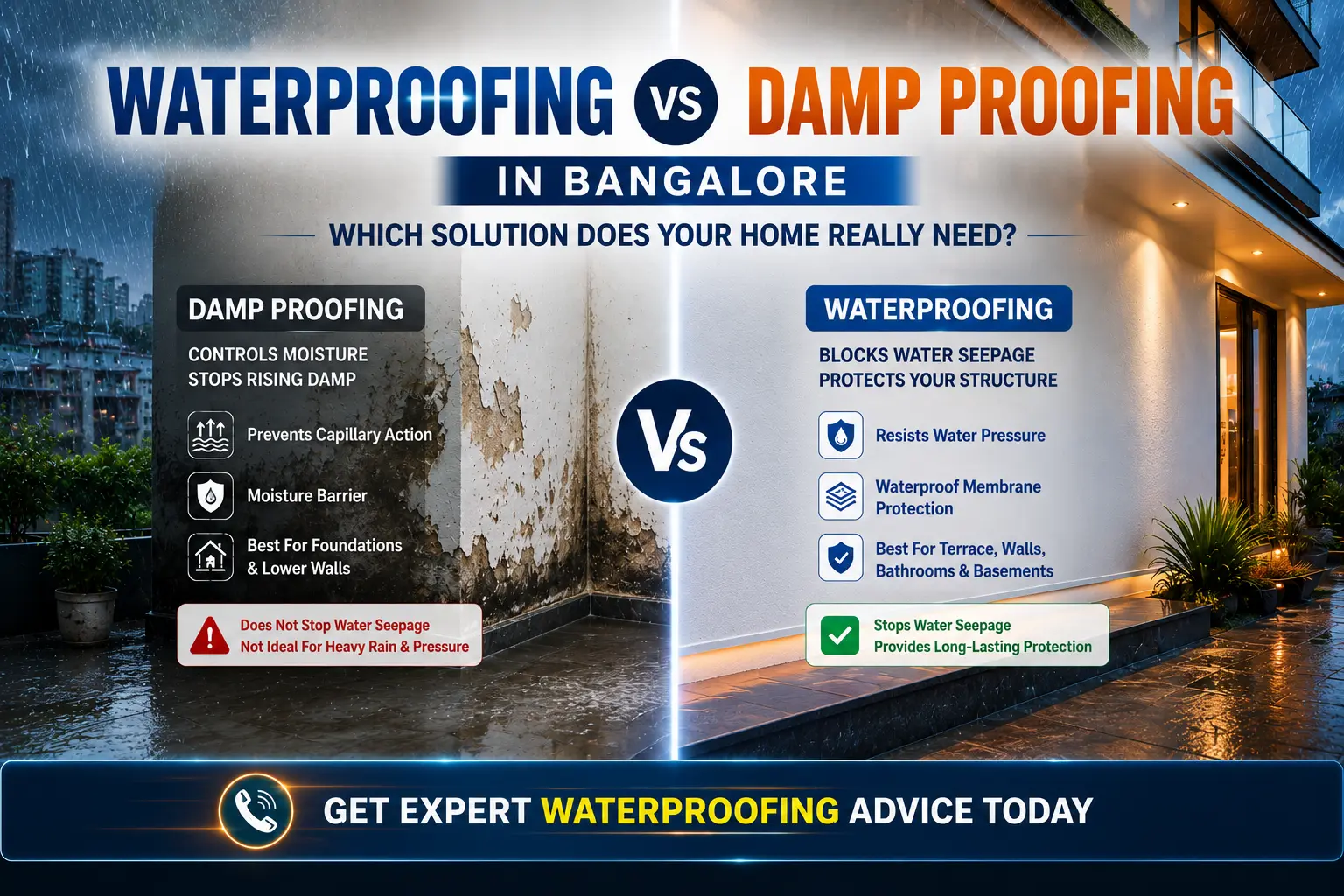
Waterproofing vs Damp Proofing in Bangalore: Which Solution Does Your Home Really Need?
Have you ever noticed ugly damp patches on your walls right after the rainy season? The paint begins to peel, white salty powder forms on the brickwork, and you are left wondering whether you need damp proofing or waterproofing to fix it. If you own an independent home, a luxury villa, or rent out properties in older, classic Bangalore neighborhoods like Jayanagar, Indiranagar, or Koramangala, this is a common headache. Bangalore’s weather features intense, non-stop monsoon rains followed by heavy humidity. This puts a massive amount of stress on our houses. If you pick the wrong fix, you will find yourself wasting money on endless paint touch-ups while hidden structural damage gets worse behind your walls. This guide will break down the real differences between waterproofing vs damp proofing Bangalore homeowners need to know to protect their homes for the long run. 📞 Call Aqua Blue Waterproofing Today at +91 88920 26121 for a Professional Site Inspection. 1-Minute Summary The choice between damp proofing and waterproofing comes down to one thing: water pressure. Damp proofing is a basic barrier built into your foundations. It only handles minor soil moisture (rising damp) where water isn’t actively pooling or pushing against the walls. Waterproofing uses heavy-duty coatings (like liquid sheets or rubber membranes) to block active leaks, heavy rain, and high water pressure. At Aqua Blue Waterproofing, we know that for Bangalore’s heavy monsoon seasons, basic damp proofing isn’t enough, you need proper waterproofing to keep your home safe and dry. Table of Contents Why Do Walls Become Damp in Bangalore Homes? What Is Damp Proofing and How Does It Work? What Is Waterproofing and How Does It Protect Your Home? Waterproofing vs Damp Proofing for Seepage: Key Differences Which Solution Works Better for Walls in Bangalore? What Is the Best Solution for Damp Walls in Bangalore Homes? When Should You Contact a Waterproofing Contractor in Bangalore? Why Bangalore Homeowners Trust Aqua Blue Waterproofing Frequently Asked Questions Why Do Walls Become Damp in Bangalore Homes? Bangalore’s building maintenance trends highlight a massive spike in moisture-related complaints directly after the heavy monsoon spells. When rain saturates the external environment, water finds the path of least resistance into your living spaces. What Causes Wall Dampness in Independent Homes and Villas? The causes of wall dampness are often a mix of poor external drainage, hairline structural cracks, and sub-standard initial construction barriers. In older, established neighborhoods of Bangalore, mature tree roots can breach foundation perimeters, creating entry pathways for moisture. External walls exposed to continuous, driving rain absorb water like a sponge if they lack elastomeric protective coatings. How Does Hydrostatic Pressure Lead to Damp Walls and Structural Damage? Hydrostatic pressure is the force exerted by standing or underground water against a structure. When heavy rains oversaturate the soil around your villa’s foundation or basement, the water table rises. This creates immense hydrostatic pressure that pushes liquid water forcefully through microscopic concrete pores and masonry joints. If ignored, this constant force leads to severe structural damage, corroding the internal steel reinforcement bars (rebars) and causing concrete spalling (flaking). What Is Damp Proofing and How Does It Work? Damp proofing is a preventive moisture control method designed strictly to resist the passage of soil moisture where there is no hydrostatic pressure. It is a fundamental step in standard construction. What Is a Damp Proof Course (DPC)? A Damp Proof Course (DPC) is a continuous horizontal barrier layer built into the foundation walls just above ground level. Typically made of materials like bitumastic compounds, plastic sheets, or rich cement mortars mixed with water-repellent admixtures, it stops capillary action—the physical process where groundwater travels upward through porous bricks and mortar like ink through blotting paper. Where Is Damp Proofing Commonly Used in Bangalore Homes? In local residential properties, damp proofing is applied at the plinth level during construction to prevent rising damp from reaching ground-floor living spaces. It functions as a basic moisture barrier. However, it is important to note that damp proofing is not designed to handle standing water or active water pressure. What Is Waterproofing and How Does It Protect Your Home? Waterproofing is an engineered system designed to prevent the ingress of liquid water under both static and hydrostatic pressure. Unlike simple moisture barriers, true waterproofing keeps a space dry even when completely submerged or subjected to driving monsoons. How Does Waterproofing Stop Water Seepage? Waterproofing functions by creating a seamless, highly flexible, and continuous waterproof membrane over structural surfaces. These advanced materials—such as Polyurethane (PU) liquid coatings or Atactic Polypropylene (APP) torch-on sheets—bridge hairline cracks and flex with seasonal thermal movements. They act as an impenetrable armor that actively deflects high-volume water seepage. Which Areas of a Bangalore Home Need Waterproofing? Different architectural zones face varying moisture loads, requiring targeted interventions from a certified waterproofing contractor in Bangalore: Terrace/Roof: Exposed to heavy rain and thermal cracking. Premium PU liquid membrane systems or APP membranes provide elite protection. Bathrooms: Constant wet zones requiring internal 2-component polymer-modified slurry coatings to block internal structural leaks. Basements & Foundations: Subjected to intense underground hydrostatic pressure, requiring crystalline waterproofing or high-pressure injection grouting. External Walls: Requiring high-build elastomeric waterproof coatings to resist driving monsoon rain. What Is the Difference Between Waterproofing and Damp Proofing for Seepage? Understanding the difference between waterproofing and damp proofing for seepage is critical to avoiding expensive, short-sighted renovation mistakes. The structural variance comes down to the severity of the water threat: Feature Damp Proofing Waterproofing Primary Purpose Shallow moisture control Continuous liquid water protection Water Resistance Moderate (Resists dampness/vapor) High (Blocks liquid water flow) Hydrostatic Pressure No resistance High resistance Monsoon Protection Limited (Fails under heavy downpours) Excellent (Long-term weather proofing) Structural Protection Partial (Only blocks capillary rising damp) Complete (Protects slab, beams, and foundation) Best Application Foundation plinth level during construction Terraces, basements, bathrooms, external walls Waterproofing vs Damp Proofing for Walls in Bangalore: Which Solution Works Better? When reviewing waterproofing vs damp proofing for walls in Bangalore, the severity
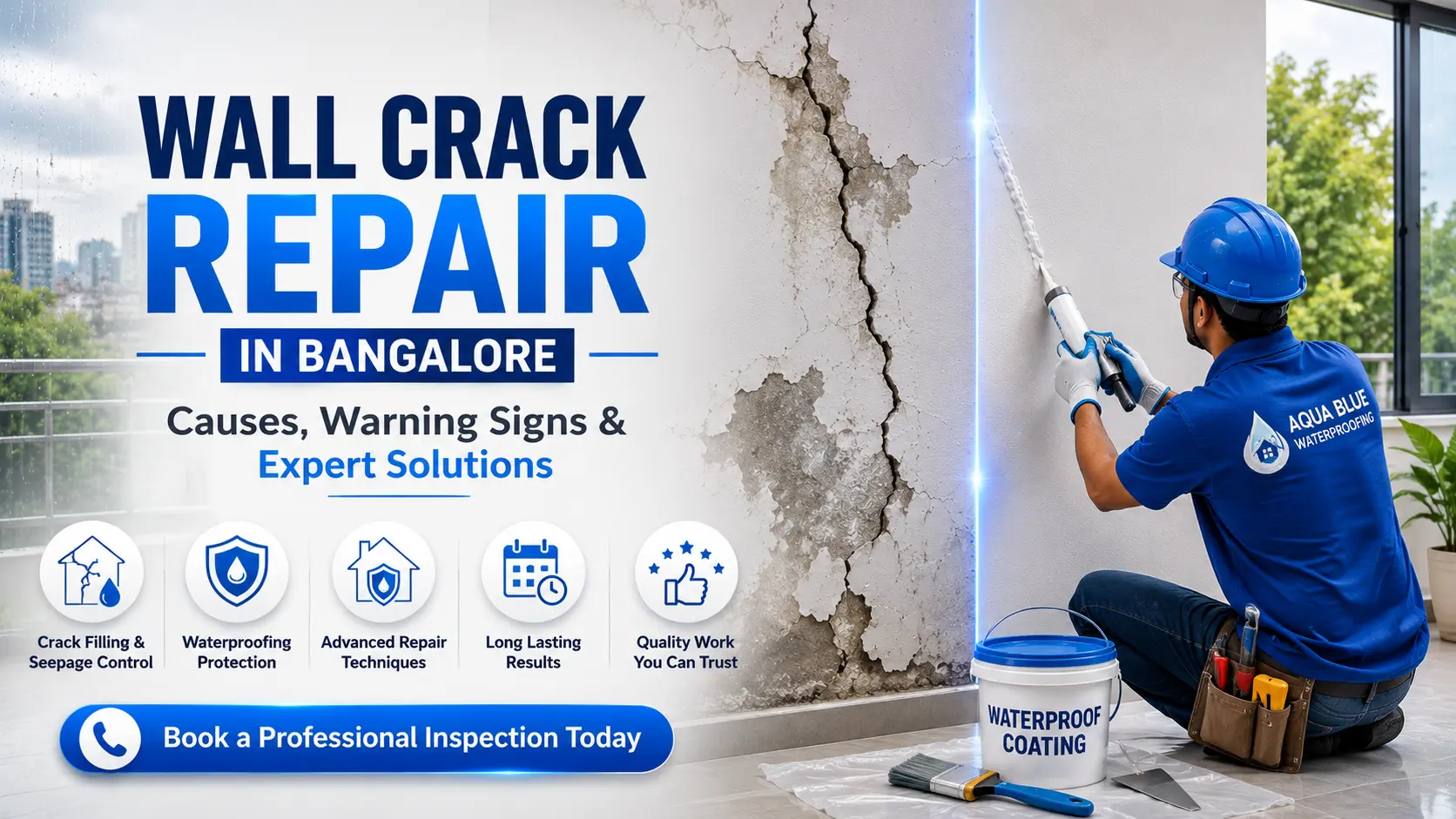
Wall Crack Repair in Bangalore: Causes, Warning Signs & Expert Solutions
You notice a small crack on your living room wall before the monsoon and assume it is harmless. However, ignoring minor gaps can lead to severe structural issues once the heavy rains hit. For homeowners, property owners, and Resident Welfare Association (RWA) managers, keeping buildings safe is a top priority. Understanding why these fissures form and finding the right wall crack repair in Bangalore is vital to avoiding expensive structural damages down the road. This comprehensive guide breaks down everything you need to know about spotting dangerous warning signs, finding the root causes, and applying advanced repair techniques to protect your property. For immediate professional assistance, you can contact Aqua Blue Waterproofing at +91 88920 26121 to speak with a specialist. 1-Minute Summary Not all wall cracks indicate a structural emergency, but cosmetic plaster fissures can worsen over time. Structural damage is often marked by deep, diagonal, or horizontal cracks wider than 5mm. Heavy monsoon moisture accelerates concrete degradation, expanding small lines into deep leaks. Combining professional crack sealing with robust waterproofing ensures long-term building health. Early professional inspections identify hidden vulnerabilities, saving property owners from major reconstruction expenses. Why Are Wall Cracks So Common in Bangalore Homes? Many property owners assume a line across their masonry is simply a cosmetic flaw. In reality, Bangalore’s dynamic climate, soil composition, and shifting water tables mean buildings are constantly under stress. When moisture infiltrates these gaps, it rusts internal steel reinforcements, causing concrete to spall and separate. Early diagnosis is the most reliable way to maintain your building’s integrity. As experts in structural preservation, Aqua Blue Waterproofing Bangalore provides advanced diagnostic and remediation methods to seal your property against structural decline. What Are the Different Types of Wall Cracks? Before choosing a fix, it helps to understand exactly what kind of crack you are looking at. Hairline Cracks These are thin, shallow gaps usually less than 2mm wide. They commonly form in the plaster layer as it shrinks while drying. While they do not compromise structural stability, they should be sealed to prevent water ingress. Settlement Cracks As a building settles into its foundation over the first few years, vertical or near-vertical lines can appear. While minor settling is normal, these cracks must be monitored to ensure they do not continue widening. Structural Cracks These are deep, wide gaps (typically greater than 5mm) that often run diagonally or in a stair-step pattern through brickwork. They indicate that the load-bearing elements of the building are under severe duress and require immediate professional attention. Moisture-Related Cracks When water seeps into masonry, it weakens the bond between materials. These cracks are almost always accompanied by damp patches, bubbling paint, or white powdery salt deposits (efflorescence). What Causes Wall Cracks in Homes? Fissures rarely appear without an underlying trigger. The most frequent causes of wall cracks in homes include: Natural Building Settlement: Heavy structures naturally compress the soil beneath them over time, causing minor shifting. Poor Construction Materials: Using low-grade sand, sub-par cement mixes, or unwashed water leads to weak plaster that cracks easily under stress. Water Seepage and Dampness: Leaking plumbing lines or unsealed external walls allow water to rot the masonry from within. Temperature Expansion and Contraction: Bangalore’s warm afternoons and cool nights cause building materials to expand and contract daily, fatiguing the structure. Structural Movement: Heavy nearby transit, vibrations from construction, or underlying soil shifts place undue physical stress on beams and columns. Why Do Wall Cracks Increase During Bangalore Monsoon? The monsoon season puts immense pressure on local properties. According to historical Indian Meteorological Department (IMD) rainfall data, Bangalore receives substantial precipitation during the monsoon months, which severely tests building envelopes. Continuous Moisture Exposure Sustained rain saturates porous external plaster. Once water penetrates the outer layer, it fills microscopic pores inside the bricks or concrete blockwork. Expansion and Shrinkage of Concrete When masonry absorbs water, it expands slightly. When it dries out during brief sunny intervals, it shrinks. This continuous cyclic movement rapidly pulls weak joints apart, turning hairline fractures into open leaks. Terrace and External Wall Seepage Poorly waterproofed roof slabs let rainwater pool and seep downward into underlying walls. This creates horizontal cracks right below the ceiling line. Poor Drainage Systems Blocked stormwater drains or improperly sloped roofs force water to pool next to the building’s foundation, softening the soil and inducing localized foundation movement. Which Wall Cracks Are Dangerous and Need Immediate Repair? Property owners must be able to differentiate between minor cosmetic flaws and hazardous structural warning signs. Wide Horizontal Cracks: Cracks running horizontally along load-bearing walls or basement concrete signal that the wall is bowing or failing under lateral pressure. Stair-Step Cracks: Following the mortar lines in a zig-zag pattern, these indicate severe foundation settlement or failure of supporting ground. Deep Structural Cracks: Any gap that passes entirely through a wall block or can be seen on both sides of a wall is a major structural hazard. Cracks With Water Leakage: If a crack actively drips water during rains, it means an internal path has formed, accelerating the rusting of internal rebar. Expanding Cracks: Gaps that grow noticeably wider over a few weeks require urgent stabilizing before severe structural damage occurs. How Do Experts Repair Wall Cracks? Professional remediation goes far beyond applying a layer of cosmetic putty over a gap. Crack Filling Services For non-structural plaster issues, technicians V-groove the crack, clean out debris, and pack it tightly with flexible polymer-modified crack filler that accommodates minor wall movements. PU Injection Grouting For active water leaks and deep concrete cracks, polyurethane (PU) grout is injected under high pressure. The polyurethane expands rapidly upon contact with moisture, completely sealing the void from the inside out. Epoxy Injection Engineers use high-strength epoxy resins for dry, structural cracks in concrete beams or columns. The epoxy cures to a strength greater than the concrete itself, effectively welding the fractured elements back together. Polymer Mortar Repairs Where concrete has spalled or broken away due to internal rust, the damaged section is
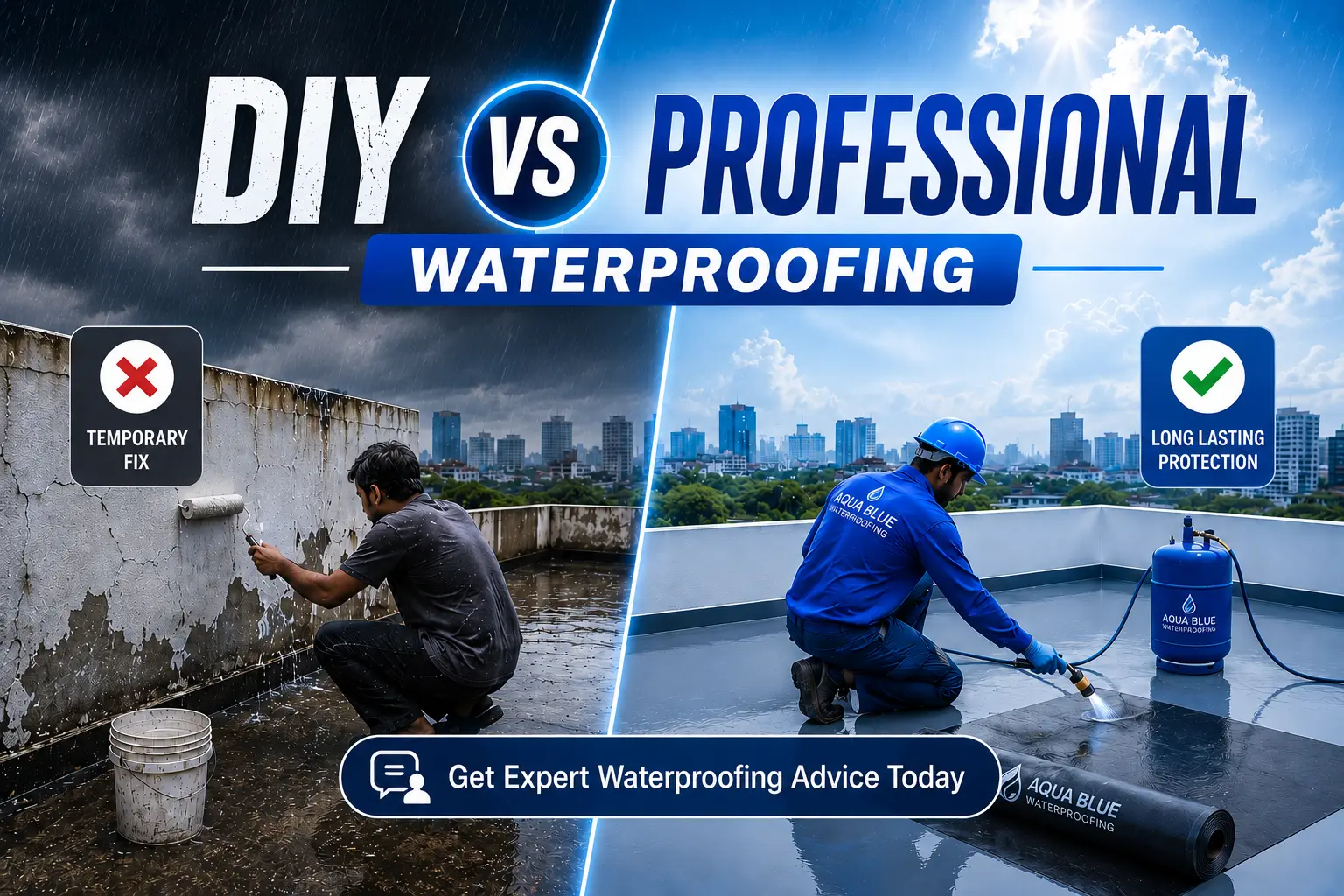
DIY Waterproofing vs Professional Waterproofing in Bangalore: What Actually Works This Monsoon?
Every monsoon, thousands of homeowners in Bangalore face the same annoying problem: ugly, damp patches that show up on walls, making the paint bubble and peel. It can be very stressful to watch water ruin your beautiful rooms, and it is natural to want a quick fix. To save money, many people head to a local hardware store to buy DIY sealants or waterproof paints. However, before you spend your time and money, it is important to know the real difference between a quick weekend DIY patch and hiring a professional waterproofing service. This guide will show you what actually works against heavy rains so you can keep your home completely dry this monsoon. 📞 Call Aqua Blue Waterproofing Today for a Professional Inspection: +91 88920 26121 1-Minute Summary DIY options work well for small, simple fixes like filling tiny surface cracks or sealing gaps around your windows. However, you need professional waterproofing for serious issues like deep wall damage, recurring wet patches, or active water leaks. Fixing these problems for good requires finding the exact source of the leak, cleaning the surface properly, and letting the specialized chemicals dry correctly. Investing in expert help before the heavy rains start will save you from spending a lot of money on major structural repairs later on. Table of Contents What Is DIY Waterproofing and When Does It Work? How Does Professional Waterproofing Work? DIY vs Professional Waterproofing: Key Differences Can DIY Waterproofing Stop Seepage During Bangalore Monsoon? Which Areas Usually Need Professional Waterproofing Instead of DIY? Why Does DIY Waterproofing Often Fail During Bangalore Monsoon? What Is the Best Professional Waterproofing Solution for Recurring Wall Leakage in Bangalore? Why Do Bangalore Property Owners Choose Aqua Blue Waterproofing? Frequently Asked Questions Which Is the Better Choice This Monsoon – DIY or Professional Waterproofing? What Is DIY Waterproofing and When Does It Work? It refers to surface treatments that homeowners apply independently without specialized machinery. These retail products typically include standard acrylic waterproof coating liquids, silicone sealants, and premixed cementitious crack fillers bought at neighborhood hardware outlets. Which Minor Repairs Can Homeowners Handle? Capable homeowners can successfully manage minor, surface-level jobs. This includes filling small hairline cracks around window frames, replacing old bathroom tile grouting, or applying a basic water-repellent sealer over small, dry masonry sections. What Are the Limitations of DIY Waterproofing? Retail products only create a thin surface layer. They are not strong enough to handle heavy water pressure, which is the physical force of water pushing outward from deep inside the concrete blocks. If your dampness is coming from an outside leak or a broken pipe hidden in the wall, a simple surface coating will always bubble up and peel away. How Does Professional Waterproofing Work? How does professional waterproofing work? Unlike cosmetic applications, it is a multi-step engineering repair designed to create an unbreakable, deep-set moisture barrier. Professional contractors utilize industrial moisture meters, specialized pressure grouting pumps, and advanced elastomeric polymer systems. Why Is Surface Preparation So Important? A professional barrier will fail if applied over weak, compromised masonry. Professional waterproofing services start by mechanical grinding, removing loose plaster, cleaning out efflorescence salts, and exposing bare concrete to ensure optimal chemical adhesion. How Does the Curing Process Improve Durability? Professional waterproof coatings need time to dry completely without any interruption. This drying process lets them form a flexible, rubber-like shield. When put on correctly, these materials bind tightly with the concrete. This allows the building to naturally expand and contract with changing weather without breaking the leak-proof seal. DIY Waterproofing vs Professional Waterproofing Bangalore – What Are the Key Differences? Choosing between these methods involves analyzing long-term value, raw performance, and corporate warranties. Evaluation Metric DIY Waterproofing Approach Professional Waterproofing Services Upfront Cost Lower material expenditures Higher initial labor and material cost Required Expertise Basic household tool usage Advanced structural engineering knowledge System Durability Short-term (typically 6 to 12 months) Long-term protection (7 to 10+ years) Service Warranties None available on application performance Dependable written material and labor warranties Target Problem Types Minor surface cracks and dry boundaries Heavy structural seepage and active leakage Long-Term Utility Requires frequent recurring applications Permanent solution protecting structural concrete Which Option Saves More Money Over Time? While a retail kit appears highly budget-friendly upfront, reapplying products every single season quickly adds up. Resolving the issue correctly the first time prevents repetitive spending on wall plastering and decorative paints. Which Option Provides Better Long-Term Protection? Professional contractors use commercial-grade elastomeric polymers that stretch across developing structural cracks, providing comprehensive, unbroken defense year after year. Can DIY Waterproofing Stop Seepage During Bangalore Monsoon? Many homeowners ask, “Can DIY waterproofing stop seepage?” The answer depends on the severity of the problem. DIY waterproofing products like waterproof coatings or crack fillers may provide temporary relief for small hairline cracks or minor surface issues. However, they are usually not enough to fix recurring seepage caused by deeper structural defects or prolonged moisture exposure. During the Bangalore monsoon, continuous rainfall can force water through hidden cracks, damaged joints, and weak waterproofing layers. As a result, damp walls, ceiling stains, and water leakage often return even after a DIY repair. Is DIY Waterproofing Enough for Monsoon Seepage in Bangalore? In most cases, DIY waterproofing is not enough for monsoon seepage in Bangalore. Heavy rains and constant moisture can expose underlying issues that surface-level treatments cannot address. If seepage keeps coming back, a professional inspection is the better solution. When Does Seepage Require Expert Intervention? Some minor dampness can be managed with basic maintenance, but serious seepage needs professional attention. You should call an expert if you notice any of these signs: Peeling or Crumbling Plaster: Wet walls can cause plaster to crack, peel, or fall off. Ceiling Leaks: Water stains, dripping ceilings, or puddles indoors may indicate a serious waterproofing issue. Mold Growth: Constant moisture can lead to mold on walls, which may damage your home and affect indoor air quality. Leaks Around Bathrooms or Pipes: Damp spots near
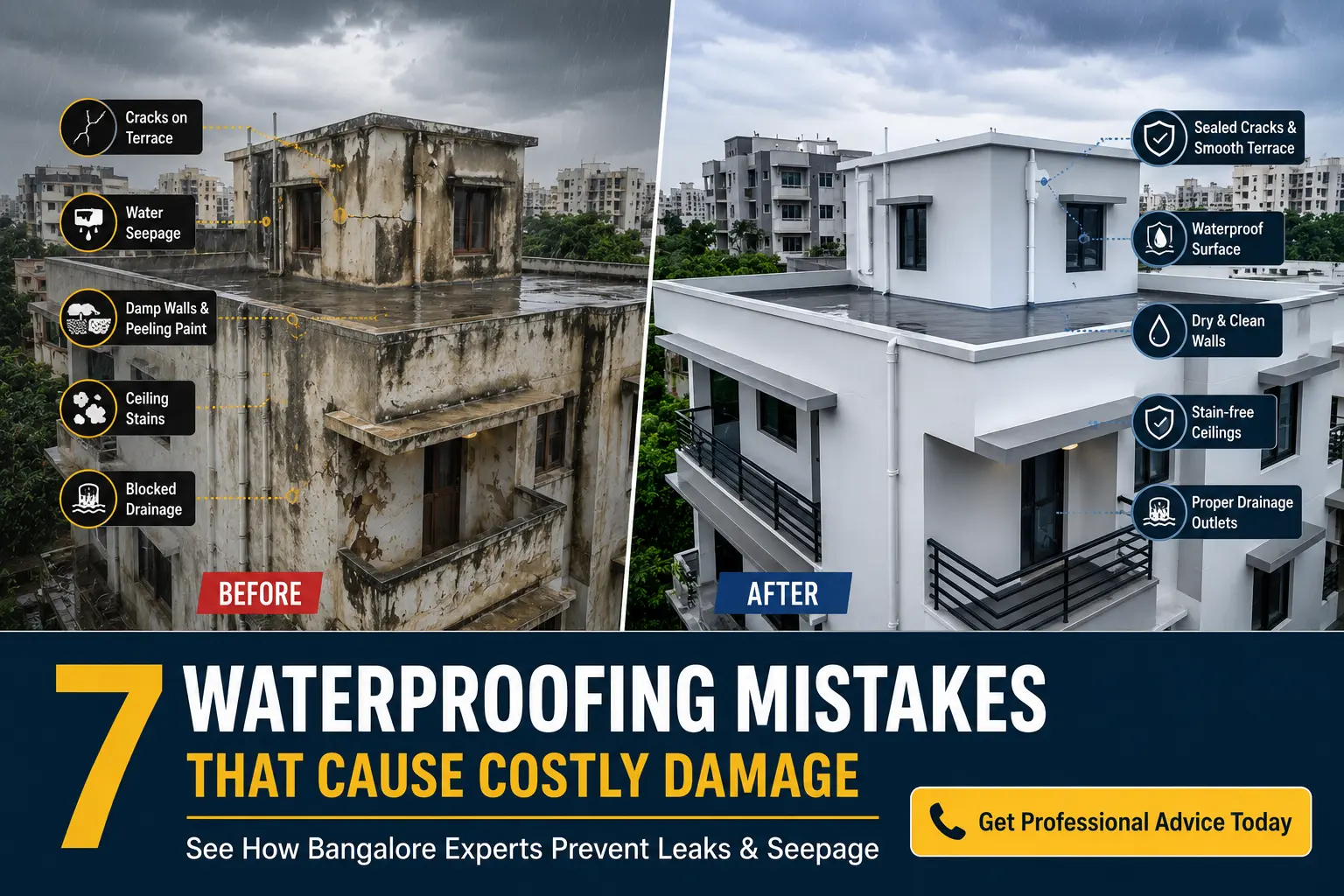
Common Waterproofing Mistakes in Bangalore and How Experts Prevent Them
Water leakage, damp walls, and seepage are common problems faced by many homeowners in Bangalore, especially during the monsoon season. At Aqua Blue Waterproofing, we often find that recurring leakage issues are not caused by rain alone but by mistakes made during waterproofing or delayed maintenance. From using the wrong materials to overlooking small cracks, these errors can lead to expensive repairs, peeling paint, mold growth, and structural damage over time. The good news is that most of these problems are preventable. In this guide, we’ll explore the most common waterproofing mistakes Bangalore property owners make and explain how experts prevent them to ensure long-lasting protection for homes, apartments, and commercial buildings. 📞 Call Aqua Blue Waterproofing Today for a Professional Inspection: +91- 88920 26121 Table of Contents 1-Minute Summary Why Do Waterproofing Failures Happen So Often in Bangalore? What Are the Biggest Waterproofing Mistakes Homeowners Make? What Causes Waterproofing Failure in Bangalore Homes? How Can You Choose the Right Waterproofing Method for Your Property? What Are the 7 Most Common Waterproofing Mistakes in Bangalore? Why Are Waterproofing Mistakes More Common in Bangalore Weather? How Can a Waterproofing Inspection in Bangalore Help Avoid Costly Repairs? Why Do Property Owners Choose Aqua Blue Waterproofing Bangalore? Frequently Asked Questions 1-Minute Summary Small waterproofing mistakes can lead to leaks, damp walls, and costly repairs. Ignoring cracks and drainage issues is one of the most common problems. Bangalore’s heavy rains can make existing waterproofing issues worse. Regular inspections help detect problems before they become serious. The right waterproofing method can protect your home and save repair costs. Aqua Blue Waterproofing helps homeowners prevent leakage and water damage with expert solutions. Why Do Waterproofing Failures Happen So Often in Bangalore? Bangalore’s weather can be challenging for buildings. Sudden heavy rains, high humidity, and long periods of moisture put constant pressure on terraces, walls, balconies, and roofs. Even a small crack or poorly sealed joint can allow water to enter and gradually damage the structure. In many cases, the issue is not the rainfall itself but the mistakes made during waterproofing. Poor surface preparation, incorrect waterproofing methods, low-quality materials, and delayed maintenance are some of the most common reasons waterproofing systems fail. Understanding what causes waterproofing failure helps homeowners take preventive action before leaks become serious problems. By avoiding common waterproofing mistakes Bangalore property owners often make, you can protect your home from seepage, damp patches, peeling paint, and expensive repair work in the future. What Are the Biggest Waterproofing Mistakes Homeowners Make? Many leakage problems start because of simple mistakes that are easy to overlook. Some of the common waterproofing mistakes Bangalore homeowners make include choosing the wrong waterproofing method for the problem area, skipping proper surface preparation before application, delaying repairs until the monsoon season, hiring inexperienced contractors based only on price, and ignoring regular waterproofing inspections. While these issues may seem minor at first, they can lead to water seepage, damp walls, peeling paint, and costly structural repairs over time. Understanding these mistakes is the first step toward protecting your home from long-term water damage. What Causes Waterproofing Failure in Bangalore Homes? Many homeowners wonder what causes waterproofing failure even after investing in repairs. In most cases, the problem is not the waterproofing material itself but mistakes made during installation, maintenance, or planning. Bangalore’s Heavy Monsoon Impact Bangalore receives heavy rainfall during the monsoon, and continuous exposure to moisture puts extra pressure on terraces, walls, balconies, and roofs. Even small cracks can allow water to seep into the structure over time. Poor Workmanship One of the most common waterproofing mistakes Bangalore property owners face is poor application. Improper surface cleaning, incorrect coating thickness, or rushed work can reduce the effectiveness of the waterproofing system. Wrong Product Selection Different areas require different waterproofing solutions. Using the same product for terraces, bathrooms, and external walls often leads to premature failure and recurring leakage issues. Lack of Maintenance Waterproofing is not a one-time task. Ignoring minor cracks, blocked drains, or damaged sealants can allow water to enter and gradually weaken the structure. Regular inspections and timely repairs help ensure long-lasting protection and prevent costly water damage. How Can You Choose the Right Waterproofing Method for Your Property? Choosing the right waterproofing solution depends on the area affected and the type of water leakage problem. Using the wrong method can lead to recurring seepage and unnecessary repair costs. Terrace Waterproofing Terraces are constantly exposed to rain and sunlight, making them one of the most vulnerable areas for water seepage. Flexible waterproof coatings and crack-filling solutions are commonly used to protect terraces from leakage and water ponding. Bathroom Waterproofing Bathrooms experience daily water exposure. Proper waterproofing beneath tiles and around pipe joints helps prevent leakage into adjacent rooms and lower floors. External Wall Waterproofing External walls face direct rain and moisture throughout the year. Waterproof exterior coatings and crack-sealing treatments help prevent damp patches, peeling paint, and water penetration. Water Tank Waterproofing Overhead and underground water tanks require specialized waterproofing materials that can safely withstand constant water contact. Proper waterproofing helps prevent leakage, cracks, and water loss. Understanding how to choose the right waterproofing method is essential for long-term protection. A professional inspection can help identify the root cause of leakage and recommend the most effective solution for your property. What Are the 7 Most Common Waterproofing Mistakes in Bangalore? Ignoring Small Cracks Until Monsoon Starts Small cracks may look harmless, but they can allow rainwater to seep into walls and ceilings during monsoon, leading to costly damage. Choosing Waterproofing Based Only on Cost Cheap waterproofing solutions often fail quickly. Always consider quality, durability, and expertise, not just price. Applying Waterproofing on an Unprepared Surface Dust, moisture, and loose materials can prevent waterproof coatings from bonding properly, reducing their effectiveness. Using the Wrong Waterproofing Method Terraces, bathrooms, walls, and water tanks need different waterproofing solutions. Using the wrong method can cause repeated leakage issues. Ignoring Drainage and Water Ponding Blocked drains and standing water can damage waterproof
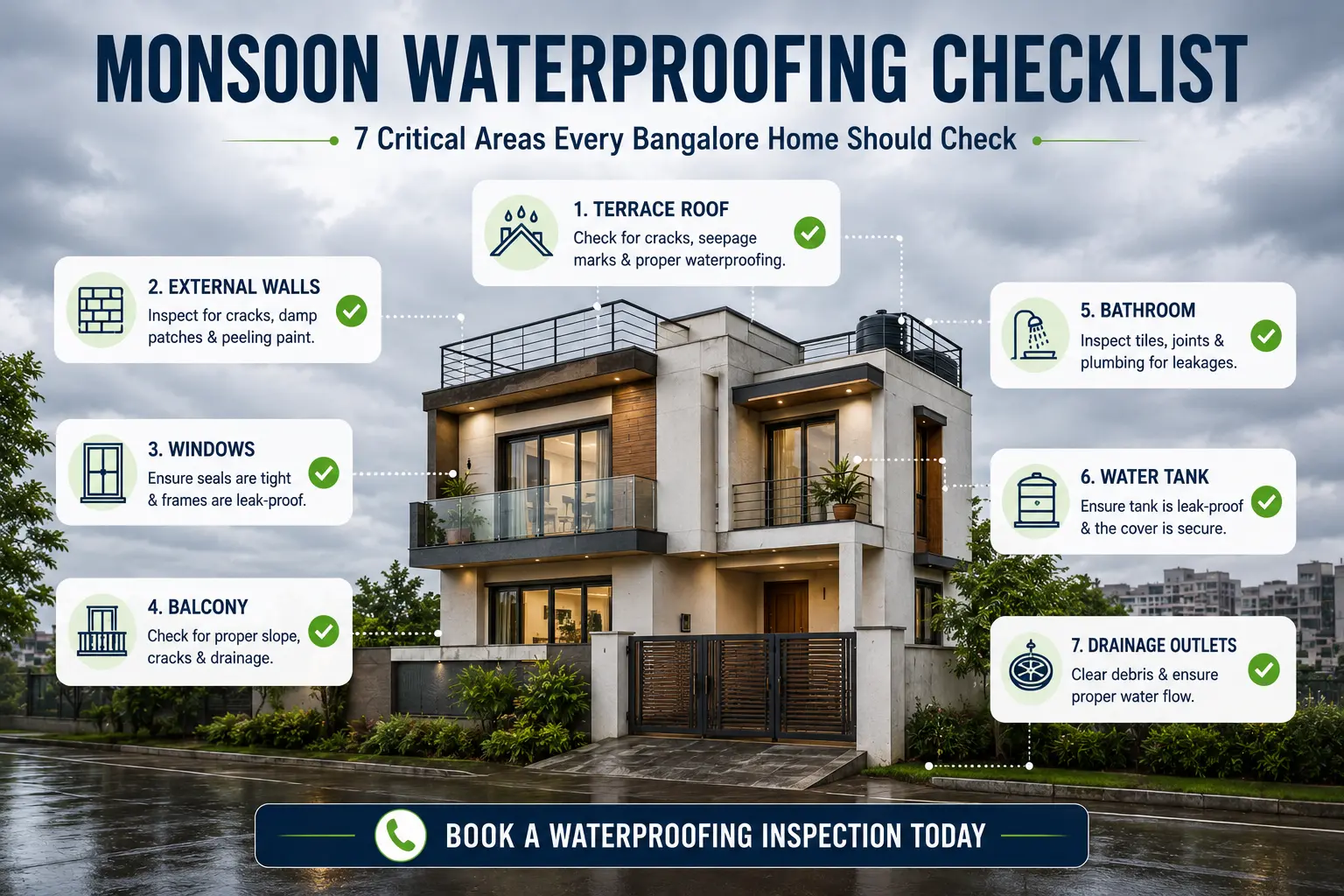
Monsoon Waterproofing Checklist for Bangalore Homes: 7 Critical Areas to Fix Right Now
Every year, many homeowners in Bangalore face problems like ceiling leaks, damp walls, peeling paint, and water seepage during the monsoon season. Unfortunately, most people notice these issues only after heavy rains begin. By then, water may have already entered the structure and caused damage that is expensive to repair. At Aqua Blue Waterproofing, we believe prevention is always better than repair. Whether you own an independent house, live in an apartment, or manage a residential community, checking your property before the rainy season can save you from major leakage problems later. This simple monsoon waterproofing checklist Bangalore guide will help you identify the most common trouble spots in your home and fix them before the rains arrive. By taking a few preventive steps now, you can keep your property safe, dry, and protected throughout the monsoon season. 📞 Need a Fast Diagnostic Check? Call aqua blue waterproofing Today: + 91- 88920 26121 1-Minute Summary Why It Matters: Bangalore’s heavy monsoon rains can cause leaks, damp walls, peeling paint, and seepage through small cracks if your home is not properly protected. 7 Areas to Check: Inspect your terrace, external walls, windows, balconies, bathrooms, water tanks, and drainage outlets before the rainy season. Save on Repair Costs: Fixing small cracks and waterproofing issues early is much more affordable than repairing major water damage later. Get Expert Help: Aqua Blue Waterproofing offers professional inspections and waterproofing solutions to help keep your home safe and dry during the monsoon. Table of Contents Why Every Bangalore Home Needs a Monsoon Waterproofing Checklist Which Areas of Home Leak During Monsoon in Bangalore Most Often? What Areas Should Be Waterproofed Before Monsoon? What Are the 7 Critical Areas to Check Before Monsoon? How Can You Perform a Waterproofing Inspection in Bangalore Before Monsoon? What Happens If You Ignore These Waterproofing Issues Before Monsoon? When Should You Call a Waterproofing Expert Instead of DIY Repairs? Why Homeowners Choose Aqua Blue Waterproofing Bangalore Real Customer Experience – Pre-Monsoon Waterproofing Saved a Bangalore Villa What Waterproofing Checks Do Most Bangalore Homeowners Forget? Frequently Asked Questions About Monsoon Waterproofing in Bangalore Conclusion Why Every Bangalore Home Needs a Monsoon Waterproofing Checklist Bangalore’s weather has become more unpredictable, with sudden heavy rains and long periods of rainfall. When water stays on terraces, roofs, or walls for a long time, it puts pressure on the building surface. Over time, even small cracks can allow water to seep inside, leading to damp walls, peeling paint, ceiling leaks, and other moisture-related problems. Using a systematic monsoon waterproofing checklist Bangalore owners can trust ensures you don’t miss hidden vulnerabilities. Taking time to inspect your building envelope during dry periods allows your structures to dry fully, ensuring that any protective sealants applied will grip the substrate properly. This simple step serves as your first line of defense, keeping your family safe and dry all year round. Which Areas of Home Leak During Monsoon in Bangalore Most Often? When preparing your property, it’s a common mistake to focus only on the roof. In reality, rainwater attacks a building from all angles. Bangalore homes frequently face a variety of distinct water entry points: Terrace Seepage: Pooling water slowly makes its way through weathered concrete and structural joints. External Wall Moisture: Heavy winds drive rain straight against exterior brickwork, resulting in white, powdery salt tracks (efflorescence) indoors. Window Leakage: Water slips past deteriorated perimeter sealants and enters directly through the window frame junctions. Balcony Water Ingress: Blocked floor drains cause rain to spill backward over door thresholds and enter your living room. Ceiling Seepage: Broken tile joints on rooftops let water seep downward, damaging expensive plasterwork below. What Areas Should Be Waterproofed Before Monsoon? To successfully protect your home, you need to shift from a reactive mindset to a proactive one. Instead of waiting for a leak to show up, homeowners should proactively treat all exterior, horizontal, and vertical surfaces that come into direct contact with rainwater. Understanding what areas should be waterproofed before monsoon begins allows you to schedule repairs during the warm, dry months. This timing ensures that your liquid polymer coats and crystalline sealants can dry completely, giving your property a tough, seamless barrier that stands up to the heaviest storms. What Are the 7 Critical Areas to Check Before Monsoon? 1. Terrace & Roof Surface Your roof bears the full force of every heavy storm. Over time, continuous exposure to hot sun and cold rain causes concrete to expand and contract, leading to fine cracks. What to inspect: Check for hairline cracks, hollow-sounding floor tiles, broken grout lines, and areas where water pools instead of draining. The solution: Clear away loose debris, route out cracks, fill them with high-grade polyurethane sealant, and apply a multi-layered elastomeric terrace waterproofing Bangalore coating system. 2. External Walls Exterior walls are continuously exposed to shifting weather conditions. If your outside walls are covered in tiny hairline cracks, wind-driven monsoon rains will force water straight into your living spaces. What to inspect: Look for small surface fissures, peeling paint patches, and green algae growth along exterior surfaces. The solution: Use an elastomeric, flexible crack filler to seal exterior fissures, followed by a thick, water-resistant anti-carbonation coating for long-lasting protection. 3. Windows & Window Joints Window frames are a frequently overlooked source of water leaks during heavy rain. Over time, the silicone sealants exposed to UV rays dry out, shrink, and split apart. What to inspect: Look for gaps where your window frames meet the outer wall, along with hardened or peeling silicone caulk lines. The solution: Completely scrape away old, brittle caulk, wipe the area clean, and apply a fresh bead of high-performance, weather-proof polyurethane or silicone sealant. 4. Balconies & Utility Areas Open balconies and service utility areas collect large volumes of rainwater in a very short amount of time during sudden downpours. What to inspect: Check for crumbling tile grout lines, cracked floor tiles, and damp spots along the base of connecting interior walls. The solution: Rake
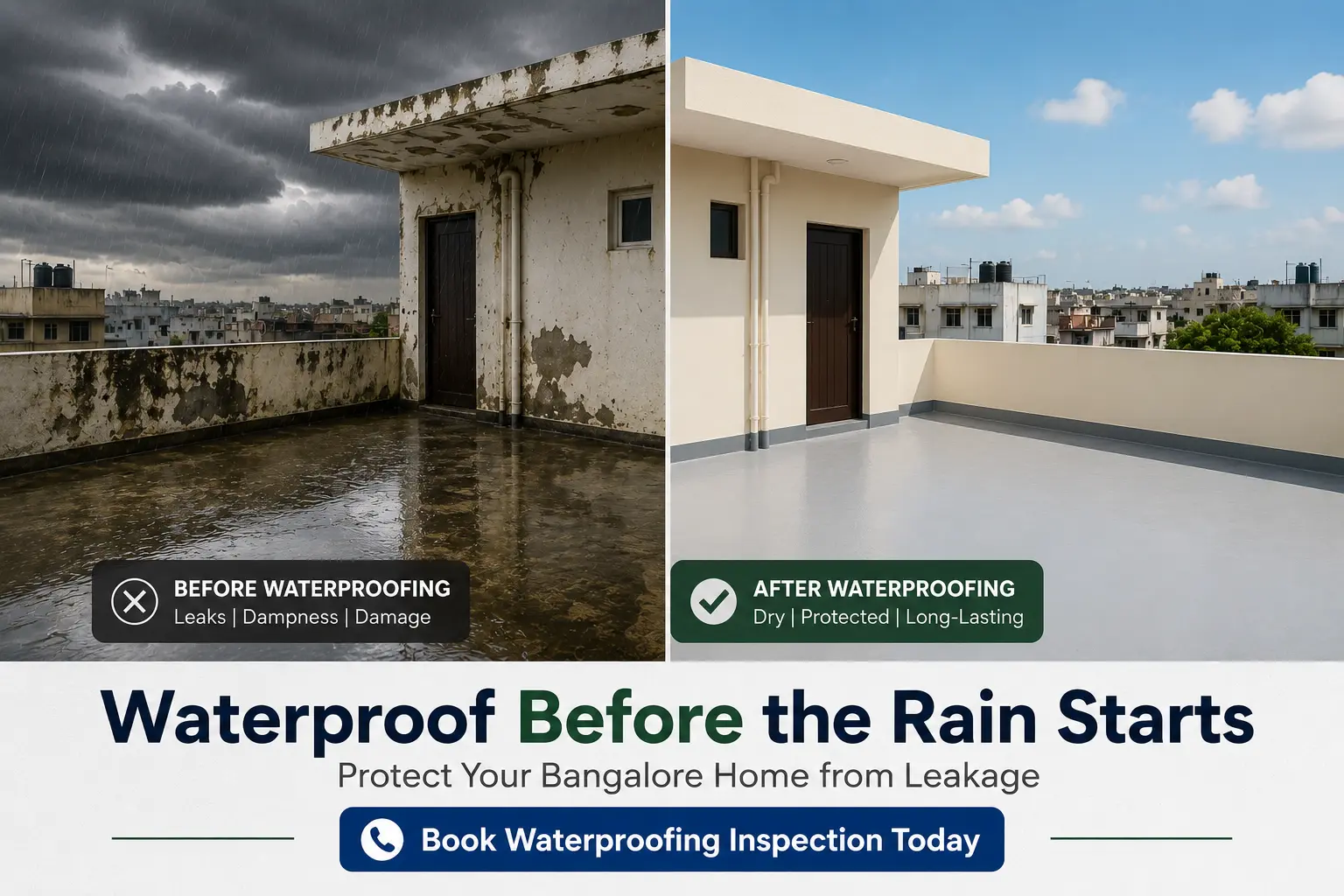
Best Time to Do Waterproofing in Bangalore: Before, During or After Monsoon?
Every year, thousands of Bangalore homeowners discover brown stains on their ceilings, peeling paint on walls, and damp floors — all after the monsoon has already hit. The unfortunate truth? Most of this damage was completely preventable. The best time to do waterproofing in Bangalore is before the rains arrive, not after your ceiling starts dripping. At Aqua Blue Waterproofing, we want to help you protect your property before the weather takes a turn. Whether you are an independent homeowner, villa owner, property manager, or commercial real estate operator in Bangalore, this guide covers everything you need to know: the right season, the right areas, the warning signs, and why pre-monsoon waterproofing is always the smartest investment. 📞 Call Aqua Blue Waterproofing Now: +91- 88920 26121 1-MINUTE SUMMARY Bangalore’s monsoon (June–September) brings heavy, unpredictable rainfall that causes terrace leakage, damp walls, and structural damage. Pre-monsoon months (February–May) offer the ideal dry, warm conditions for waterproofing coatings to bond and cure properly. Waiting until you see visible leakage means damage is already done. Aqua Blue Waterproofing recommends inspecting and waterproofing your property every year before June. TABLE OF CONTENTS Why Timing Matters for Waterproofing in Bangalore Homes What Is the Best Season for Waterproofing in Bangalore? Why Waterproofing Before Monsoon Matters Can Waterproofing Be Done During Rainy Season? Which Areas Should Be Waterproofed Before Monsoon? What Happens If You Delay Waterproofing Work? How to Know Your Home Needs Waterproofing Why Choose Aqua Blue Waterproofing Bangalore? Real Case Example – Pre-Monsoon Waterproofing Saved a Bangalore Villa Before vs During vs After Monsoon – Which Is Best? Frequently Asked Questions Conclusion Why Timing Matters for Waterproofing in Bangalore Homes Bangalore’s weather is deceptive. Unlike coastal cities, it does not have a long, predictable build-up to monsoon season. Rains can arrive suddenly in June — and when they do, they are intense. The city’s rapid urban growth has also worsened waterlogging and moisture retention on rooftops and walls. The core problem is this: most homeowners wait until they see visible leakage before acting. By then, water has already seeped through the concrete, damaged the reinforcement bars, and started degrading the interior. Repairing this damage costs significantly more than preventive waterproofing. Common signs of delayed action include: Terrace leakage staining bedroom and kitchen ceilings Damp walls causing paint to bubble and peel Fungal growth in bathrooms and utility areas Hairline cracks expanding after even light rain What Is The Best Season For Waterproofing in Bangalore? Bangalore experiences three broad weather phases that directly affect waterproofing quality: Season Months Humidity Suitability Summer / Pre-Monsoon February – May Low to Moderate Ideal – best time for the coating to stick tightly and dry perfectly. Monsoon June – September Very High Risky – coatings do not cure properly Post-Monsoon / Winter October – January Moderate Possible – but damage may already exist Key Insight: The pre-monsoon months of March, April, and May offer the best season for waterproofing in Bangalore. Surfaces dry faster, temperatures are stable, and waterproof coatings cure within the recommended time window — ensuring long-lasting protection. Why Waterproofing Before Monsoon Matters For Bangalore Homes Pre-monsoon waterproofing is not just a recommendation — it is the most cost-effective way to protect your property. Here is why: Water seepage pressure increases dramatically during Bangalore’s heavy monsoon rains Existing hairline cracks absorb moisture and expand — damaging the concrete structure below Once water enters a terrace slab, it corrodes steel reinforcement bars, weakening the entire structure Interior ceilings, electrical fittings, and flooring suffer expensive secondary damage Can Waterproofing Be Done During Rainy Season In Bangalore? This is one of the most common questions we receive — and the honest answer is: it depends on the type of work and the severity of the problem. Emergency waterproofing — such as applying crack sealants or temporary roof patches — can be done during light rain breaks. However, full waterproof coating application during active monsoon conditions is risky and often ineffective. Factor Before Monsoon During Monsoon Coating Adhesion Excellent – dry surface Poor – moisture interference Drying / Curing Time Fast – 24 to 48 hours Slow or incomplete Long-Term Durability High – full protection cycle Low – temporary at best Risk of Rework Minimal High Cost Efficiency Best value Expensive due to failure rate Which Areas Of Your Property Should Be Waterproofed Before Monsoon? Not all parts of a building are equally vulnerable. During Bangalore rains, the following areas are the first to fail: Terrace & Roof Areas The terrace is the most exposed surface of any building. Flat RCC terraces are especially prone to water pooling. Cracks in the waterproof membrane even hairline ones — allow water to penetrate the slab over time. Apply liquid-applied or cementitious waterproof coatings Ensure proper slope and drainage correction before coating Inspect expansion joints and parapet wall junctions External Walls Bangalore’s driving rain — especially in the southwest monsoon , hits external walls at an angle. Unpainted or poorly painted walls absorb moisture rapidly, leading to efflorescence and damp patches indoors. Apply exterior waterproof elastomeric paint or coating Seal all window frames and door junctions Bathrooms & Utility Areas Internal leakage from bathrooms is the most common source of ceiling damage in apartments and independent homes. Grout cracks and failed tile adhesive are the typical culprits. Waterproof floors and walls up to at least 600mm height before tiling Use crystalline waterproofing compounds for long-term protection Water Tanks & Basements Overhead water tanks develop cracks due to thermal expansion. Basements in Bangalore’s clay-rich soil face hydrostatic pressure during heavy rains, causing seepage through walls and floors. Inspect and re-coat overhead and underground tanks annually Apply negative-side waterproofing treatments for basement walls What Happens If You Delay Waterproofing Work? Delaying waterproofing is one of the most expensive decisions a homeowner can make. Here is a realistic timeline of what happens when pre-monsoon waterproofing is skipped: Month 1 (Monsoon starts): Small crack allows water ingress — no visible damage yet Month 2: Ceiling damp patches

How to Detect Water Leakage Source in Your Bangalore Home (Expert Guide)
Imagine waking up to a beautiful Bangalore morning, only to find a damp, discolored patch creeping across your ceiling or a musty smell greeting you in the hallway. For many residents in areas like Indiranagar or Whitefield, this isn’t just a nuisance – it’s a recurring nightmare. Whether it is the relentless pounding of the monsoon or the slow silent drip of a cracked internal pipe, water damage is a stealthy thief of property value. This guide, presented by Aqua Blue Waterproofing, is designed for homeowners, property managers, and RWA members who need to move beyond guesswork. We will delve into water leakage detection in Bangalore, covering everything from identifying early warning signs to the advanced technology we use to pinpoint sources without breaking your walls. Need immediate help? Call Aqua Blue Waterproofing at +91 88920 26121 for a professional inspection. One-Minute Summary The Problem: Bangalore’s high humidity and heavy monsoons exacerbate structural cracks and terrace seepage. Early Signs: Look for peeling paint, musty odors, and sudden spikes in water bills. DIY Detection: Use the water meter test and visual inspections of “wet zones” like bathrooms and terraces. Professional Tools: Experts use thermal imaging and moisture meters for non-invasive detection. The Bottom Line: Early detection can save you 30–50% in long-term repair costs. Table of Contents Early Signs of Hidden Water Leakage Why Detection is Vital Before It Gets Worse Step-by-Step Guide: How to Detect the Source Common Leakage Sources in Bangalore Homes Professional Detection Methods (Thermal Imaging & More) DIY vs. Professional Detection: Comparison Frequently Asked Questions What Are the Early Signs of Hidden Water Leakage in Bangalore Homes? In a bustling city like Bangalore, we often overlook small changes in our environment. However, water leakage detection in Bangalore starts with your senses. Why Do Walls Get Damp During Bangalore Monsoon? Bangalore’s monsoon season (June to October) brings high humidity levels. When combined with poor external waterproofing, rainwater seeps through micro-cracks in the building’s facade. If you see dampness on the interior side of an outer wall, it is a clear sign that your external protective coating has failed. Peeling Paint or Wallpaper: Moisture trapped behind the surface causes the bond to fail. Musty Odors: A persistent earthy smell usually indicates mold growing behind drywall or under flooring. Discolored Patches: Yellow or brown staining on the ceiling often points to terrace seepage or a leaking bathroom upstairs. Why Is Water Leakage Detection Important Before It Gets Worse? Ignoring a small leak today can lead to a structural crisis tomorrow. How to detect hidden water leakage in Bangalore homes is a skill that pays for itself. Structural Damage: Water corrodes TMT bars (steel reinforcement) inside concrete. Once the steel rusts, it expands, causing the concrete to “spall” or break away. Health Risks: Mold and mildew are major triggers for respiratory issues and allergies, especially in Bangalore’s cooler, damp climate. Financial Impact: According to industry standards, moisture-related damage can increase repair costs by 30–50% if ignored. A simple crack injection today is significantly cheaper than a full slab replacement next year. How to Detect Water Leakage Source in Your Home (Step-by-Step Guide) If you suspect a leak, follow these steps to find the culprit: 1. Check Damp Spots & Paint Peeling Trace the dampness to its highest point. Water gravity dictates that the source is usually above or slightly to the side of the visible patch. 2. Inspect Terrace & Roof Area Check for stagnant water or blocked drainage pipes. In Bangalore homes, “dead pockets” on terraces often accumulate silt and water, leading to seepage. 3. Look for Plumbing Leak Signs Check under sinks and behind toilets. If the wall is damp near a plumbing line, the joint might be compromised. 4. Monitor Water Meter for Hidden Leaks Turn off all taps and appliances (washing machines, etc.). Check your water meter. If the dial is still moving, you have a hidden leak in your internal piping. 5. Check Bathroom & Wall Joints Inspect the grout between tiles. Cracked grout allows water to seep into the floor slab every time you take a shower. What Are the Most Common Leakage Sources in Bangalore Homes? Every city has its unique challenges. In Bangalore, we frequently see: Terrace Cracks: Thermal expansion due to the city’s fluctuating day/night temperatures causes concrete to expand and contract, creating cracks. External Wall Seepage: Lack of high-quality weather-proof paint. Bathroom Leakage: Faulty “P-traps” or sunken slab waterproofing failure. Pipe Leaks: High mineral content in some Bangalore borewell water can lead to pipe corrosion over time. What Methods Do Professionals Use for Water Leakage Detection in Bangalore? At Aqua Blue Waterproofing, we believe in “measure twice, cut once.” We use advanced technology to ensure we don’t break walls unnecessarily. Thermal Imaging Leak Detection Infrared cameras detect temperature differences. Since water-saturated areas are cooler than dry ones, we can “see” the water path behind your tiles. Moisture Meter Testing This device measures the moisture content of various building materials, helping us confirm if a wall is truly drying out or still absorbing water. Pressure Testing for Pipes We pressurize your plumbing lines to see if they hold steady. A drop in pressure confirms a leak in the hidden internal pipes. DIY vs. Professional Water Leakage Detection – What Works Better? Factor DIY Detection Professional (Aqua Blue) Accuracy Low (Visual only) High (Data-driven) Cost Free initially Approx. ₹2,500 – ₹5,000 (Inspection) Detection Depth Surface only Hidden/Deep leaks detected Long-term Savings Low High (Prevents recurring issues) Frequently Asked Questions 1. How to detect hidden water leakage in Bangalore homes? A: Start with a water meter test and check for “hot spots” or damp smells. For hidden leaks, professional thermal imaging is the most effective method. 2. What is the fastest way to find a leakage source? A: The fastest way is to isolate your plumbing valves one by one. If the meter stops moving after closing a specific valve, the leak is in that zone. 3. Is water leakage detection expensive in
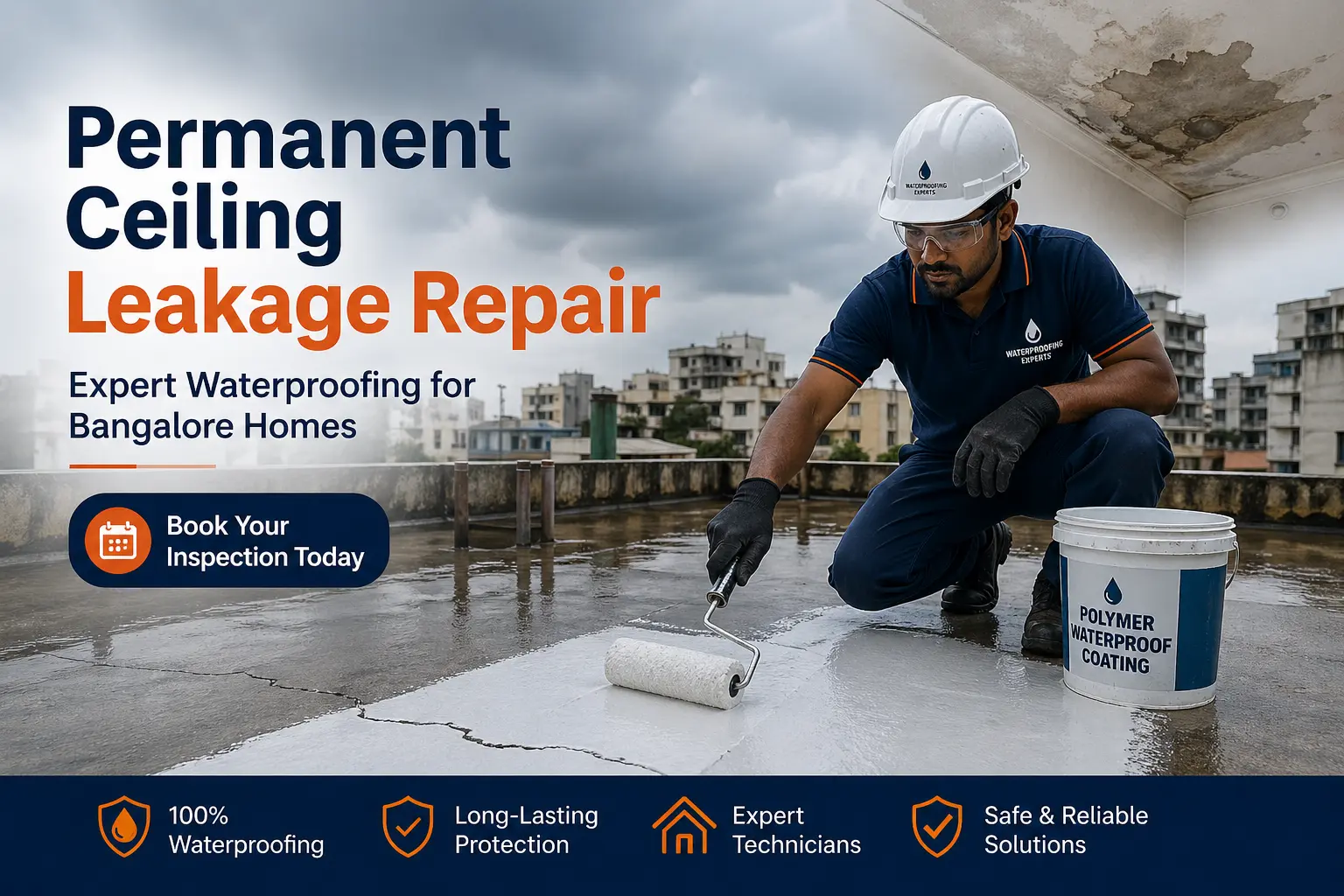
Ceiling Leakage Repair in Bangalore: Expert Guide for Homes
With heavy rain hitting Bangalore this 2026 season, many homeowners are worried about leaky ceilings. Whether it’s a slow drip on your floor or wet patches on your walls, you shouldn’t wait to fix it. Water damage spreads fast and can quickly lead to dangerous electrical problems or weak structures. Ignoring these signs isn’t just an aesthetic issue; it can lead to electrical hazards and weakened structures. This guide is designed to help you understand why leaks happen and how to achieve a permanent ceiling leakage repair in Bangalore. At Aqua Blue Waterproofing, we combine years of local experience with advanced technology to keep your home safe and dry. Stop the Drip Today! 📞 Call Aqua Blue Waterproofing: +91 88920 26121 One-Minute Summary Ceiling leaks in Bangalore are usually caused by thermal expansion, poor terrace drainage, or plumbing issues from the floor above. Early signs include peeling paint and musty smells. To fix this permanently, you need a combination of crack filling, drainage correction, and modern polymer coatings. Aqua Blue Waterproofing offers expert inspections and long-lasting solutions tailored to the city’s unique climate. Table of Contents Why Ceiling Leakage Happens in Bangalore Early Signs You Shouldn’t Ignore Why Leaks Get Worse in the Rain How to Repair Ceiling Leakage for Good Terrace and Crack Sealing Treatments Why Modern Coatings Beat Old Methods Finding the Right Experts in Bangalore Our Specialized Bangalore Expertise A Real Case Study FAQs: Common Questions from Bangalore Homeowners Why Does Ceiling Leakage Happen in Bangalore Homes? Understanding what causes ceiling seepage is the first step toward a fix. Bangalore’s weather plays a massive role. Thermal Expansion: The “heat-and-rain” cycle in Bangalore causes concrete to expand and shrink rapidly, creating micro-cracks. Terrace Issues: If your building’s roof doesn’t have a proper slope, water stagnates and eventually seeps through the slab. Plumbing Failures: In apartments, leaks often stem from “sunken slabs” (the area under bathrooms) in the flat above you. Construction Gaps: Rapid construction in areas like Sarjapur can sometimes leave gaps in the concrete density, making it porous. What Are the Early Signs of Ceiling Leakage You Shouldn’t Ignore? A ceiling leakage fix is much cheaper when done early. Watch for: Damp Patches: Dark, moist circles that grow after a heavy downpour. Paint Peeling: When moisture gets trapped, it pushes the paint off the surface. Water Stains: Yellow or brown outlines on your white ceiling. Moldy Odors: A persistent earthy smell usually means mold is growing behind your false ceiling. Why Ceiling Leakage Gets Worse During Bangalore Monsoon? During the monsoon, the sheer volume of water creates “hydrostatic pressure.” If your roof leakage repair in Bangalore wasn’t done correctly, the constant weight of standing water on the terrace forces moisture into existing cracks. This is why a small damp spot in May can become a full-blown drip by July. How to Fix Ceiling Leakage Permanently in Bangalore? A permanent fix requires more than just a patch of white cement. Source Identification: We use moisture meters to see if the leak is from a pipe or the roof. Crack Filling: We use V-groove cutting and polymer-modified mortar to seal cracks. Coating: Applying a high-elasticity membrane that moves with the building. Drainage: Ensuring your rainwater pipes are clear and the roof slope is correct. What Are the Best Solutions for Ceiling Seepage Repair in Bangalore? Terrace Leakage Solution The best way to stop a ceiling leak is from the top. We apply a Waterproof Membrane (like PU or Acrylic) that acts like a raincoat for your building. Crack Sealing Treatment For structural cracks, we use Polymer-based filling. Unlike traditional cement, this doesn’t crack when the building vibrates or the temperature changes. Damp Ceiling Repair If the damage is internal, we use Injection Grouting. We inject a special resin into the ceiling that expands to block water paths without needing to break your roof. Which Waterproofing Method Works Best for Ceiling Leakage? Traditional methods like “brick-bat coba” or simple cement-milk coatings are rigid. They work for a year or two, but they cannot handle Bangalore’s temperature swings. For a modern ceiling leakage fix, we recommend Liquid Applied Membranes (PU or Acrylic). These are: Joint-free: They create one single, seamless sheet over your roof. Flexible: They move with the building. UV Resistant: They don’t break down under the harsh Bangalore sun. Where Can You Find Reliable Ceiling Leakage Repair in Bangalore? Don’t settle for “handyman” fixes. A professional service provides: Pre-repair Inspection: Using tools, not just guesswork. Quality Materials: Using brands like Dr. Fixit, Fosroc, or Asian Paints professionally. Warranty: A guarantee that the leak won’t return next year. Why Choose Aqua Blue Waterproofing for Ceiling Leakage Repair in Bangalore? At Aqua Blue Waterproofing, we don’t believe in “one size fits all.” Local Expertise: We understand Bangalore’s soil and weather patterns. Advanced Techniques: From PU Grouting to Thermal Imaging. Coverage: We serve all of Bangalore, from Whitefield to Electronic City. Real Case Example: Ceiling Leakage Fixed in Bangalore Home Location: Bangalore (Residential Property) The Problem:The homeowner was facing seepage from walls and terrace, especially during heavy rains. Water was entering through cracks and causing damp patches inside the home. Our Solution:At Aqua Blue Waterproofing, we conducted a detailed inspection and: Identified cracks in terrace and wall joints Performed proper surface preparation Applied crack filling treatment Completed polymer waterproof coating on terrace and walls The Result:The waterproofing work was completed smoothly, and even after heavy Bangalore rains, there are no seepage issues at all. The client appreciated the professional approach, quick response, and transparent pricing. ~Leela Ganesh What Do Bangalore Homeowners Ask About Ceiling Leakage Repair? (FAQs) Q1: What causes ceiling seepage in apartments? A: Usually, it’s a failed waterproof layer in the bathroom or balcony of the flat directly above you. Q2: Which waterproofing is best for ceiling leakage? A: Polymer/PU waterproofing is the best for ceiling leakage, because it gives a permanent, flexible, and long-term solution. Q3: How to fix ceiling leakage permanently? A: Identify the source (roof
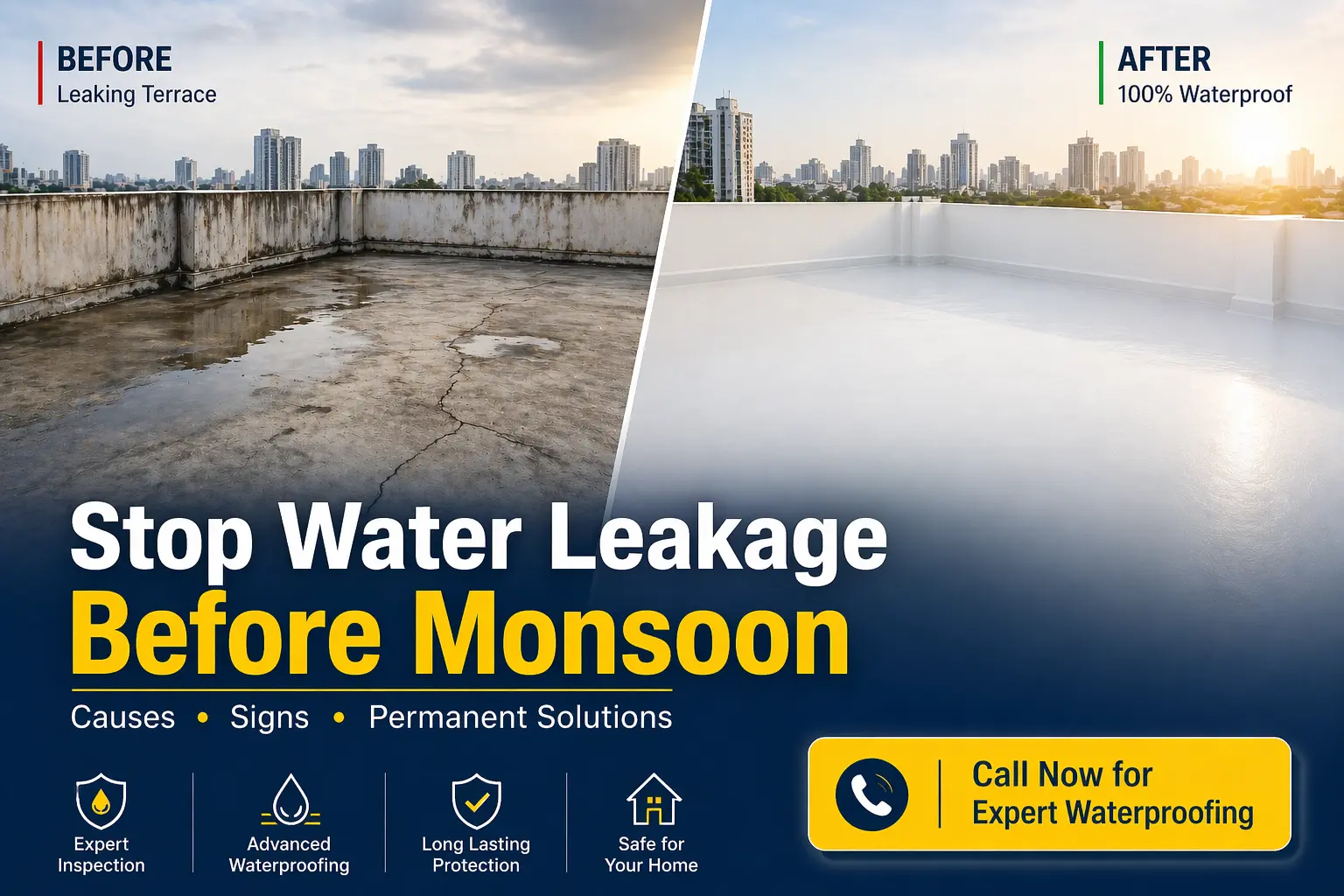
Water Leakage Problems in Bangalore: Causes & Solutions
With the 2026 monsoon season approaching, Bangalore homeowners are facing a familiar foe: persistent seepage. Whether you’re managing a premium RWA in Sarjapur or settling into a new apartment in Indiranagar, ignoring water leakage problems in Bangalore is a gamble you can’t afford to take. Water doesn’t just sit on your walls; it eats away at the very foundation of your investment. At Aqua Blue Waterproofing, we understand that Bangalore’s unique combination of rapid urbanization and intense weather shifts requires more than just a coat of paint; it requires expert engineering. This guide will walk you through why leakages happen, how to spot them, and the professional solutions that actually last. Need Immediate Help? 📞 Call Aqua Blue Waterproofing Today: +91 88920 26121 One-Minute Summary Bangalore’s weather is tough on buildings. The hot sun followed by heavy rain causes walls to expand and shrink, creating tiny cracks that let water in. Whether it’s water pooling on your roof or damp spots on your walls, catching these signs early- like a musty smell or bubbling paint , can save you a fortune. From advanced protective coatings to deep-seal repairs, Aqua Blue Waterproofing offers simple, long-lasting fixes to keep your home dry and safe, no matter how hard it rains. Table of Contents Why Leakage Increases During Bangalore Monsoons Common Causes of Water Leakage Identifying Leakage Problems Early The Risks of Ignoring Water Damage Best Solutions & Waterproofing Methods Preventative Maintenance Tips Why Choose Aqua Blue Waterproofing? Real-World Case Study Frequently Asked Questions (FAQs) Why Do Water Leakage Problems in Bangalore Increase During Monsoon? Bangalore experiences a specific phenomenon where daytime temperatures can be quite high, followed by sudden, heavy evening downpours. Thermal Expansion & Contraction: During the day, building materials expand under the sun. Sudden rain causes them to cool rapidly and contract. This “thermal shock” creates hairline cracks in concrete slabs and external plaster. Water Penetration: Once these cracks exist, Bangalore’s driving rain (often accompanied by high winds) pushes moisture deep into the structure, leading to the water leakage problems in Bangalore that residents dread. Construction Quality: The rapid pace of construction in areas like Sarjapur often leads to inadequate curing of concrete, leaving the structure porous and vulnerable. What Are the Most Common Causes of Water Leakage in Bangalore Buildings? Understanding the source is half the battle won. Here are the primary culprits: Ceiling Leakage Causes Ceiling dampness is often the result of slab cracks or poor curing during the construction phase. In many Bangalore apartments, leaking pipes from the flat above (often in the sunken slab area of bathrooms) are the hidden cause of ceiling patches. Terrace Leakage Causes Flat roofs are common in Bangalore, but they are prone to water stagnation. If the slope is not perfectly directed toward the drainage pipes, water pools and eventually finds its way through the concrete pores. Wall Seepage Causes External walls take the brunt of the monsoon. Why do walls leak during monsoon? Usually, it is due to poor-quality external plaster or the lack of a high-performance weather-shield coating. Cracks around window frames are also a major entry point. How Can You Identify Water Leakage Problems Early? Don’t wait for a flood. Look for these subtle signs: Damp Patches: Darker shades on walls or ceilings that grow after rain. Efflorescence: A white, salty powder on the wall surface. Paint Peeling: If your premium emulsion is flaking off, moisture is trapped behind it. Musty Smell: A persistent “old basement” odor indicates hidden mold growth. Read related blog on: Signs Your House Needs Waterproofing What Happens If You Ignore Water Leakage Problems in Bangalore? Ignoring a leak is a gamble with your safety. Over time, water reaches the internal steel reinforcements (rebars), causing them to rust and expand. This leads to spalling, where chunks of concrete actually fall off. Beyond structural risks, mold growth poses a severe health risk to children and the elderly, triggering respiratory issues and allergies. What Are the Best Solutions for Water Leakage Problems in Bangalore? Damp Walls Solution Bangalore For external walls, we recommend a High-Build Polymer Coating. Unlike regular paint, these coatings are elastic and can bridge cracks up to 2mm wide, moving with the building. Terrace Waterproofing Solutions The gold standard is a Liquid Applied Membrane. This creates a seamless, joint-free layer across your terrace. We also ensure slope correction so water never sits still. Crack Filling & Sealants We don’t just use white cement. We use Polymer-modified mortars and PU sealants that bond with the concrete to provide a permanent seal against water ingress. How to Prevent Water Leakage in Your House Before Monsoon? Inspect the Terrace: Ensure all drain outlets are clear of debris. Seal the Cracks: Use a high-quality sealant for any visible cracks on the exterior. Check Plumbing: Inspect bathroom joints and kitchen sinks for slow drips. Apply Protective Coating: A preventive waterproof coat is 10x cheaper than a post-leakage structural repair. Why Choose Aqua Blue Waterproofing for Leakage Solutions? Aqua Blue Waterproofing isn’t just a service provider; we are your structural partners. We use: Advanced Thermal Imaging: To find leaks without breaking your walls. Customized Chemical Mixes: Tailored for Bangalore’s soil and weather. Warranty-Backed Work: We don’t just fix; we guarantee our results. Real Case Example: Terrace Leakage Fixed in Bangalore A homeowner in Bangalore faced recurring leakage during monsoon due to terrace wall cracks. Water seepage was visible every time it rained, affecting the interior walls. They contacted Aqua Blue Waterproofing, where our team conducted a proper site inspection to identify the root cause. We applied crack filling treatment followed by a professional waterproof coating system to seal the affected area. Result:After multiple rains, the homeowner reported no seepage or leakage, with clear improvement in wall condition. Client Feedback:“I hired Aqua Blue Waterproofing for terrace wall cracks that were causing leakage during rains. They inspected the area properly and applied crack filling and waterproof coating. After a few rains, I can see a clear improvement—no more seepage so far.