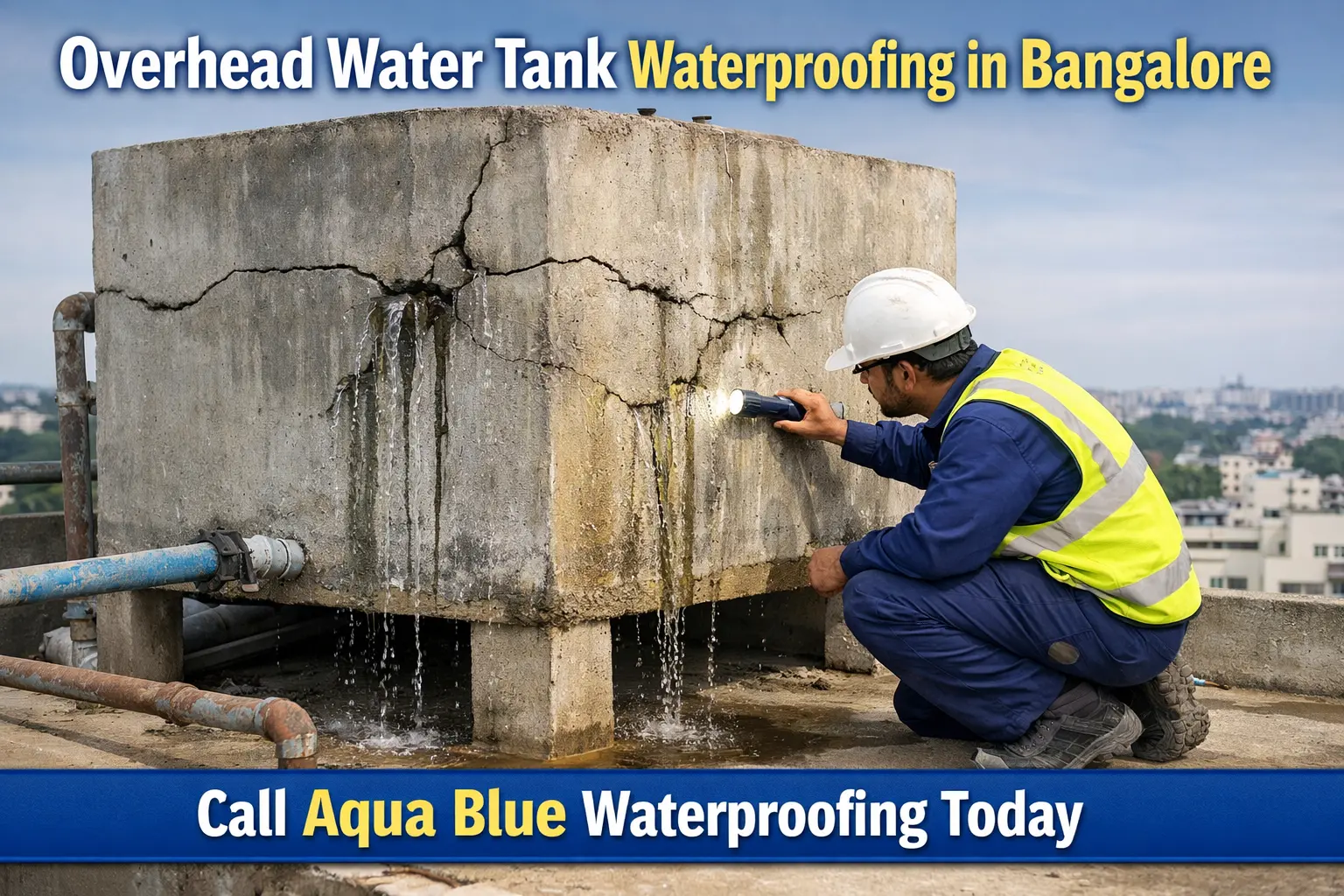
Imagine waking up to damp patches on your ceiling or realizing your expensive water tanker delivery is draining away through a silent, invisible leak. In Bangalore’s 2026 water crisis, every drop lost is a financial drain. With over 1.3 million aging homes in districts like Whitefield and Jayanagar, structural tank leakage is a top maintenance crisis.
Whether you are a “tanker-dependent” homeowner or an Apartment Owners’ Association (AOA) member, understanding Overhead Water Tank Waterproofing in Bangalore is vital. At Aqua Blue Waterproofing, we specialize in identifying these hidden vulnerabilities. This guide covers the root causes of leakage and the professional fixes our experts use to keep your property structurally sound.
📞 Protect Your Home Today! Call Aqua Blue Waterproofing: 88920 26121
Table of Contents
-
Why Overhead Tanks Leak in Bangalore: Root Causes
-
The Hidden Risks of Ignoring Tank Leakage
-
Modern Leak Repair Methods: Beyond Traditional Cement
-
Best Waterproofing Materials for 2026
-
Professional 6-Step Execution Process
-
Why Experts Matter: The Aqua Blue Advantage
-
Cost Analysis & Maintenance Tips
-
Frequently Asked Questions (FAQs)
One-Minute Summary: The Essentials
-
The Problem: Thermal expansion, aging RCC (Reinforced Cement Concrete), and 2026’s erratic monsoon cycles cause structural cracks in Bangalore’s water tanks.
-
The Fix: Modern engineering utilizes PU Injection Grouting to seal deep cracks and Food-Grade Epoxy or Cementitious coatings to provide a 100% watertight internal lining.
-
The Safety Factor: All materials used must be VOC-free and non-toxic to ensure drinking water remains uncontaminated.
-
The Result: A waterproofed tank reduces dependence on expensive tankers and prevents structural corrosion of the building.
What Causes Overhead Water Tank Leakage in Bangalore Homes?
In a city like Bangalore, where the temperature can fluctuate significantly between day and night, concrete undergoes constant stress. This is the primary driver of Overhead Water Tank Waterproofing in Bangalore needs.
Why Do RCC Overhead Tanks Crack Over Time?
Most tanks in Bangalore are made of RCC. Concrete is naturally porous and prone to structural shrinkage.
-
Temperature Variation: The intense afternoon sun causes the concrete to expand, while the cool evening air causes it to contract. This cycle eventually leads to hairline fractures.
-
Poor Initial Plastering: If the original construction used sub-standard cement-to-sand ratios, the tank walls become brittle.
-
Foundation Settlement: Slight shifts in the building’s foundation can cause stress at the “cold joints”—the junction where the tank wall meets the floor.
Why Are Apartment Overhead Tank Leakage Problems Common?
Apartment overhead tank leakage problems are a nightmare for Resident Welfare Associations (RWAs).
-
Hydrostatic Pressure: Massive tanks in high-rises hold thousands of liters, exerting immense pressure on the bottom slab.
-
Aging Infrastructure: Many complexes built during the early 2000s tech boom in Electronic City or Hebbal are now seeing their original waterproof membranes fail.
-
Vibrations: Constant pumping and building vibrations can widen existing micro-cracks over time.
Why Is Overhead Tank Leakage a Serious Problem?
Ignoring a small “sweating” patch on your tank wall is a recipe for disaster.
1. Severe Structural Corrosion
When water leaks through a crack, it eventually reaches the internal steel reinforcement (TMT bars). Water + Oxygen + Steel = Rust. As steel rusts, it expands up to four times its original volume, causing the concrete to “spall” or break off. This compromises the safety of the entire pillar supporting the tank.
2. Health and Contamination Risks
Cracks aren’t a one-way street. While water leaks out, pollutants like dust, insects, and even sewage-contaminated groundwater (in sumps) can leak in. This leads to the growth of harmful algae and E. coli bacteria, making your “potable” water dangerous.
3. The “Tanker Drain” Effect
In 2026, a 6,000-liter water tanker in Bangalore can cost upwards of ₹1,200 to ₹2,500 during peak summer. If your tank has a 10% seepage rate, you are effectively throwing away thousands of rupees every month.
What Are the Best Overhead Water Tank Leak Repair Methods?
If you are researching how to fix overhead water tank leakage in Bangalore, you must distinguish between a “temporary patch” and a “structural fix.”
Crack Injection Repair (PU Grouting)
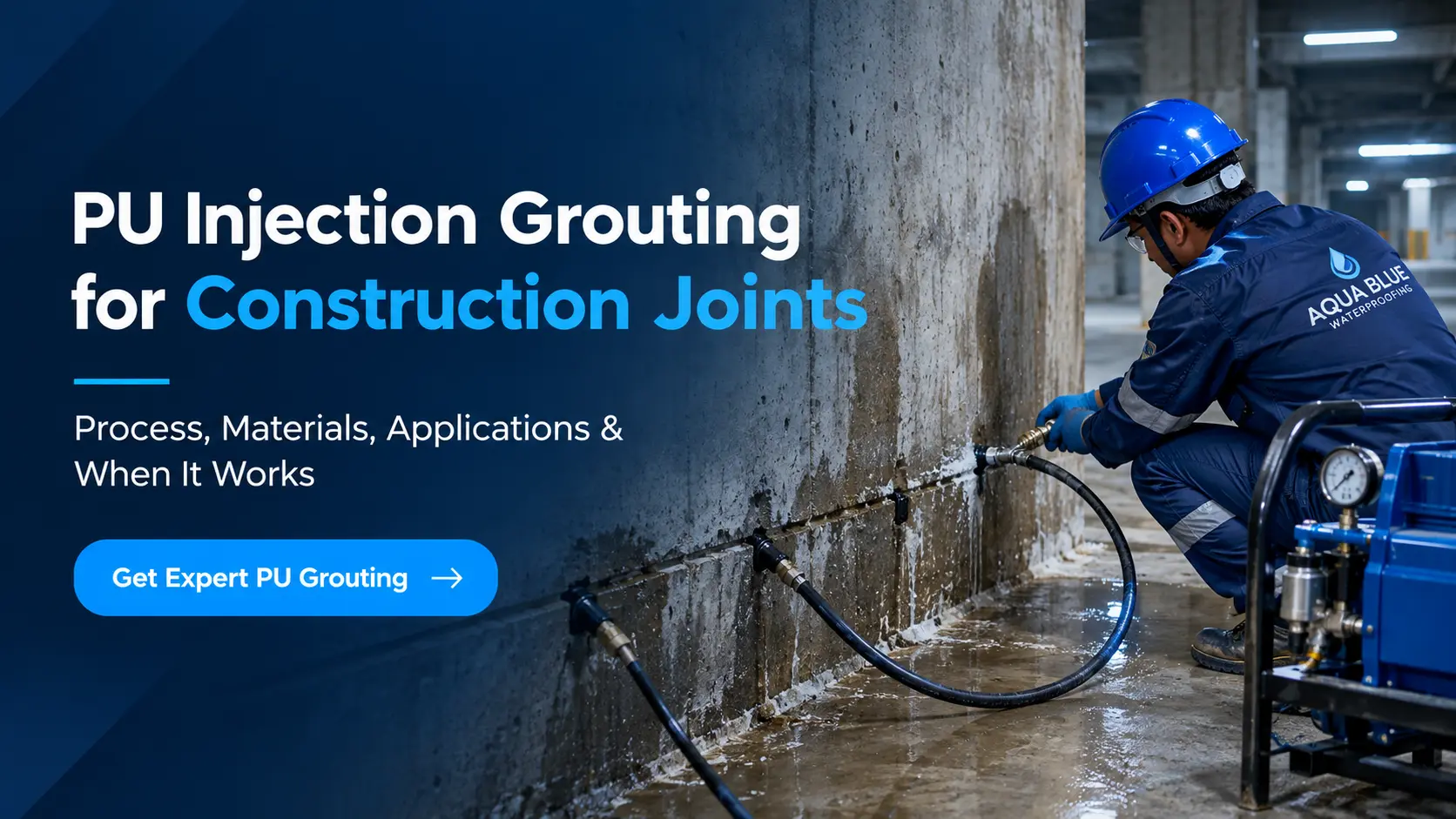
For deep, active leaks, surface coating is useless. We use Polyurethane (PU) Injection Grouting.
-
How it works: We drill holes along the crack and inject a hydrophobic resin under high pressure.
-
The Result: The resin reacts with water inside the crack, expanding into a dense, flexible foam that seals the leak through the entire 6-inch or 9-inch wall thickness.
Crystalline Waterproofing
This is an “active” technology. The chemicals react with the moisture in the concrete to grow insoluble crystals inside the pores. This essentially turns the concrete itself into a waterproof barrier.
Food-Grade Epoxy Tank Coating
Epoxy provides a smooth, glass-like finish that is 100% impermeable. It is ideal for internal lining because it is easy to clean and prevents algae from sticking to the walls.
Which Waterproofing Materials Are Best for Water Tanks?
Choosing the right material is vital for health. You cannot use the same bitumen or coal-tar used on a roof inside a water tank.
| Material | Application | Benefit |
| 2-Component Cementitious | Standard RCC Tanks | Flexible, Breathable, UV Resistant |
| PU Grouting Resin | Structural Cracks | Stops active pressure leaks instantly |
| Food-Grade Epoxy | Drinking Water Tanks | Non-toxic, Algae-resistant, Durable |
| Crystalline Slurry | New or Old Concrete | Becomes a permanent part of the slab |
Aqua Blue Waterproofing only uses ISI-certified, Food-Grade materials ensuring that your water remains safe for drinking, cooking, and bathing.
How Professional Overhead Water Tank Waterproofing Is Done in Bangalore
At Aqua Blue Waterproofing, our process is what sets us apart. We follow a strict 6-step engineering protocol:
-
Advanced Inspection: We use moisture meters to map out “silent” seepage zones that aren’t visible to the naked eye.
-
Mechanical Cleaning: Using high-pressure water jets and wire brushes, we remove every trace of algae and old, failing coatings.
-
V-Groove Treatment: Every crack is widened into a ‘V’ shape to allow for deep-penetrating repair mortars.
-
Pressure Grouting: We inject PU resin into the structural core to bridge the gap between internal and external surfaces.
-
Layered Coating: We apply two to three coats of a flexible waterproof membrane, ensuring 100% coverage of corners and pipe inlets.
-
Curing & Testing: We allow the system to cure for 72 hours and perform a Hydrostatic Pond Test—filling the tank to the brim to prove there is zero leakage.
Why Hiring Professional Contractors in Bangalore Is Important
Many local handymen suggest “Doctor Fixit” mixed with cement as a DIY fix. While these products are great, they fail without proper surface preparation and specialized application tools.
The Risks of DIY or Unskilled Labor:
-
Toxic Materials: Using industrial-grade chemicals that leach lead or arsenic into your drinking water.
-
Surface Failure: Applying coating over algae, which causes the entire layer to peel off within months.
-
Hidden Damage: Patching a crack on the surface while the internal steel continues to rust and weaken the structure.
Aqua Blue Water Tank Waterproofing provides a written warranty and uses specialized technicians who understand the chemistry of concrete.
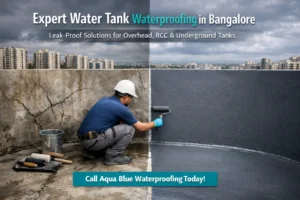
Read related blog: Water Tank Waterproofing in Bangalore
Cost Factors for Overhead Water Tank Waterproofing in Bangalore
In 2026, the cost of water tank waterproofing in Bangalore typically ranges between ₹45 to ₹85 per sq. ft. The final quote depends on:
-
Tank Condition: Extensive “honeycombing” or deep cracks require more material and labor.
-
Accessibility: Underground sumps are generally cheaper to treat than overhead tanks on 20-story buildings.
-
Choice of Material: A premium food-grade epoxy will cost more than a standard cementitious coating but offers double the lifespan.
Note: We recommend an on-site inspection for an accurate quote, as every tank’s structural health is unique.
FAQs: Overhead Water Tank Waterproofing in Bangalore
1. What causes overhead water tank leakage?
The main causes are thermal expansion cycles, structural shrinkage of RCC, and failing joints at the floor-wall junction.
2. How long does a professional waterproofing treatment last?
A high-quality system from Aqua Blue typically lasts 8 to 12 years, provided regular cleaning and maintenance are performed.
3. Is the coating safe for drinking water?
Yes. We strictly use Food-Grade, VOC-free coatings that are certified safe for potable water storage.
4. Can you fix a leak without breaking the tank?
Absolutely. Using PU Injection Grouting, we can seal even active, high-pressure leaks from the inside without any demolition.
5. How much time does the process take?
Depending on the size, a standard 2,000-liter tank takes 2–3 days for cleaning, repair, and coating.
Conclusion: Protect Your Water Tank Before the Next Monsoon
In 2026, water security in Bangalore is a priority. A leaking tank is more than just a nuisance; it’s a threat to your building’s lifespan and your family’s health. By investing in professional Overhead Water Tank Waterproofing in Bangalore, you save on tanker costs, prevent structural decay, and ensure a clean water supply for years to come.
Stop the seepage before it becomes a disaster.
📞 Call Aqua Blue Waterproofing Today: 88920 26121
📍 Visit our Google My Business listing for directions and recent project photos!
Are you seeing dampness on your top-floor ceiling? Have you had a bad experience with a “quick-fix” repair? Share your story in the comments below!

PRAVEEN P is the Founder of Aqua Blue Waterproofing and a Waterproofing Technical Specialist with over 16 years of industry experience. Since establishing the company in 2014, he has helped homeowners and businesses across Bangalore solve leakage and seepage issues through reliable, long-lasting waterproofing solutions and expert guidance.