Bangalore homes face unique structural stress due to sudden climatic shifts, heavy monsoon rain, and thermal expansion. Many homeowners invest in surface paint touch-ups, only to see damp patches return within months. Choosing the wrong strategy leads to recurring leakage, weakened masonry, and interior wall damage. Finding effective waterproofing methods in Bangalore requires identifying the root cause of dampness rather than treating surface symptoms alone. At Aqua Blue Waterproofing, we prioritize source identification to deliver permanent structural protection.
Stop recurring leakage with diagnostic leak testing from Aqua Blue Waterproofing. Call our expert team at +91-88920 26121 to schedule an on-site evaluation.
- Source First: Water leakage location dictates the repair strategy, not the coating product.
- Targeted Solutions: Polymer waterproofing, waterproof membranes, cementitious slurry, and injection grouting solve entirely different problems.
- Old vs. New Buildings: Aged structures require flexible, breathable systems to tolerate structural settling and thermal movement.
- Expert Diagnosis: Precision moisture testing prevents costly, repetitive repair failures.
- Why the Source of Water Leakage Must Be Identified First
- How Waterproofing Experts Diagnose the Leakage Source
- How to Choose a Waterproofing Method for Water Leakage
- Which Waterproofing Methods in Bangalore Are Suitable for Old Houses?
- Polymer Waterproofing vs Waterproof Membrane: Which Should You Choose?
- Injection Grouting: When Surface Waterproofing Is Not Enough
- Waterproofing Decision Guide Based on the Leakage Source
- How to Choose a Long-Lasting Waterproofing Solution
- The Best Waterproofing Solution for Bangalore Homes
- When Should You Call a Waterproofing Expert?
- Frequently Asked Questions
- Conclusion
Why the Source of Water Leakage Must Be Identified First
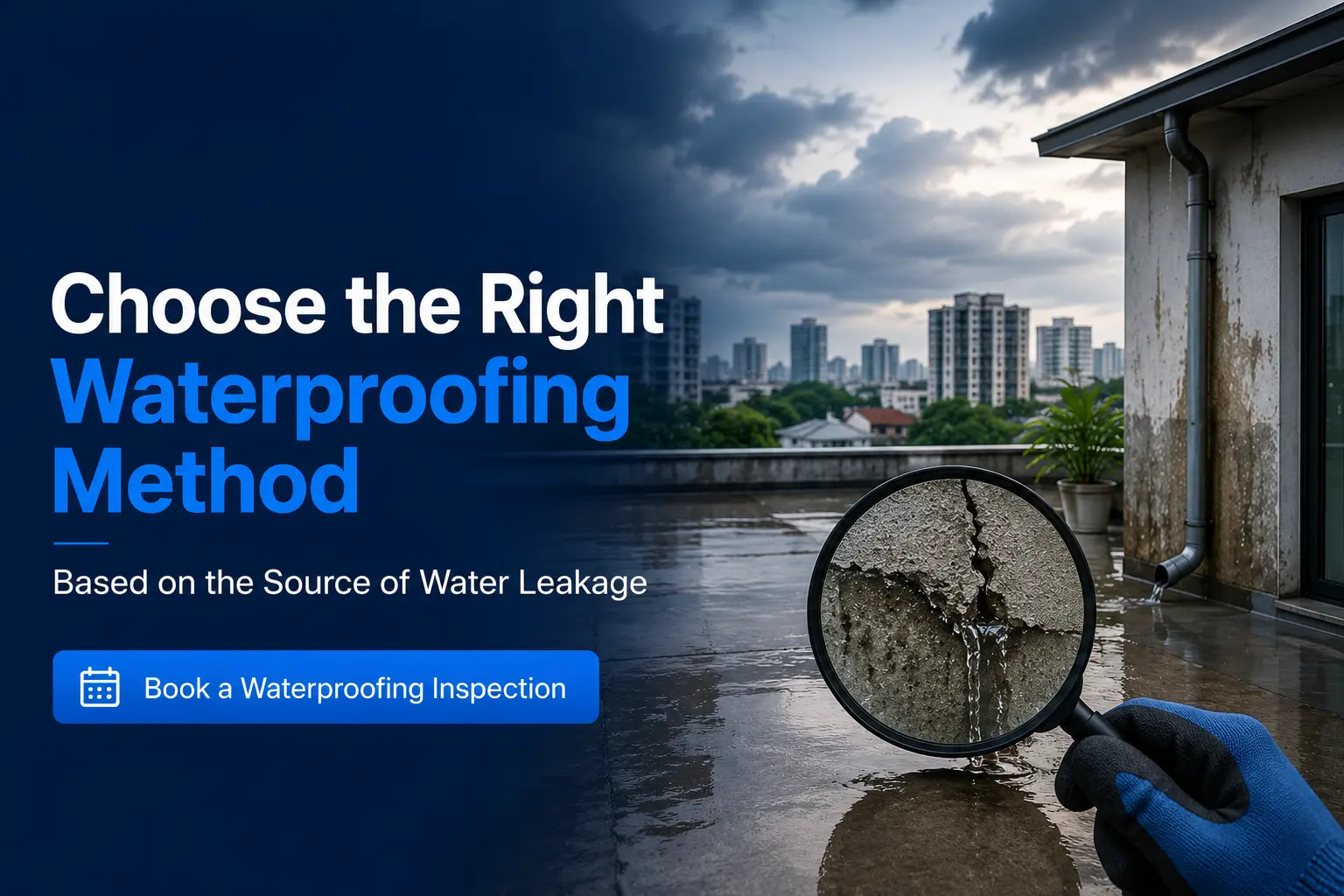
Treating water seepage without locating the entry point causes persistent failures. Water travels along concrete micro-cracks and frequently manifests far from its actual origin. A water leakage detection inspection helps identify the exact source before selecting the right waterproofing method.
Common Sources of Water Leakage in Bangalore Homes
- Terrace Leakage: Direct rainwater pooling penetrates thermal expansion cracks on unprotected roof slabs.
- Exterior Wall Seepage: Wind-driven monsoon rain enters hairline plaster cracks, creating interior damp patches.
- Bathroom Leakage: Degraded floor tile grouting and worn plumbing seals allow water to soak into sub-slabs.
- Basement Moisture: Underground water tables exert hydrostatic pressure against foundation walls.
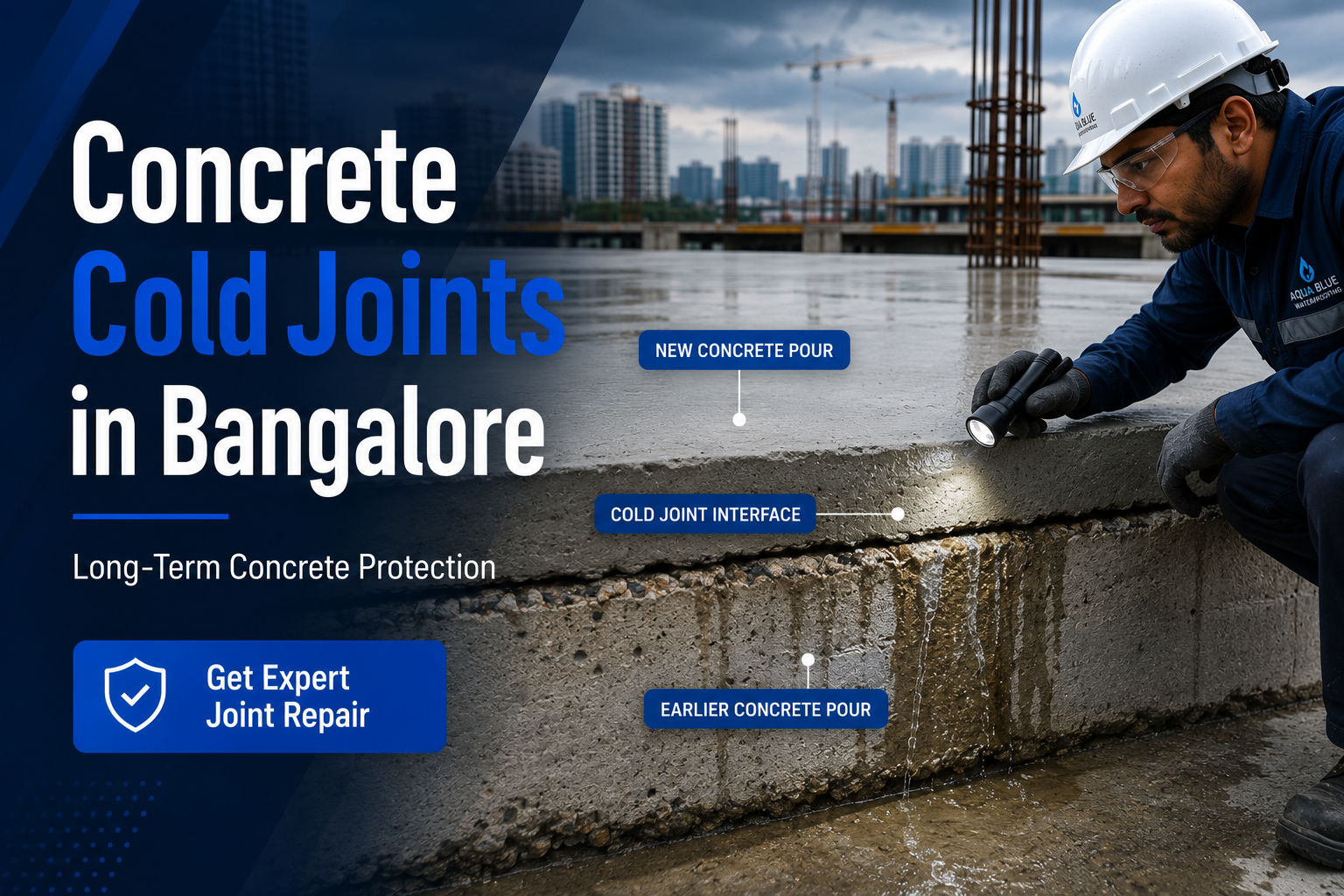
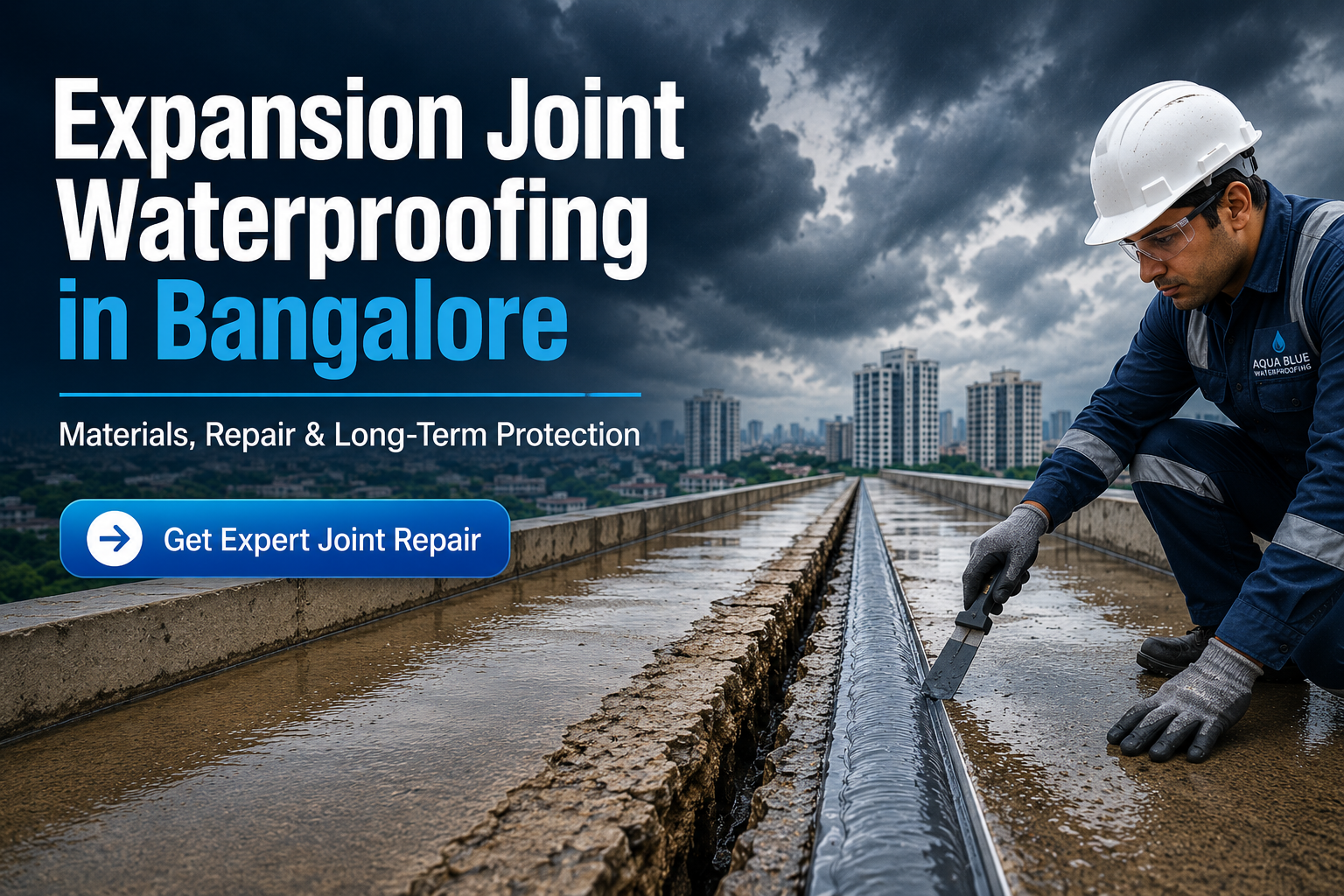
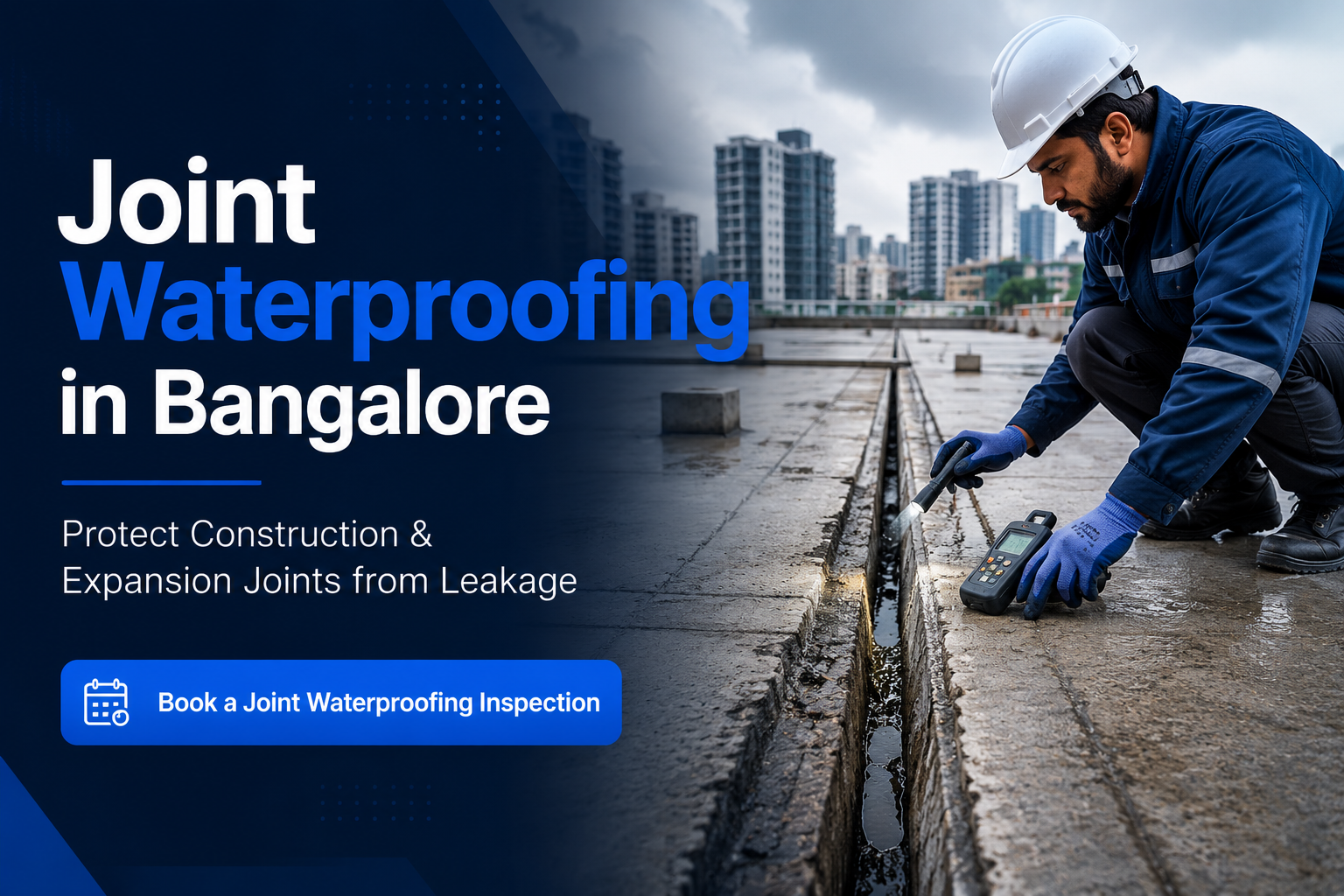
- Concrete & Expansion Joints: Inadequate joint sealants cause structural moisture ingress during heavy downpours.
Why Surface Waterproofing Often Fails
- Trapped Moisture: Coating over damp concrete traps moisture inside, causing peeling and blistering.
- Wrong Application: Applying rigid coatings on surfaces subject to temperature shifts causes early cracking.
- Hydrostatic Pressure: Standard damp-proof paint cannot withstand continuous groundwater pressure.
How Waterproofing Experts Diagnose the Leakage Source
Aqua Blue Waterproofing utilizes precise diagnostic protocols to isolate water ingress before applying coatings:
- Moisture Inspection: Pinless moisture meters assess sub-surface water density behind plaster.
- Leak Detection: Thermal imaging maps hidden fluid channels within concrete structures.
- Crack Assessment: Distinguishes between surface hairline cracks and deep structural fissures.
- Structural Evaluation: Determines whether seepage stems from rainwater penetration, groundwater pressure, or concealed plumbing leaks.
How to Choose a Waterproofing Method for Water Leakage
Selecting appropriate waterproofing methods in Bangalore requires matching technical solutions to specific building zones:
- Terrace Leakage (Polymer Waterproofing): Liquid elastomeric polymer coatings stretch and contract with thermal movement without splitting.
- Exterior Wall Seepage (Waterproof Coating/Membrane): Breathable acrylic polymer barriers seal external walls while allowing internal moisture vapor to escape.
- Bathroom Leakage (Cementitious Waterproofing): Polymer-modified cementitious slurry forms an impermeable layer underneath floor tiles.
- Basement Water Pressure (Bituminous Waterproofing): Heavy-duty bituminous membranes resist subterranean moisture and hydrostatic pressure.
- Structural Cracks (Injection Grouting): High-pressure polyurethane (PU) resin fills internal concrete voids to block active water leaks.
Which Waterproofing Methods in Bangalore Are Suitable for Old Houses?
Older buildings require flexible waterproofing systems due to structural settling and weathered masonry.
Structural Challenges in Aged Buildings
- Settlement cracks from decades of structural shifting.
- High thermal movement due to weathered concrete decks.
- Weakened, porous external plaster and brickwork absorbing dampness.
Recommended Methods for Older Structures
- Polymer Waterproofing: Offers high elasticity to bridge moving cracks without rupturing.
- Injection Grouting: Fills internal concrete honeycombs without requiring structural demolition.
- Breathable Waterproof Systems: Prevents wall blistering by allowing trapped moisture vapor to vent outwards.
Polymer Waterproofing vs Waterproof Membrane: Which Should You Choose?
Both systems offer long-lasting performance, but suit different architectural requirements:
- Polymer Waterproofing: Applied as a seamless liquid coating. Ideal for complex terrace layouts, exterior walls, and parapets.
- Waterproof Membrane: Pre-formed sheet barriers (bituminous or APP). Best suited for large, flat commercial decks and podiums.
| Feature | Polymer Waterproofing | Waterproof Membrane |
|---|---|---|
| Flexibility | High (Stretches with structure) | Moderate to High |
| Crack Bridging | Bridges hairline cracks up to 2mm | High sheet coverage |
| UV Resistance | Excellent (Acrylic/PU formulations) | Requires protective screed overlay |
| Durability | High overall service life | High sheet barrier life |
| Best Application | Terraces, Walls, Complex Roofs | Large Flat Decks, Podiums |
| Maintenance | Low & simple recoating | Moderate (Seam checks required) |
Injection Grouting: When Surface Waterproofing Is Not Enough
When water leaks through concrete cracks or expansion joints, surface coatings are insufficient. High-pressure PU injection grouting forces low-viscosity resin into core structural voids. Upon reacting with moisture, the material expands into a dense foam, blocking active water flow and reinforcing structural integrity.
Waterproofing Decision Guide Based on the Leakage Source
| Leakage Symptom | Primary Leakage Cause | Recommended Waterproofing Solution |
|---|---|---|
| Water dripping from terrace ceiling | Roof pooling / thermal cracks | Liquid Polymer Elastomeric Coating |
| Damp patches on interior walls | External wall hairline cracks | Breathable Polymer Barrier Coat |
| Continuous leaks near floor slabs | Bathroom sub-slab seepage | Cementitious Slurry + Tile Grouting |
| Dampness rising from ground level | Subterranean moisture pressure | PU Injection Grouting + Bituminous Coat |
| Seepage in 20+ year old building | Masonry movement & porous bricks | Flexible Polymer Coating + Grouting |
How to Choose a Long-Lasting Waterproofing Solution
To ensure durability when evaluating waterproofing methods in Bangalore, follow this checklist:
- Identify Source: Verify whether moisture originates from rainwater, groundwater, or plumbing.
- Inspect Cracks: Treat structural cracks with high-pressure grouting prior to surface coating.
- Select Systems: Match flexible coatings to exposed zones and rigid slurries to sub-tile zones.
- Verify Compatibility: Ensure surfaces are thoroughly cleaned down to bare concrete before application.
- Ensure Expertise: Work with certified applicators who provide technical inspections.
The Best Waterproofing Solution for Bangalore Homes
Bangalore's weather demands UV-resistant, monsoon-durable coatings with strong crack-bridging capabilities. Aqua Blue Waterproofing uses an inspection-first approach, employing advanced polymer formulations and modern diagnostics to deliver tailored solutions for every property.
When Should You Call a Waterproofing Expert?
Contact Aqua Blue Waterproofing if you observe:
- Recurring damp patches despite previous repairs.
- Flaking paint and powdery mineral deposits (efflorescence) on interior walls.
- Visible cracks along concrete beams, slabs, or expansion joints.
- Water pooling or ceiling stains following heavy rainfall.
Frequently Asked Questions
Q1: How do I choose the right waterproofing method?
Ans: Determine the exact location and cause of leakage. Exposed roof slabs require flexible polymer coatings, whereas wet internal sub-slabs require cementitious barriers.
Q2: What is the best waterproofing method for water leakage?
Ans: Liquid-applied polymer elastomeric systems offer superior performance for surface water leakage due to their jointless application and crack-bridging ability.
Q3: Which waterproofing method lasts the longest?
Ans: Multi-layer polymer systems protected by screed or tile overlays offer exceptional long-term durability when properly applied over diagnosed concrete.
Q4: Is Polymer Waterproofing better than Waterproof Membrane?
Ans: Polymer waterproofing is better suited for complex layouts requiring jointless coverage, while membrane sheets excel on large, flat surfaces.
Q5: Can Injection Grouting stop structural leakage permanently?
Ans: Yes, high-pressure PU injection grouting seals internal concrete voids from within, stopping active leaks permanently.
Q6: What waterproofing method is suitable for old houses?
Ans: Flexible polymer coatings paired with PU injection grouting work best for older houses by accommodating structural movement without peeling.
Conclusion
Selecting effective waterproofing methods in Bangalore relies on identifying the underlying moisture entry point rather than applying temporary surface coats. By conducting a technical diagnostic inspection and applying specialized polymer systems, you protect your building's structural integrity permanently.
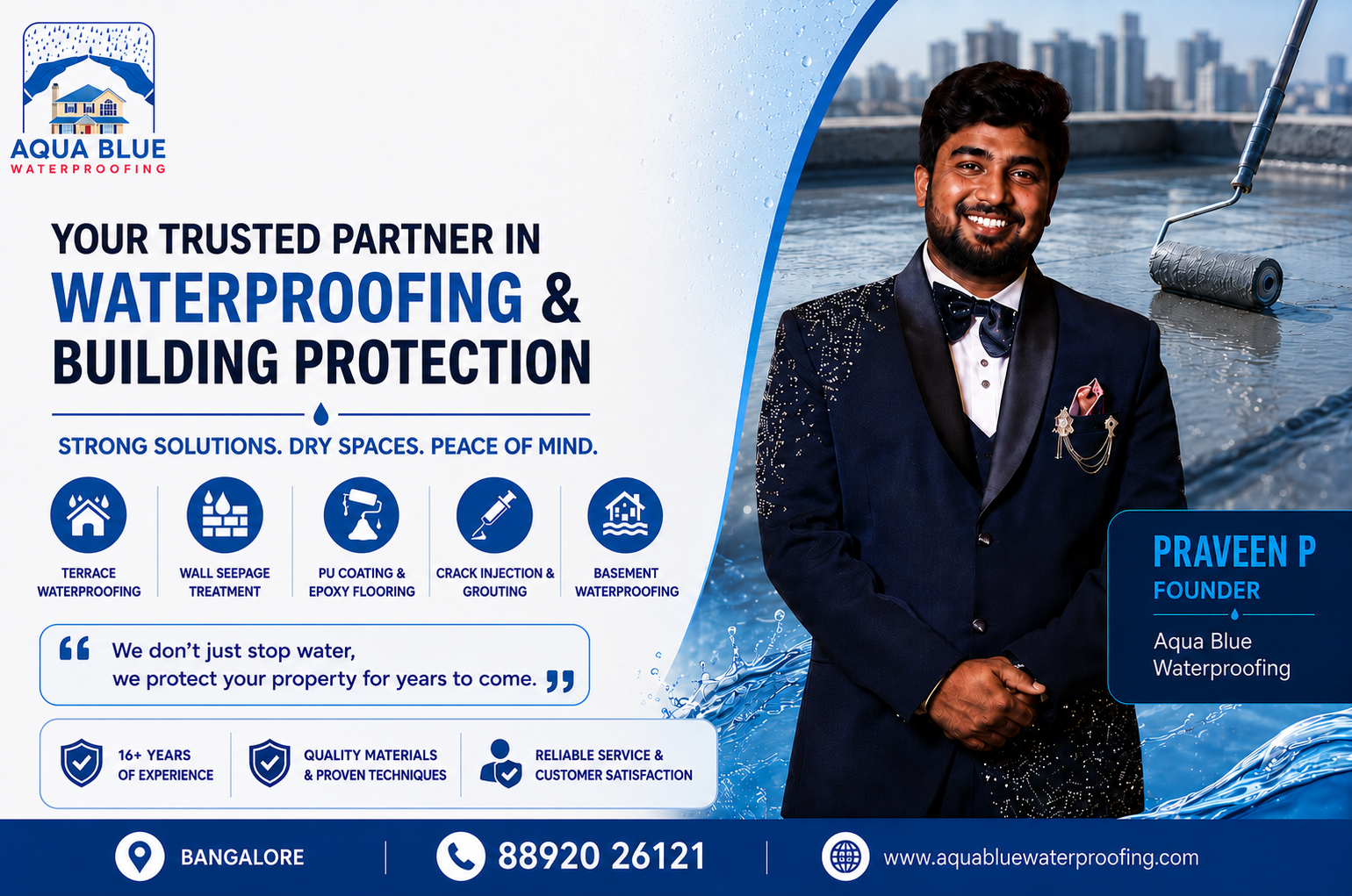
PRAVEEN P is the Founder of Aqua Blue Waterproofing and a Waterproofing Technical Specialist with over 16 years of industry experience. Since establishing the company in 2014, he has helped homeowners and businesses across Bangalore solve leakage and seepage issues through reliable, long-lasting waterproofing solutions and expert guidance.