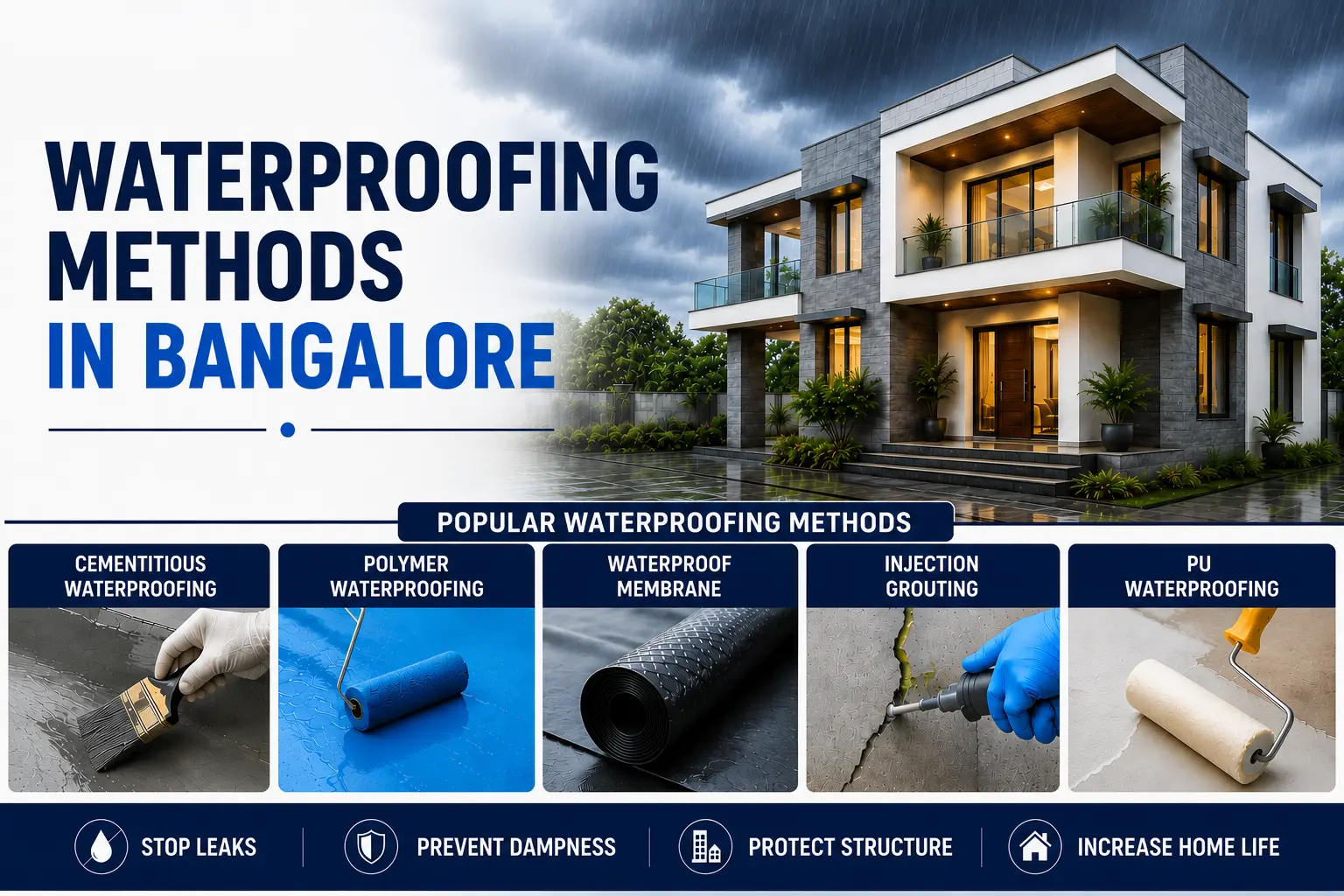
Bangalore homes face unique structural stress due to sudden weather shifts, heavy monsoons, and thermal expansion. Applying generic coatings without identifying the core issue leads to recurring dampness and wall damage. This guide breaks down the most effective waterproofing methods in Bangalore, comparing polymer, cementitious, membrane, bituminous, and grouting systems so you can choose the long-lasting solution your home needs.
Dealing with recurring damp patches or peeling paint on your walls is frustrating, especially in a city like Bangalore where sudden climate shifts and heavy monsoon rains expose hidden structural flaws. Many homeowners spend thousands on quick surface coats only to see water seepage return within months. Choosing the right waterproofing methods in Bangalore requires matching the repair technology to your specific structural issue rather than applying a one-size-fits-all patch. This comprehensive guide breaks down the most reliable waterproofing solutions in Bangalore, helping you protect your property value permanently.
- Main Types of Waterproofing Methods Used in Bangalore
- Difference Between Waterproofing Methods
- Best Waterproofing Method for Specific Water Leakage Problems
- Which Waterproofing Solutions Last the Longest?
- How Waterproofing Experts Choose the Right Method
- Why Waterproofing Fails Even After Repairs
- Decision Guide: How to Choose the Right Method
- When Should You Call Waterproofing Experts in Bangalore?
- Frequently Asked Questions
- Conclusion
Main Types of Waterproofing Methods Used in Bangalore
Understanding the primary types of waterproofing methods available allows you to make informed decisions for your home.
Cementitious Waterproofing
This is a rigid or semi-flexible coating created by mixing Portland cement with synthetic waterproofing agents.
- Best Use Case: Wet areas like bathroom slabs, water tanks, and balconies before tiling.
- Durability: High durability in unexposed internal areas.
- Limitations: Lacks elasticity; it cannot stretch if concrete expands or develops structural movement cracks.
Polymer Waterproofing
Utilizing advanced synthetic resins like acrylics or polyurethanes, polymer waterproofing in Bangalore creates a seamless, flexible rubber-like protective layer over masonry.
- Best Use Case: Exposed terraces, exterior walls, and roof slabs subjected to temperature swings.
- Durability: Excellent resistance to weather and UV exposure.
- Limitations: Requires precise surface preparation to achieve optimal adhesion.
Waterproof Membrane Systems
Pre-formed bituminous or synthetic TPO/PVC sheets heat-welded or bonded over concrete decks.
- Best Use Case: Large commercial rooftops, podiums, and terrace gardens with high traffic.
- Durability: Exceptional long-term performance when properly protected.
- Limitations: Improper seam welding can create weak points where water trickles through.
Bituminous Waterproofing
Asphalt-based liquid coatings or torch-on rolls designed to form a dark, impermeable barrier.
- Best Use Case: Underground foundations, retaining walls, and basement exteriors.
- Durability: High against subterranean ground moisture.
- Limitations: Softens under direct sunlight and degrades without UV protection.
Injection Grouting
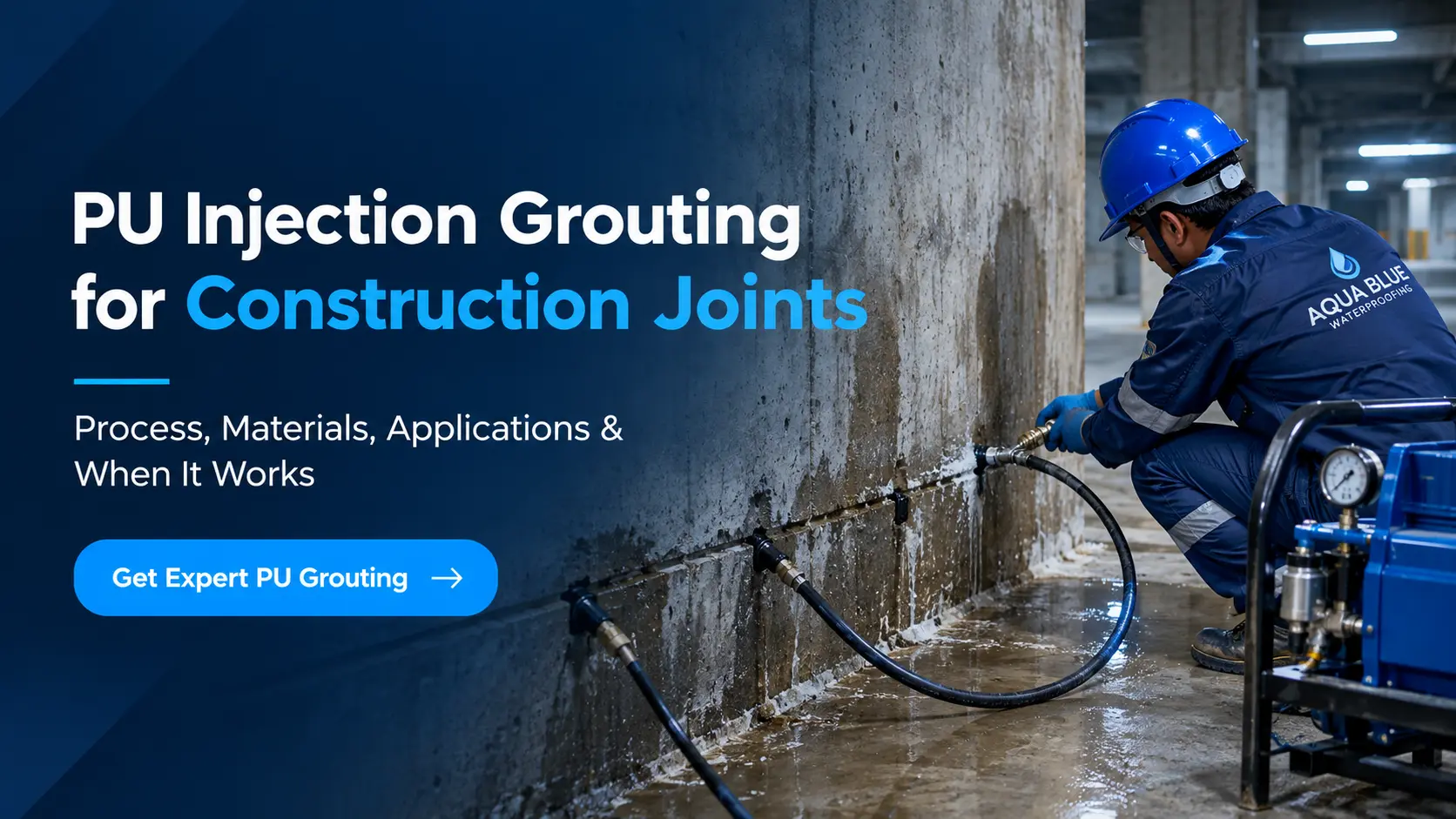
A low-viscosity polyurethane or epoxy resin injected directly under pressure into core structural cracks and hollow voids.
- Best Use Case: Active water gushing through concrete expansion joints or structural cracks.
- Durability: Permanent structural fill.
- Limitations: Serves as a target repair rather than a complete surface coat.
Difference Between Waterproofing Methods
Understanding the fundamental difference between waterproofing methods helps prevent misapplication.
| Feature | Polymer Waterproofing | Cementitious Coating | Membrane Sheets | Injection Grouting |
|---|---|---|---|---|
| Flexibility | High (stretches with cracks) | Rigid / Low elasticity | Very High | Non-applicable (fill) |
| UV Resistance | Excellent | Moderate (requires cover) | Variable by material | N/A (Internal core) |
| Crack Bridging | Up to 2mm | Minimal | High | Seals core void |
| Maintenance | Low | Low | Moderate | Zero |
| Bangalore Fit | Ideal for roofs & walls | Wet interior slabs | Large terraces | Structural cracks |
Best Waterproofing Method for Specific Water Leakage Problems
Matching the remedy to your concrete issue is critical when evaluating waterproofing methods for water leakage problems:
- Terrace Leakage: Liquid elastomeric polymer coatings work best because they expand and contract with summer heat without splitting.
- Wall Seepage: Breathable polymer waterproof coats combined with acrylic crack sealants protect exterior surfaces while letting internal vapor escape.
- Bathroom Leakage: Polymer-modified cementitious slurry applied under floor tiles creates a permanent barrier above structural slabs.
- Basement Moisture: High-density bituminous coatings or crystalline waterproofing withstand heavy hydrostatic water pressure.
- Crack-Related Leakage: High-pressure polyurethane injection grouting seals deep internal voids instantly.
Which Waterproofing Solutions Last the Longest?
Selecting long-lasting waterproofing methods in Bangalore depends heavily on building structure type:
- Independent Homes & Villas: Seamless liquid polymer membranes overlaid with heat-reflective coatings handle direct UV exposure efficiently.
- Apartments & High-Rises: Combination systems—polyurethane injection for slab voids and elastomeric coats for exterior walls—provide maximum durability.
- Older Buildings: Flexible, breathable polymer systems are mandatory because aged masonry shifts and settled walls crack easily.
Overall, engineered waterproofing solutions for Bangalore homes that combine crack-filling with elastic surface membranes yield the highest lifespan.
How Waterproofing Experts Choose the Right Method
True waterproofing professionals do not guess; they follow a systematic diagnostic approach:
- Moisture Inspection: Digital pinless meters measure trapped water density behind plaster.
- Thermal Leak Detection: Infrared thermography cameras map hidden fluid paths inside walls without destructive drilling.
- Crack Assessment: Categorizing surface hairline cracks versus deep structural fissures.
- Surface Evaluation: Assessing substrate concrete strength, dust contamination, and old paint adhesion.
This precise diagnostic process is why property owners trust Aqua Blue Waterproofing Bangalore for guaranteed results.
Why Waterproofing Fails Even After Repairs
Waterproofing projects fail due to poor execution rather than product quality:
- Selecting rigid cement coats for flexible terrace surfaces.
- Applying new waterproof coatings over loose, uncleaned dust or peeling paint.
- Ignoring active internal cracks before painting.
- Skipping proper moisture testing prior to application.
- Always clean substrates down to bare masonry.
- Seal all visible cracks with polymer sealant first.
- Ensure full curing time between multi-layer coats.
Decision Guide: How to Choose the Right Method
Ask these questions to select the appropriate waterproofing methods in Bangalore:
- Is the leakage on an open terrace exposed to sun? Choose Polymer Elastomeric Coating.
- Is the moisture rising near ground level up to 3 feet? Choose Chemical DPC Injection & Salt-Resistant Plaster.
- Are there structural cracks dripping water? Choose Polyurethane Pressure Grouting.
- Is it a wet interior area before tiling? Choose Flexible Cementitious Coating.
When Should You Call Waterproofing Experts in Bangalore?
DIY solutions like surface paint or silicon sprays are temporary Band-Aids. You require professional waterproofing services in Bangalore when:
- Damp patches return repeatedly every rainy season.
- White powdery mineral deposits (efflorescence) ruin interior plaster.
- Water drips directly from ceiling concrete slabs.
Aqua Blue Waterproofing Bangalore offers advanced thermal diagnostics, high-grade polymer chemistry, and trained applicators to eliminate dampness permanently.
Frequently Asked Questions
Q1: Which waterproofing method is best in Bangalore?
Ans: Liquid-applied polymer elastomeric coatings are generally best for Bangalore roofs due to their elasticity during thermal fluctuations.
Q2: What is the difference between waterproof membrane and polymer waterproofing?
Ans: Membranes are pre-formed sheets welded together, whereas polymer systems are liquid coatings applied directly to form a continuous, jointless rubber sheet.
Q3: Which waterproofing method lasts the longest?
Ans: Multi-layer polymer membrane systems protected by a screed or tile layer last the longest.
Q4: Which method is best for terrace leakage?
Ans: Polymer elastomeric coatings with crack-bridging capability offer superior performance for open terraces.
Q5: Is waterproofing different for old Bangalore homes?
Ans: Yes, older structures require breathable, high-elasticity polymers because the underlying masonry shifts more easily over time.
Q6: How do experts detect the source of water leakage?
Ans: Experts use digital moisture meters and thermal imaging cameras to track hidden moisture highways without breaking walls.
Conclusion
The most effective waterproofing method depends on finding the actual root source of moisture, not just masking visible damp spots. By matching your home's structural requirements with advanced polymer technologies and proper diagnostic inspections, you can keep your walls completely dry year-round.
PRAVEEN P is the Founder of Aqua Blue Waterproofing and a Waterproofing Technical Specialist with over 16 years of industry experience. Since establishing the company in 2014, he has helped homeowners and businesses across Bangalore solve leakage and seepage issues through reliable, long-lasting waterproofing solutions and expert guidance.