Persistent dampness on interior walls, ceiling stains near concrete slabs, and active water seepage during monsoon heavy downpours are classic warning signs of failed building joints. For property managers, architects, and homeowners, investing in specialized joint waterproofing in Bangalore is critical to protecting structural stability. Because concrete expands, contracts, and shifts under environmental stressors, unsealed or improperly treated joints quickly become direct entryways for rainwater and subterranean moisture.
This guide provides a comprehensive breakdown of concrete joint types, why standard surface coatings fail, advanced repair technologies like polyurethane (PU) injection grouting, and how Aqua Blue Waterproofing delivers engineered joint treatment solutions across residential and commercial properties in Bangalore.
Need immediate expert assistance for recurring joint leaks?
Speak with our senior technical specialists today: Call Aqua Blue Waterproofing at +91-88920 26121 for an on-site joint inspection.
Quick Answer: What Is Joint Waterproofing?
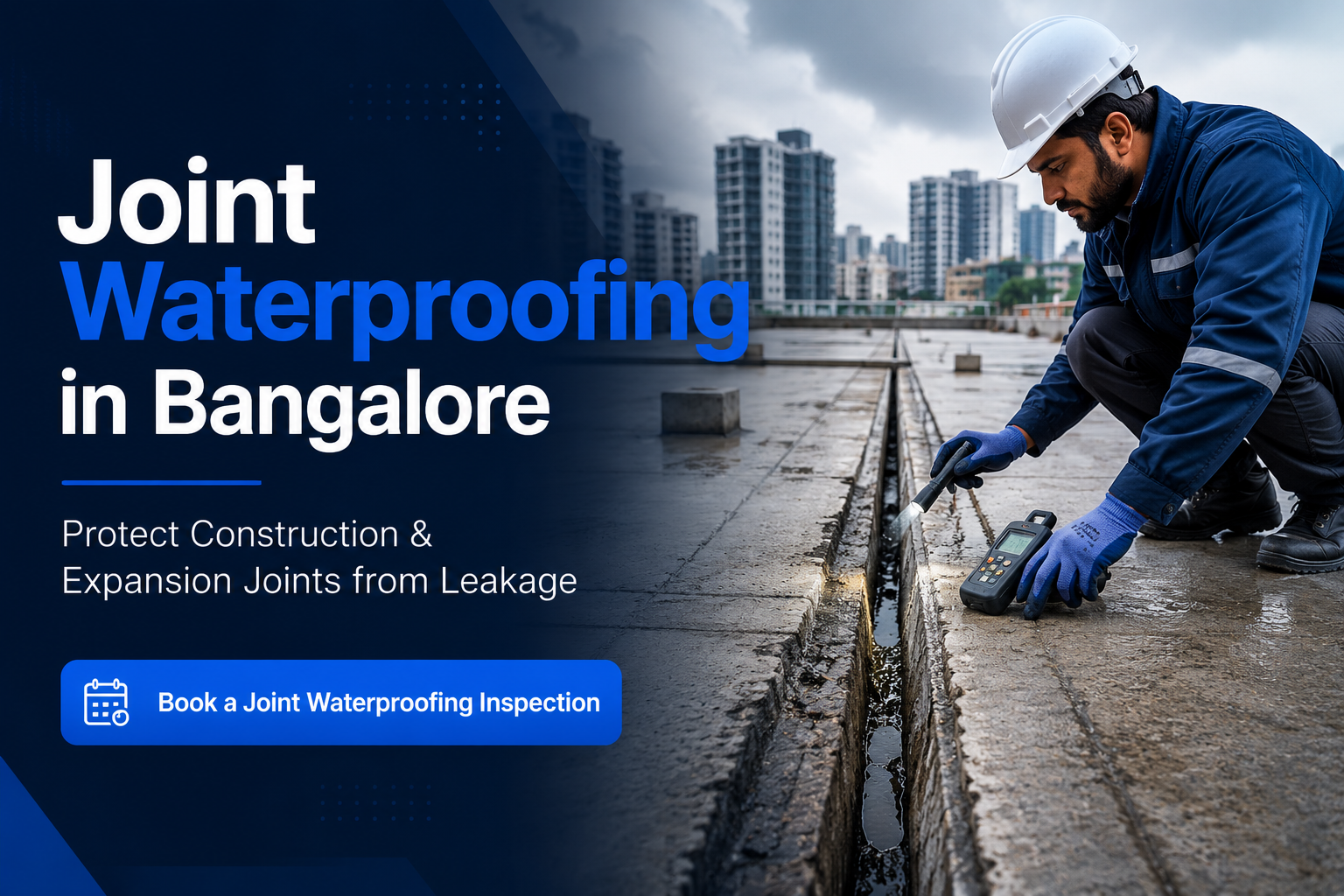
Joint waterproofing is the specialized application of flexible sealants, expanding grouts, and elastomeric membranes to seal intentionally created or structural gaps in concrete.
- Why Buildings Need It: Concrete naturally expands, contracts, and settles. Joints accommodate this movement, but without dedicated flexible waterproofing systems, water penetrates these structural gaps.
- Sealing vs. Waterproofing: Simple surface sealing merely covers a crack with topical caulk. Engineered joint waterproofing creates a continuous, high-movement elastomeric barrier deep within the joint substrate capable of withstanding hydrostatic pressure.
- When It Is Necessary: Immediate intervention is required when damp patches appear along wall-floor junctions, expansion joint covers crack, efflorescence forms on basement walls, or active water drips through cold joints.
Table of Contents
- What Is Building Joint Waterproofing?
- Types of Building Joints That Require Waterproofing
- Why Construction Joint Leakage Happens
- How Joint Waterproofing Works
- Waterproofing Methods for Different Joint Types
- Joint Waterproofing for Apartment Buildings
- Joint Waterproofing for Commercial Buildings
- Best Joint Leakage Repair Methods
- How to Choose the Right Joint Waterproofing System
- Why Joint Waterproofing Fails
- When Should You Call Joint Waterproofing Experts in Bangalore?
- Frequently Asked Questions
What Is Building Joint Waterproofing?
Concrete is a durable construction material, but it is not monolithic. Large structures are poured in sections and subjected to dynamic physical forces. Building joint waterproofing involves designing and installing specialized physical barriers, elastomeric compounds, and chemical grouts designed to handle continuous joint movement without tearing or debonding.
Why Building Joints Become Leakage Points
Building joints represent structural discontinuities in a concrete element. They become severe water pathways due to five primary factors:
- Rainwater Penetration: Heavy monsoon downpours collect on flat roofs, podiums, and external facades, finding path of least resistance through joint interfaces.
- Thermal Movement: Ambient temperature swings between day and night cause concrete slabs to expand and contract, placing stress on joint materials.
- Joint Sealant Deterioration: Inferior caulking compounds lose elasticity over time due to UV radiation, oxidation, and weathering.
- Concrete Shrinkage: As fresh concrete cures, moisture evaporation causes minor volume reduction, forming fine gaps along construction interfaces.
- Hydrostatic Pressure: Below-grade structures like basements experience external groundwater pressure forcing water through cold joints and retaining wall seams.
Types of Building Joints That Require Waterproofing
Achieving long-term protection requires understanding the precise function and physical characteristics of each structural joint.
Construction Joints
Created when concrete placement is temporarily stopped (e.g., end of a workday or shift). These non-moving interfaces require mechanical keying, hydrophilic waterstops, or deep chemical grouting to prevent construction joint leakage.
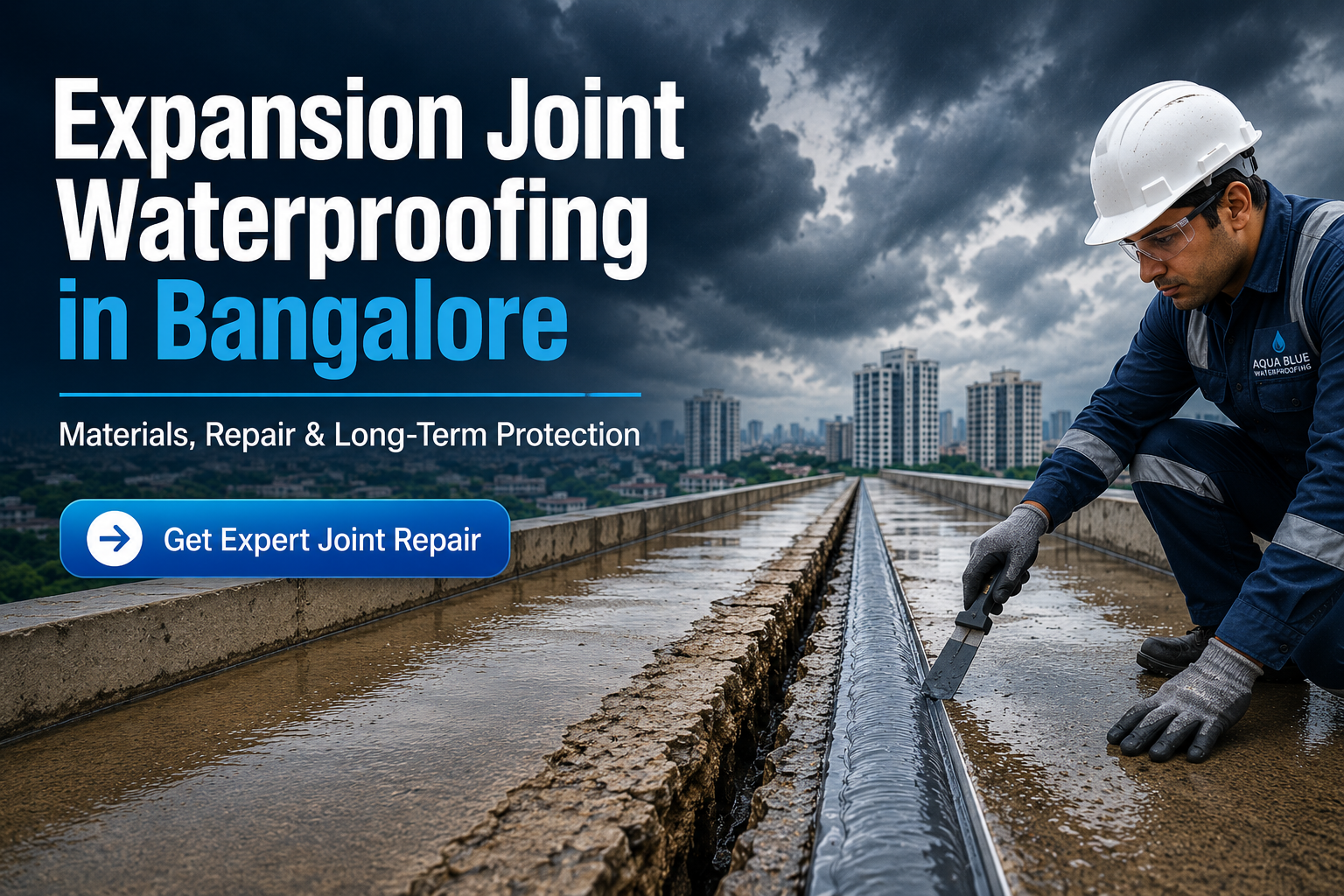
Expansion Joints
Engineered gaps designed to absorb thermal expansion and contraction across large concrete decks, podiums, and multi-story structures. They require high-movement elastomeric systems capable of expanding up to 50% without bond failure.
Control Joints
Intentionally placed saw-cuts or tooling grooves that dictate where concrete shrinkage cracking will occur. These require elastomeric joint filling compounds to prevent surface water entry.
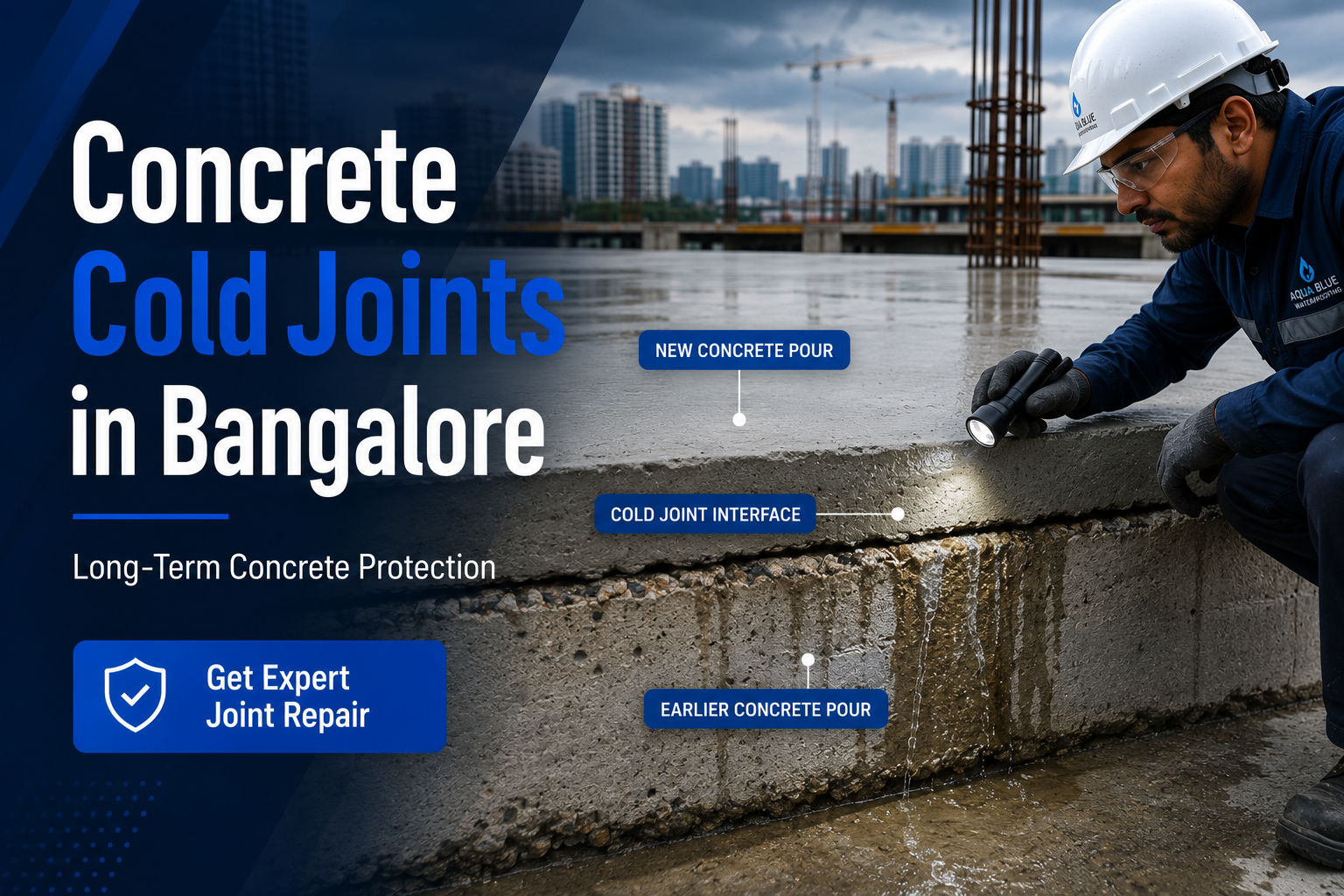
Concrete Cold Joints
Unintended joints formed when fresh concrete is poured against concrete that has already achieved its initial set. Cold joints lack internal chemical bonding and are extremely prone to localized seepage.
Structural Movement Joints
Gaps provided between distinct structural components (such as adjacent building blocks or bridge approaches) to handle differential settlement, wind loads, and seismic vibration.
Perimeter Joints
Interfaces where horizontal floor slabs meet vertical brick walls, curtain walls, or concrete parapets. These demand flexible elastomeric seals to prevent perimeter moisture ingress.
Penetration Joints
Seals surrounding utility pipes, electrical conduits, drain lines, and plumbing penetrations passing through concrete slabs and retaining walls.
Why Construction Joint Leakage Happens
When managing joint waterproofing Bangalore projects, construction joint failure is among the most frequent diagnosis.
Common Causes
- Poor Joint Preparation: Leaving laitance, dust, or loose aggregate on cured concrete before pouring fresh concrete destroys interface adhesion.
- Failed Sealants: Utilizing rigid cementitious mortar or basic silicone instead of specialized polyurethane sealants.
- Uncontrolled Shrinkage: Curing contraction pulling concrete surfaces apart.
- Hydrostatic Water Pressure: High water tables in low-lying areas exerting upward and lateral water forces.
- Vibration and Dynamic Movement: Heavy vehicular traffic on podium decks or neighboring construction activities disrupting joint seals.
Early Warning Signs
- Persistent damp patches along wall bases or ceiling seams.
- Active water dripping or continuous pooling in subterranean parking levels.
- Efflorescence: White, chalky mineral deposits leaching out of concrete joints.
- Paint blistering, flaking, or plaster delamination along joint lines.
- Micro-fractures and visible sealant detachment along joint margins.
How Joint Waterproofing Works
Executing a lasting repair requires a systematic engineering workflow rather than surface patch repairs.
- Joint Inspection: Visual analysis and non-destructive sounding to determine structural stability, joint depth, and failure mode.
- Moisture Assessment: Moisture meters and thermal imaging identify the extent of water saturation within surrounding masonry.
- Crack and Movement Evaluation: Measuring dynamic thermal movement to select sealants with the appropriate Movement Accommodation Factor (MAF).
- Surface Preparation: Mechanical chasing, V-groove routing, high-pressure cleaning, and mechanical grinding to achieve a clean substrate profile.
- Waterproofing System Installation: Inserting non-bonding backer rods, applying joint primers, placing hydrophilic swelling bars, or executing pressure injection grouting.
- Testing and Quality Verification: Performing water ponding or flood testing to verify a complete, watertight seal.
Waterproofing Methods for Different Joint Types
Selecting the correct chemical chemistry and mechanical barrier is essential for permanent structural performance.
- PU Sealants: Single or multi-component polyurethane compounds providing high elasticity, excellent tensile strength, and superior adhesion to concrete.
- Polyurethane Injection Grouting: Expanding hydrophobic resin injected under pressure into leaking joint cavities; reacts instantly with water to form a rigid or flexible dense foam.
- Epoxy Injection Systems: Structural resins used to permanently bridge and bond non-moving structural cracks and cold joints where high mechanical strength is required.
- Waterproof Membranes: Preformed EPDM or liquid-applied elastomeric polyurethane membranes installed over expansion joints to provide continuous secondary containment.
- Flexible Polymer Systems: Acrylic and polymer-modified cementitious coatings designed to bridge minor movement zones on vertical surfaces.
- Joint Sealing Systems: High-performance hypalon or composite tape systems bonded with specialized epoxy adhesives across heavy-movement structural gaps.
Joint Waterproofing Method Selection Matrix
| Joint Type | Recommended Method | Movement Accommodation | Water Pressure Resistance | Expected Service Life |
|---|---|---|---|---|
| Construction Joint | PU Injection Grouting / Hydrophilic Bar | Low to Moderate | Very High | 10–15+ Years |
| Expansion Joint | PU Sealant + EPDM/Hypalon Band | High (Up to ±50%) | High | 10–12 Years |
| Cold Joint | Hydrophobic PU Resin Grouting | Low | Very High | 10–15 Years |
| Penetration Joint | Hydrophilic Sealant + PU Foam | Low | High | 8–10 Years |
| Control Joint | Polyurethane Joint Sealant | Moderate | Moderate | 7–10 Years |
Joint Waterproofing for Apartment Buildings
Multi-story residential complexes face continuous exposure to environmental stressors. Comprehensive joint waterproofing for apartment buildings prevents costly disputes and preserves property values.
Common Leakage Locations
- Terrace Expansion Joints: Thermal expansion causes large rooftop slabs to move continuously, cracking rigid waterproofing beds.
- Basement & Lift Pit Joints: Subterranean concrete joints subject to persistent high groundwater pressure.
- Podium Slabs: Landscaped and driveway decks experiencing dynamic vehicle vibration and standing irrigation water.
- External Wall Expansion Seams: Vertical joints between precast panels or shear walls allowing wind-driven rain penetration into living spaces.
Why Apartment Associations Choose Professional Joint Sealing
- Eliminates recurring interior wall dampness and tenant grievances.
- Prevents internal steel rebar corrosion and concrete spalling inside shear walls.
- Protects common areas, subterranean parking, and electrical rooms from flooding.
- Eliminates repetitive spending on ineffective annual patch repairs.
Joint Waterproofing for Commercial Buildings
Commercial assets—such as IT parks, shopping malls, and industrial warehouses—demand robust waterproofing systems designed for heavy physical loading.
High-Risk Commercial Joints
- Podium & Deck Joints: High vehicular wheel loads demand tear-resistant joint systems.
- Basement Retaining Walls: Below-grade perimeters requiring high hydrostatic pressure resistance.
- Expansion Joints in Parking Structures: Movement gaps subject to oil, chemical spills, and continuous traffic.
- Service Penetration Clusters: Concentrated MEP pipe and cable penetrations through basement slabs.
Commercial Requirements
- High Traffic & Chemical Resistance: Materials must withstand abrasion, automotive fluids, and heavy wheel loads.
- Long Service Life: Commercial facilities require durable solutions that minimize maintenance cycles.
- Minimal Operational Disruption: Non-intrusive techniques like targeted high-pressure injection grouting allow business operations to continue during repairs.
Best Joint Leakage Repair Methods
Effective joint leakage repair in Bangalore requires matching the repair technique to the specific water condition and joint dynamic.
- Minor Joint Seepage: Routing joint edges into a clean V-groove, applying a high-adhesion primer, and sealing with a high-performance elastomeric polyurethane joint compound.
- Active Water Leakage: Drilling staggered injection ports along the joint line and injecting fast-reacting hydrophobic polyurethane resin to instantly block flowing water.
- Structural Joint Movement: Installing dynamic joint tape systems bonded with structural epoxy adhesives across the joint opening, protected by dynamic cover plates.
- Basement Pressure Leakage: Executing deep curtain grouting or high-pressure PU foam injection to create a permanent water-impermeable barrier behind retaining wall cold joints.
- Large Commercial Joints: Heavy-duty compression seal profiles backed by liquid elastomeric membranes designed for high wheel loads.
How to Choose the Right Joint Waterproofing System
Match the building type and structural behavior to the appropriate waterproofing technology:
- Residential Homes: Focus on flexible elastomeric PU sealants for parapet joints, perimeter wall gaps, and terrace tile joint interfaces.
- Apartment Complexes: Utilize combination systems—polyurethane injection grouting for active basement leaks and wide-movement EPDM tape bands for podium/terrace expansion joints.
- Commercial Properties: Deploy heavy-duty, chemical-resistant polyurethane sealant profiles and compression seals engineered for dynamic vehicular vibration.
- Older Structures: Avoid rigid materials; use low-viscosity, flexible PU grouts and highly extensible elastomeric coatings to accommodate historic structural settling.
- High-Movement Structures: Always specify sealants with a minimum Movement Accommodation Factor (MAF) of ±25% to ±50% combined with non-adherent backing rods.
Why Joint Waterproofing Fails
Understanding standard industry failure modes helps building owners avoid superficial contractor work.
- Wrong Sealant Selection: Using rigid mortar, general silicone, or brittle acrylic caulking in dynamic movement joints.
- Ignoring Joint Movement: Omitting backing rods, which causes three-sided adhesion and restricts the sealant's natural flexibility.
- Poor Surface Preparation: Applying sealants over dusty, oily, or crumbly concrete surfaces, leading to adhesive failure.
- Inadequate Injection Grouting: Using low-pressure hand pumps or incorrect resin formulations that fail to penetrate deep joint voids.
- Waterproofing Over Wet Substrates: Applying non-tolerant sealants or coatings on damp concrete, resulting in blistering and bond detachment.
When Should You Call Joint Waterproofing Experts in Bangalore?
General painting or masonry contractors often apply rigid cementitious coats over joint lines, which crack within months as the building moves. Specialized joint waterproofing contractors near me possess the pressure-grouting equipment, elastomeric material knowledge, and diagnostic tools needed to solve structural seepage permanently.
Key Indicators Professional Intervention Is Needed
- Recurrent joint leakage returning every monsoon season.
- Cracking, splitting, or bulging expansion joint cover plates.
- Active, flowing water entering basement parking or lift pits through wall-floor junctions.
- Noticeable efflorescence and structural concrete spalling along shear wall joint seams.
- Failure of previous surface-applied sealant or patch attempts.
For specialized joint waterproofing services in Bangalore, Aqua Blue Waterproofing provides root-cause diagnosis and high-durability joint treatments engineered for long-term structural protection.
Frequently Asked Questions
What is joint waterproofing?
Joint waterproofing is the application of specialized flexible materials, chemical grouts, and elastomeric sealants to prevent water ingress through engineered gaps or cold seams in concrete structures.
Why do construction joints leak?
Construction joints leak due to thermal movement, concrete shrinkage, inadequate surface preparation between concrete pours, and the degradation of non-flexible surface coatings.
How long does joint waterproofing last?
When executed using high-performance polyurethane sealants, expanding PU grouts, and proper joint design, professional joint waterproofing lasts 10 to 15+ years.
What is the difference between expansion joint and construction joint waterproofing?
Expansion joints require high-movement elastomeric systems and debonding tapes to accommodate structural shift. Construction joints are static or low-movement interfaces treated with deep chemical injection grouting or hydrophilic waterstops.
Can injection grouting stop joint leakage permanently?
Yes. High-pressure polyurethane injection grouting penetrates deep into microscopic voids and reacts with moisture to form a durable, flexible water-impermeable seal inside the concrete matrix.
Which joint waterproofing method is best for apartment buildings?
A combination of polyurethane injection grouting for underground basements and high-movement PU sealant systems with EPDM tapes for rooftop/podium expansion joints yields the most reliable results.
How much movement can a waterproofed joint handle?
Modern high-performance polyurethane joint sealants and dynamic tape systems accommodate continuous movements between ±25% and ±50% of the joint width without cracking or debonding.
How do I find reliable joint waterproofing contractors near me?
Look for specialized waterproofing companies that provide advanced diagnostics, possess high-pressure injection grouting machinery, use certified elastomeric products, and offer long-term performance warranties.
Safeguard Your Property with Aqua Blue Waterproofing
Building joints require specialized material chemistry, precise mechanical preparation, and deep-seal application techniques. Attempting quick surface repairs with general cement or standard caulk only delays necessary maintenance while structural concrete degrades from internal rebar corrosion.
At Aqua Blue Waterproofing, our certified technicians utilize specialized polyurethane injection grouting, elastomeric joint sealants, and flexible movement tape systems tailored to Bangalore's specific climate and building conditions.
Have questions about treating a leaking expansion joint, basement wall seam, or construction cold joint?
Share your structural joint challenges in the comments below or contact our technical team directly.
Phone: +91-88920 26121
Inspection Booking: Contact Aqua Blue Waterproofing today to schedule a comprehensive on-site joint inspection and technical evaluation.
PRAVEEN P is the Founder of Aqua Blue Waterproofing and a Waterproofing Technical Specialist with over 16 years of industry experience. Since establishing the company in 2014, he has helped homeowners and businesses across Bangalore solve leakage and seepage issues through reliable, long-lasting waterproofing solutions and expert guidance.