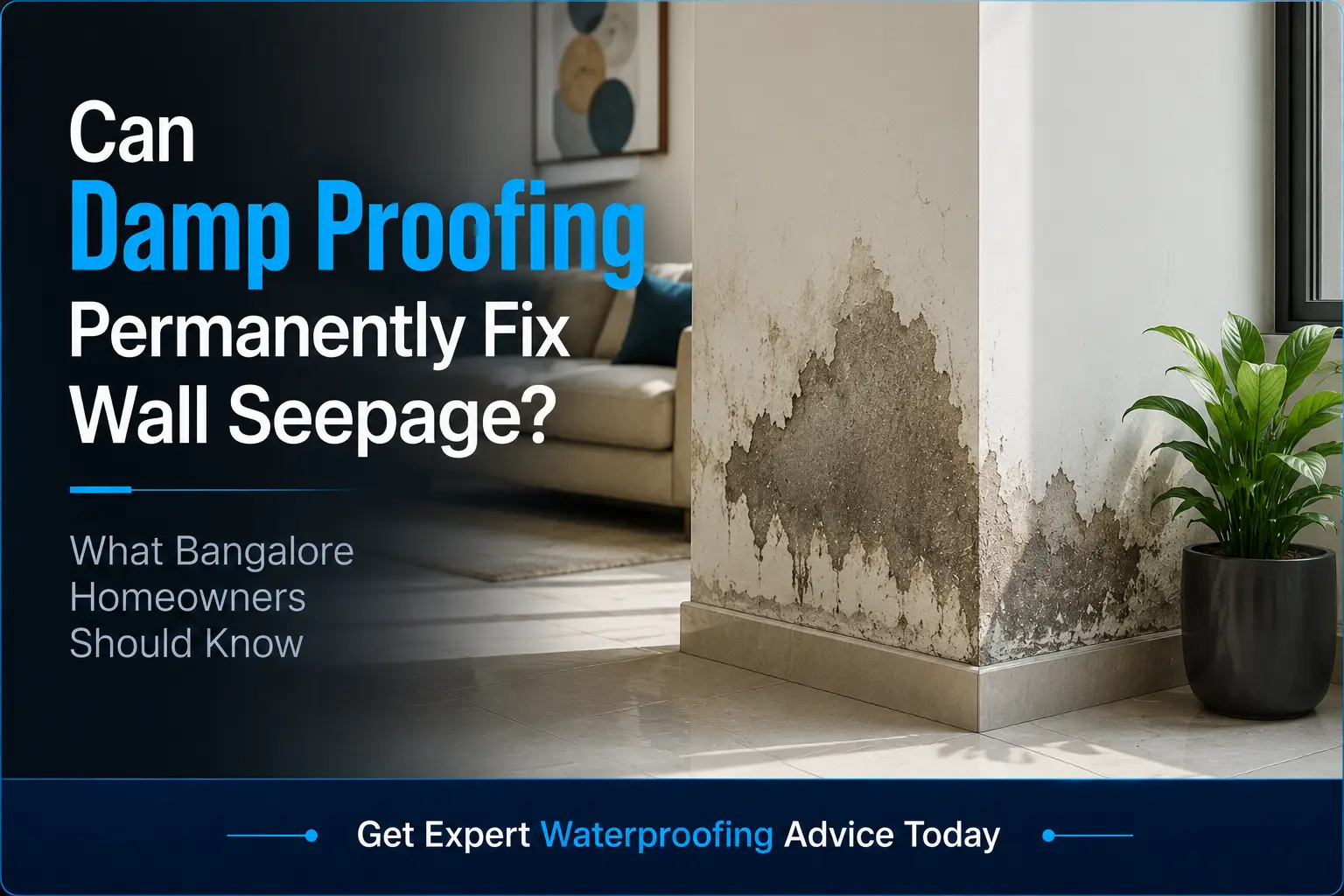
Imagine this scenario: You recently got damp proofing done to fix those annoying moist patches on your brickwork. A few months later or right after the first heavy monsoon downpour, you notice the exact same damp patches, peeling paint, or wall seepage returning in the exact same spots. Naturally, you start wondering whether the treatment actually solved the problem or merely covered up the symptoms for a short time.
This confusion is incredibly common for Bangalore homeowners managing independent houses, older villas, or apartments with heavily exposed exterior walls. Our city’s unique weather cycle characterized by heavy monsoon rainfall, high humidity, and intense water pressure on external walls means that generic fixes quickly fall apart. Many residents mistake damp proofing for a complete waterproofing cure, only to watch their hard-earned money wash away during the next big storm.
Can damp proofing permanently fix wall seepage? The truth is that many property owners, independent house owners, villa owners, and Resident Welfare Association (RWA) members invest in the wrong treatment because they do not know how water behaves inside masonry.
This comprehensive guide will help you understand when damp proofing works, exactly why it fails against active leaks, and how to choose the right wall seepage treatment Bangalore homes need to stay dry permanently.
📞 Call Aqua Blue Waterproofing Today at +91-88920 26121 for a Professional Site Inspection.
1-Minute Summary
The choice between damp proofing and waterproofing comes down to water pressure. Damp proofing acts as a basic horizontal barrier designed strictly to stop shallow, capillary-action moisture (rising damp) under zero water pressure. Waterproofing utilizes heavy-duty, flexible membranes to actively seal out heavy rainwater, standing water, and intense hydrostatic pressure during severe monsoons. While damp proofing works well to stop ground moisture from climbing up your foundations, it cannot fix active wall leaks. For true monsoon protection and long-term asset preservation in Bangalore, professional waterproofing is the definitive choice.
Table of Contents
-
Can Damp Proofing Permanently Fix Wall Seepage?
-
Why Damp Proofing Fails in Many Bangalore Homes
-
5 Signs Your Home Needs Waterproofing Instead of Damp Proofing
-
What Is the Best Solution for Different Types of Wall Seepage?
-
What Do Aqua Blue Waterproofing Experts Recommend After Site Inspection?
-
Can Damp Proofing and Waterproofing Be Used Together?
-
What Happens If You Choose the Wrong Solution?
-
Before You Spend Money, Ask These 5 Questions
-
Why Bangalore Homes Need a Different Approach Than Other Cities
-
Frequently Asked Questions
-
Final Verdict: Is Damp Proofing Enough?
Can Damp Proofing Permanently Fix Wall Seepage?
The short answer is: Sometimes, but only under very specific conditions.
Damp proofing is designed solely to keep out shallow ground moisture where there is no active water pressure. It works brilliantly as a barrier to block rising damp at the base of your home. However, if your wall seepage is caused by driving rain, leaking pipes, terrace run-off, or structural cracks, damp proofing cannot fix it. Active water intrusion requires an engineered waterproofing membrane that can withstand continuous, shifting liquid water pressure.
Why Damp Proofing Fails in Many Bangalore Homes
To protect your property, it helps to understand why a standard damp barrier is simply not enough to stop severe wall seepage.
Heavy Monsoon Rain Creates Water Pressure
When non-stop rain beats against your walls, water collects on the masonry surface. This creates lateral water pressure that easily pushes right through thin damp-proofing paints and primers.
Exterior Wall Cracks Let Water Enter
As buildings settle over time, tiny structural cracks open up on your exterior plaster. Damp proofing compounds are rigid and cannot stretch; when a new crack forms, the damp proof barrier snaps, allowing rainwater to enter directly.
Old Buildings Already Have Moisture Damage
In established Bangalore neighborhoods, decades of seasonal rain leave deep moisture pockets trapped inside old brick walls. A basic surface coating cannot clear out this deep saturation and will quickly bubble off the wall.
Damp Proofing Cannot Seal Active Water Leaks
Think of damp proofing like a light windcheater jacket, it resists a damp breeze or light mist. Active seepage is like a high-pressure water hose. Without a heavy-duty waterproof shield, the water will force its way through.
5 Signs Your Home Needs Waterproofing Instead of Damp Proofing
If you notice even two of these warning signs on your property, skip the basic damp coatings and contact a specialized waterproofing contractor in Bangalore immediately:
-
Water dripping from walls: Active, moving water droplets or wet run-off marks on your plaster.
-
Peeling paint every monsoon: Paint finishes that blister, flake, and fall off like clockwork every rainy season.
-
White salt deposits: Powdery white stains (efflorescence) blooming across your brick masonry or grout lines.
-
Damp patches getting bigger: Discolored wall halos that slowly expand across your rooms after a storm.
-
Mold smell: A persistent, musty odor or visible black mold spores spreading across your lower or upper walls.
What Is the Best Solution for Different Types of Wall Seepage?
Understanding the overall structural variance is essential to avoid wasting money on temporary repairs. For a comprehensive breakdown of how these principles apply to roofs, sumps, and bathrooms, read our ultimate comparison: Waterproofing vs Damp Proofing in Bangalore: Which Solution Does Your Home Really Need?
This comparison matrix shows exactly which treatment fits your specific structural issues:
| Problem Type | Damp Proofing | Waterproofing |
| Rising Damp (Ground Moisture) | ✅ Highly Effective | Optional |
| Exterior Wall Seepage | ❌ Fails | ✅ Mandatory |
| Terrace & Roof Leakage | ❌ Fails | ✅ Mandatory |
| Basement Seepage | ❌ Fails | ✅ Mandatory |
| Hairline Structural Cracks | ❌ Fails | ✅ Mandatory |
What Do Aqua Blue Waterproofing Experts Recommend After Site Inspection?
At Aqua Blue Waterproofing Bangalore, we believe in a people-first approach that fixes the root problem rather than just painting over it. Our certified team follows a meticulous diagnostic inspection process before recommending any solution:
-
Moisture Meter Testing: We use professional digital meters to map out the exact percentage of hidden wetness inside your walls.
-
Crack Mapping: Our team identifies structural versus thermal cracks on your building’s exterior.
-
Root Cause Analysis: We find out exactly where the water enters—whether from a leaking pipeline, a broken roof drain, or porous external bricks.
-
Exterior Inspection: We examine your building’s facade to check if your outer walls are absorbing rain like a sponge.
-
Tailored Recommendations: We provide a transparent, step-by-step repair plan tailored to your home’s unique layout.
Can Damp Proofing and Waterproofing Be Used Together?
Yes! In fact, the most durable homes use both treatments together.
Think of them as a team. A proper damp proof course (DPC) is laid at the foundation level during construction to keep ground moisture from climbing upward (damp walls). At the same time, high-build elastomeric waterproof membranes are applied to your terrace, external walls, and bathrooms to block heavy rainwater from entering from above. Using both systems ensures complete, long-term protection.
What Happens If You Choose the Wrong Solution?
Choosing a quick, cheap damp-proofing fix for an active water leak always leads to a stressful cycle of recurring headaches:
-
Wasted Money: You will end up paying for temporary fixes over and over again.
-
Paint Peeling Again: New interior paint and wall putty will crack and flake off within just a few months.
-
Mold Returns: Toxic black mold will keep growing back, which can cause respiratory issues for your family.
-
Structural Damage Increases: Trapped water will slowly rust the internal steel rebar inside your concrete beams, causing dangerous concrete flaking.
Before You Spend Money, Ask These 5 Questions
Use this simple interactive checklist to evaluate your walls before choosing a contractor:
-
Where exactly is the moisture coming from? (Ground, external wall, or ceiling?)
-
Does the problem appear and worsen only during or after heavy rains?
-
Is your interior wall paint peeling repeatedly in the exact same spot?
-
Are there visible cracks on the exterior plaster directly behind the damp patch?
-
Has the dampness returned even after you tried a basic retail primer patch?
If you answered “yes” to questions 2 through 5, your home has an active leak that requires professional waterproofing membranes.
Why Bangalore Homes Need a Different Approach Than Other Cities
Bangalore properties face distinct environmental challenges that generic construction guides do not account for:
-
Intense Annual Rainfall: The city receives significant annual rainfall, often packed into sudden, intense tropical storms that flood external drainage systems.
-
High Humidity Cycles: Regular humidity shifts trap moisture within porous brick masonry, preventing walls from drying out naturally.
-
Exposed Architectural Layouts: Beautiful local independent homes and luxury villas often feature open terraces, balconies, and large exterior walls that bear the brunt of driving monsoon winds.
Frequently Asked Questions:
Q1. Can damp proofing stop rainwater seepage?
A: No. Damp proofing compounds lack the elasticity and thickness needed to stop driving rainwater from pushing through exterior wall cracks.
Q2. Is damp proofing suitable for exterior walls?
A: No. Damp proofing is meant for low-pressure ground foundations. Exterior building walls require flexible, UV-resistant elastomeric waterproofing coatings.
Q3. Why do damp walls return after damp proofing?
A: Because damp proofing only creates a superficial surface block. If the structural path letting water into the wall is not sealed from the outside, the water pressure will simply push the new coating off the wall.
Q4. Can waterproofing and damp proofing be combined?
A: Yes. Combining a foundation damp proof course with structural waterproofing membranes on your roof and walls gives your property the ultimate defense.
Final Verdict: Is Damp Proofing Enough to Stop Wall Seepage Permanently?
To sum it up: Damp proofing works well for controlling basic ground moisture (rising damp), but it is not a permanent solution for active wall seepage caused by heavy monsoons, exterior cracks, or terrace leaks.
Choosing a temporary cover-up will only lead to peeling paint, persistent mold, and unnecessary repair costs down the line. Before investing your hard-earned money, ensure you identify the true source of the water.
As your trusted local experts, Aqua Blue Waterproofing Bangalore provides deep diagnostic inspections and customized structural repairs engineered for our local climate.
Ready to Protect Your Home?
Still unsure whether your home needs damp proofing or waterproofing? Don’t spend money on the wrong solution. Let Aqua Blue Waterproofing inspect the root cause of your wall seepage and recommend the most effective treatment for your Bangalore home. Book your professional site inspection today and protect your property before the next monsoon hits.
📞 Call Aqua Blue Waterproofing Today at +91-88920 26121
📍 Visit Our Google Business Profile
🏠 Book a Professional Waterproofing Inspection in Bangalore

PRAVEEN P is the Founder of Aqua Blue Waterproofing and a Waterproofing Technical Specialist with over 16 years of industry experience. Since establishing the company in 2014, he has helped homeowners and businesses across Bangalore solve leakage and seepage issues through reliable, long-lasting waterproofing solutions and expert guidance.