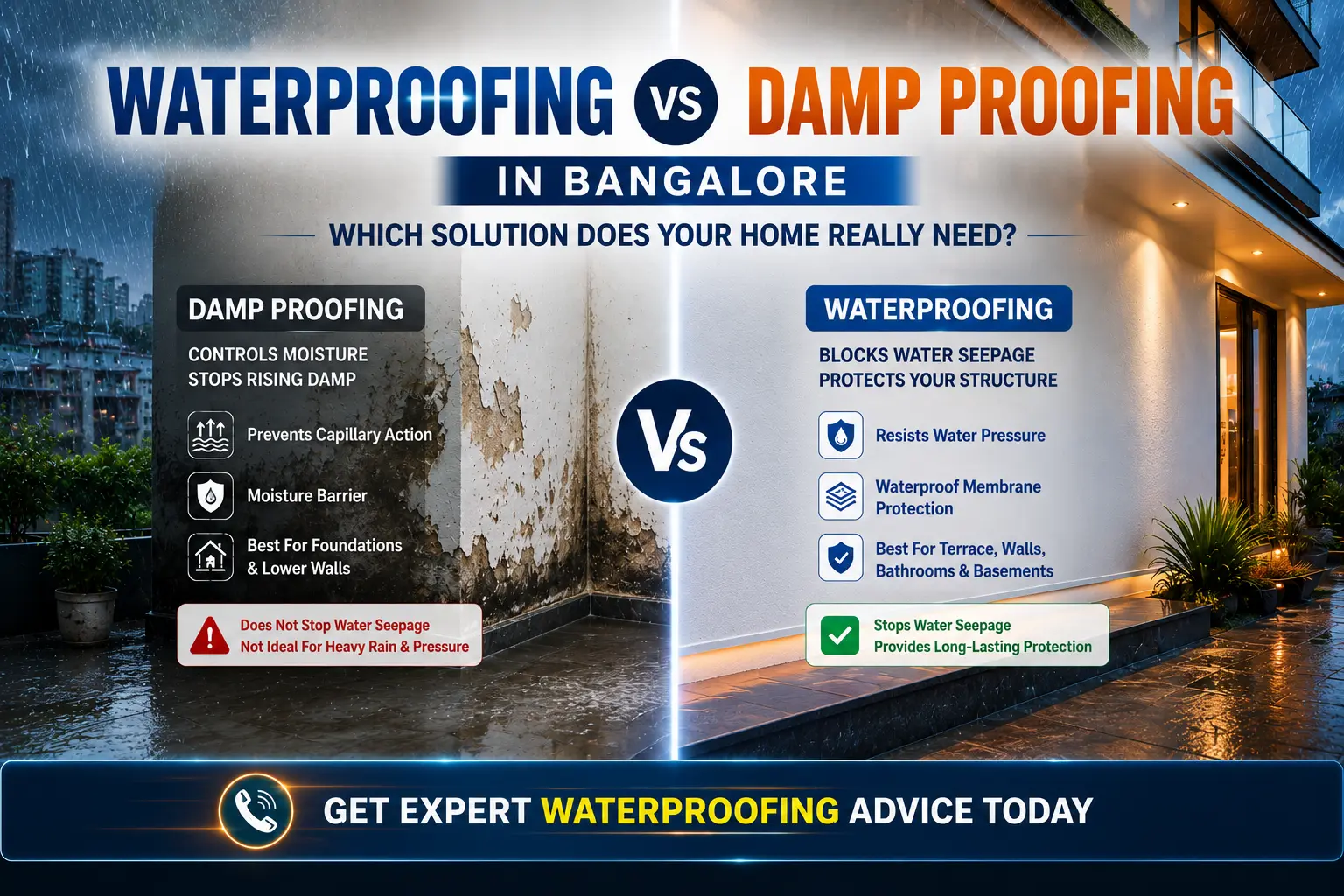
Have you ever noticed ugly damp patches on your walls right after the rainy season? The paint begins to peel, white salty powder forms on the brickwork, and you are left wondering whether you need damp proofing or waterproofing to fix it.
If you own an independent home, a luxury villa, or rent out properties in older, classic Bangalore neighborhoods like Jayanagar, Indiranagar, or Koramangala, this is a common headache. Bangalore’s weather features intense, non-stop monsoon rains followed by heavy humidity. This puts a massive amount of stress on our houses. If you pick the wrong fix, you will find yourself wasting money on endless paint touch-ups while hidden structural damage gets worse behind your walls.
This guide will break down the real differences between waterproofing vs damp proofing Bangalore homeowners need to know to protect their homes for the long run.
📞 Call Aqua Blue Waterproofing Today at +91 88920 26121 for a Professional Site Inspection.
1-Minute Summary
The choice between damp proofing and waterproofing comes down to one thing: water pressure.
-
Damp proofing is a basic barrier built into your foundations. It only handles minor soil moisture (rising damp) where water isn’t actively pooling or pushing against the walls.
-
Waterproofing uses heavy-duty coatings (like liquid sheets or rubber membranes) to block active leaks, heavy rain, and high water pressure.
At Aqua Blue Waterproofing, we know that for Bangalore’s heavy monsoon seasons, basic damp proofing isn’t enough, you need proper waterproofing to keep your home safe and dry.
Table of Contents
-
Why Do Walls Become Damp in Bangalore Homes?
-
What Is Damp Proofing and How Does It Work?
-
What Is Waterproofing and How Does It Protect Your Home?
-
Waterproofing vs Damp Proofing for Seepage: Key Differences
-
Which Solution Works Better for Walls in Bangalore?
-
What Is the Best Solution for Damp Walls in Bangalore Homes?
-
When Should You Contact a Waterproofing Contractor in Bangalore?
-
Why Bangalore Homeowners Trust Aqua Blue Waterproofing
-
Frequently Asked Questions
Why Do Walls Become Damp in Bangalore Homes?
Bangalore’s building maintenance trends highlight a massive spike in moisture-related complaints directly after the heavy monsoon spells. When rain saturates the external environment, water finds the path of least resistance into your living spaces.
What Causes Wall Dampness in Independent Homes and Villas?
The causes of wall dampness are often a mix of poor external drainage, hairline structural cracks, and sub-standard initial construction barriers. In older, established neighborhoods of Bangalore, mature tree roots can breach foundation perimeters, creating entry pathways for moisture. External walls exposed to continuous, driving rain absorb water like a sponge if they lack elastomeric protective coatings.
How Does Hydrostatic Pressure Lead to Damp Walls and Structural Damage?
Hydrostatic pressure is the force exerted by standing or underground water against a structure. When heavy rains oversaturate the soil around your villa’s foundation or basement, the water table rises. This creates immense hydrostatic pressure that pushes liquid water forcefully through microscopic concrete pores and masonry joints. If ignored, this constant force leads to severe structural damage, corroding the internal steel reinforcement bars (rebars) and causing concrete spalling (flaking).
What Is Damp Proofing and How Does It Work?
Damp proofing is a preventive moisture control method designed strictly to resist the passage of soil moisture where there is no hydrostatic pressure. It is a fundamental step in standard construction.
What Is a Damp Proof Course (DPC)?
A Damp Proof Course (DPC) is a continuous horizontal barrier layer built into the foundation walls just above ground level. Typically made of materials like bitumastic compounds, plastic sheets, or rich cement mortars mixed with water-repellent admixtures, it stops capillary action—the physical process where groundwater travels upward through porous bricks and mortar like ink through blotting paper.
Where Is Damp Proofing Commonly Used in Bangalore Homes?
In local residential properties, damp proofing is applied at the plinth level during construction to prevent rising damp from reaching ground-floor living spaces. It functions as a basic moisture barrier. However, it is important to note that damp proofing is not designed to handle standing water or active water pressure.
What Is Waterproofing and How Does It Protect Your Home?
Waterproofing is an engineered system designed to prevent the ingress of liquid water under both static and hydrostatic pressure. Unlike simple moisture barriers, true waterproofing keeps a space dry even when completely submerged or subjected to driving monsoons.
How Does Waterproofing Stop Water Seepage?
Waterproofing functions by creating a seamless, highly flexible, and continuous waterproof membrane over structural surfaces. These advanced materials—such as Polyurethane (PU) liquid coatings or Atactic Polypropylene (APP) torch-on sheets—bridge hairline cracks and flex with seasonal thermal movements. They act as an impenetrable armor that actively deflects high-volume water seepage.
Which Areas of a Bangalore Home Need Waterproofing?
Different architectural zones face varying moisture loads, requiring targeted interventions from a certified waterproofing contractor in Bangalore:
-
Terrace/Roof: Exposed to heavy rain and thermal cracking. Premium PU liquid membrane systems or APP membranes provide elite protection.
-
Bathrooms: Constant wet zones requiring internal 2-component polymer-modified slurry coatings to block internal structural leaks.
-
Basements & Foundations: Subjected to intense underground hydrostatic pressure, requiring crystalline waterproofing or high-pressure injection grouting.
-
External Walls: Requiring high-build elastomeric waterproof coatings to resist driving monsoon rain.
What Is the Difference Between Waterproofing and Damp Proofing for Seepage?
Understanding the difference between waterproofing and damp proofing for seepage is critical to avoiding expensive, short-sighted renovation mistakes.
The structural variance comes down to the severity of the water threat:
| Feature | Damp Proofing | Waterproofing |
| Primary Purpose | Shallow moisture control | Continuous liquid water protection |
| Water Resistance | Moderate (Resists dampness/vapor) | High (Blocks liquid water flow) |
| Hydrostatic Pressure | No resistance | High resistance |
| Monsoon Protection | Limited (Fails under heavy downpours) | Excellent (Long-term weather proofing) |
| Structural Protection | Partial (Only blocks capillary rising damp) | Complete (Protects slab, beams, and foundation) |
| Best Application | Foundation plinth level during construction | Terraces, basements, bathrooms, external walls |
Waterproofing vs Damp Proofing for Walls in Bangalore: Which Solution Works Better?
When reviewing waterproofing vs damp proofing for walls in Bangalore, the severity of your wall seepage must dictate the solution.
Can Damp Proofing Stop Monsoon Water Seepage?
No. If your independent home or villa is experiencing active water seepage during the monsoon—where water visibly dampens the plaster, destroys wall putty, and causes paint to peel off in flakes—damp proofing will fail. Damp proofing cannot withstand lateral water penetration from driving external rains or high-pressure water accumulating against exterior masonry.
When Is Waterproofing the Better Investment?
Waterproofing is the definitive solution for active external wall seepage, older heritage homes in areas like Malleshwaram, and modern premium villas with large exposed facades. While basic damp proofing might offer temporary cosmetic relief, structural waterproofing stops the root cause of water entry, ensuring your interiors remain pristine for over a decade.
What Is the Best Solution for Damp Walls in Bangalore Homes?
The best solution for damp walls in Bangalore homes requires a data-backed approach rather than guesswork.
The Diagnostic Inspection Process
True remediation starts with an expert inspection. Engineers use non-destructive moisture mapping tools to locate hidden leak paths behind internal plaster without breaking your walls.
Multi-Layer Wall Treatment
For structural wall seepage, the optimal cure involves:
-
Stripping the damaged interior plaster down to the bare brick/concrete masonry.
-
Filling structural joints and thermal cracks with polymer-modified mortars.
-
Applying a robust internal or external waterproof membrane (such as an elastomeric or crystalline matrix) to completely lock out moisture.
When Should You Contact a Waterproofing Contractor in Bangalore?
Many landlords and homeowners resort to quick DIY patches or local painters who apply basic plastic paint over damp walls. These superficial fixes seal moisture inside the brickwork, accelerating structural decay.
You must contact a specialized waterproofing contractor in Bangalore immediately if you spot any of these warning signs:
-
Blistering, bubbling, or peeling paint finishes.
-
A persistent, musty damp smell inside bedrooms.
-
Efflorescence (white, powdery salt streaks leaching through grout lines).
-
Active water dripping or damp halos forming on your concrete ceilings.
📞 Call Aqua Blue Waterproofing Today at +91-88920 26121 for an Expert Site Inspection.
Why Bangalore Homeowners Trust Aqua Blue Waterproofing
At Aqua Blue Waterproofing, we do not provide superficial cover-ups. We deliver localized, elite-tier structural protection engineered specifically for Bangalore’s climate and building architectures.
-
Advanced Diagnostics: We use precision moisture meters to chart water paths before recommending solutions.
-
Premium Global Materials: We use verified, high-performance elastomeric, polyurethane, and crystalline systems from trusted global manufacturers.
-
Certified Technicians: Our team is trained in advanced crack-bridging, injection grouting, and seamless joint treatments.
-
Tailored Solutions: Customized specifications matching your property type whether it is a heritage independent home or a premium modern villa.
Frequently Asked Questions
Q1. What is the difference between waterproofing and damp proofing?
A: Damp proofing helps prevent moisture and water vapor from entering through the ground where there is little or no water pressure. It is mainly used at the foundation level of buildings.
Waterproofing provides a strong protective layer that completely blocks water and moisture, even under high water pressure. It is essential for areas like roofs, exterior walls, and basements where water leakage is more likely.
Q2. Can damp proofing stop water seepage during Bangalore monsoon?
A: No. Damp proofing coatings are thin and lack the elasticity required to bridge structural cracks or resist the positive water pressure created by continuous rain.
Q3. Is waterproofing a better long-term investment than damp proofing?
A: Yes, because it uses premium engineering materials like polyurethane membranes and requires meticulous surface preparation. It lasts multiple times longer, preventing recurring and frustrating repair cycles.
Q4. Can damp proofing and waterproofing be used together?
A: Absolutely. In ideal construction practices, damp proofing is applied at the plinth level to block rising soil moisture, while waterproofing is deployed on terraces, external walls, and wet areas to handle structural water loads.
Q5. Which solution lasts longer in Bangalore weather?
A: Engineered waterproofing systems last substantially longer. A premium PU or APP membrane system offers reliable protection for many years, whereas standard damp proofing coatings degrade much faster under heavy weather exposure.
Final Verdict
To summarize: Damp proofing controls baseline capillary moisture, while waterproofing halts active water intrusion. If your Bangalore home suffers from active seasonal seepage, leaking ceilings, or damp walls, temporary moisture barriers will not protect your asset. Professional waterproofing is mandatory to preserve your home’s value.
Protect your home before minor dampness turns into major, expensive structural failure.
📞 Call Aqua Blue Waterproofing Today at +91-88920 26121
📍 Visit Our Google Business Profile
🏠 Book a Professional Waterproofing Inspection in Bangalore
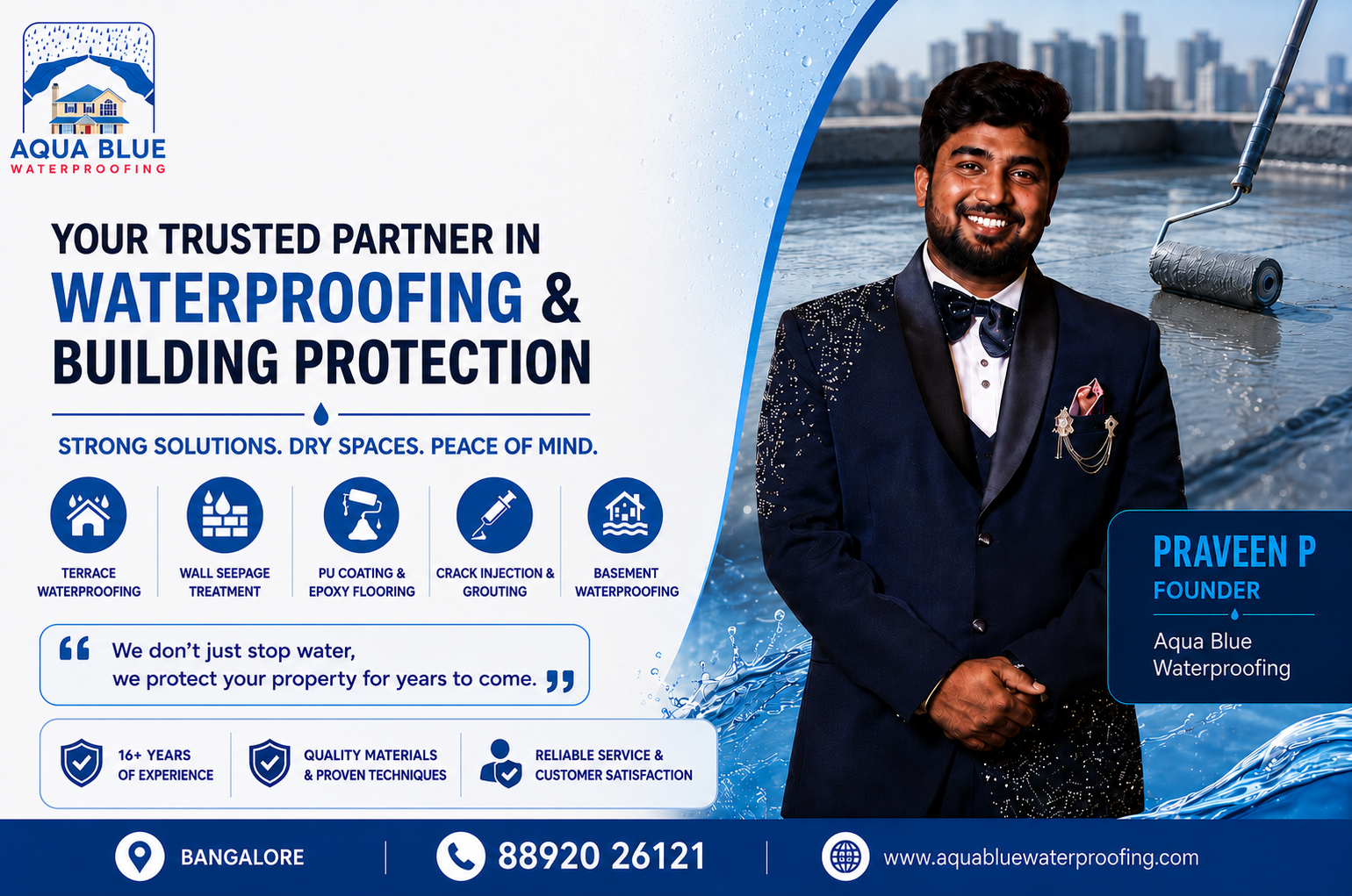
PRAVEEN P is the Founder of Aqua Blue Waterproofing and a Waterproofing Technical Specialist with over 16 years of industry experience. Since establishing the company in 2014, he has helped homeowners and businesses across Bangalore solve leakage and seepage issues through reliable, long-lasting waterproofing solutions and expert guidance.