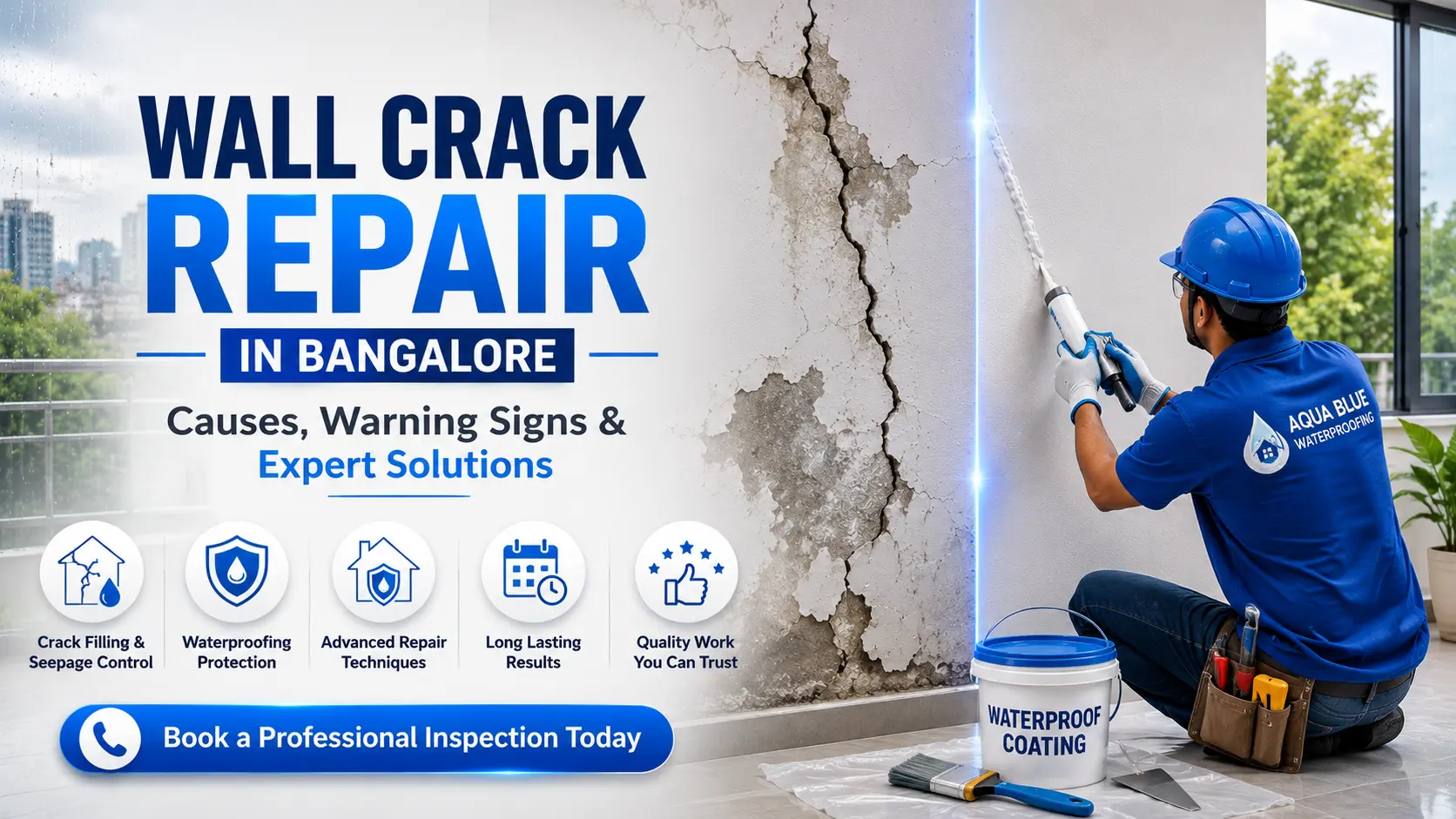
You notice a small crack on your living room wall before the monsoon and assume it is harmless. However, ignoring minor gaps can lead to severe structural issues once the heavy rains hit. For homeowners, property owners, and Resident Welfare Association (RWA) managers, keeping buildings safe is a top priority. Understanding why these fissures form and finding the right wall crack repair in Bangalore is vital to avoiding expensive structural damages down the road.
This comprehensive guide breaks down everything you need to know about spotting dangerous warning signs, finding the root causes, and applying advanced repair techniques to protect your property.
For immediate professional assistance, you can contact Aqua Blue Waterproofing at +91 88920 26121 to speak with a specialist.
1-Minute Summary
-
Not all wall cracks indicate a structural emergency, but cosmetic plaster fissures can worsen over time.
-
Structural damage is often marked by deep, diagonal, or horizontal cracks wider than 5mm.
-
Heavy monsoon moisture accelerates concrete degradation, expanding small lines into deep leaks.
-
Combining professional crack sealing with robust waterproofing ensures long-term building health.
-
Early professional inspections identify hidden vulnerabilities, saving property owners from major reconstruction expenses.
Why Are Wall Cracks So Common in Bangalore Homes?
Many property owners assume a line across their masonry is simply a cosmetic flaw. In reality, Bangalore’s dynamic climate, soil composition, and shifting water tables mean buildings are constantly under stress. When moisture infiltrates these gaps, it rusts internal steel reinforcements, causing concrete to spall and separate. Early diagnosis is the most reliable way to maintain your building’s integrity. As experts in structural preservation, Aqua Blue Waterproofing Bangalore provides advanced diagnostic and remediation methods to seal your property against structural decline.
What Are the Different Types of Wall Cracks?
Before choosing a fix, it helps to understand exactly what kind of crack you are looking at.
Hairline Cracks
These are thin, shallow gaps usually less than 2mm wide. They commonly form in the plaster layer as it shrinks while drying. While they do not compromise structural stability, they should be sealed to prevent water ingress.
Settlement Cracks
As a building settles into its foundation over the first few years, vertical or near-vertical lines can appear. While minor settling is normal, these cracks must be monitored to ensure they do not continue widening.
Structural Cracks
These are deep, wide gaps (typically greater than 5mm) that often run diagonally or in a stair-step pattern through brickwork. They indicate that the load-bearing elements of the building are under severe duress and require immediate professional attention.
Moisture-Related Cracks
When water seeps into masonry, it weakens the bond between materials. These cracks are almost always accompanied by damp patches, bubbling paint, or white powdery salt deposits (efflorescence).
What Causes Wall Cracks in Homes?
Fissures rarely appear without an underlying trigger. The most frequent causes of wall cracks in homes include:
-
Natural Building Settlement: Heavy structures naturally compress the soil beneath them over time, causing minor shifting.
-
Poor Construction Materials: Using low-grade sand, sub-par cement mixes, or unwashed water leads to weak plaster that cracks easily under stress.
-
Water Seepage and Dampness: Leaking plumbing lines or unsealed external walls allow water to rot the masonry from within.
-
Temperature Expansion and Contraction: Bangalore’s warm afternoons and cool nights cause building materials to expand and contract daily, fatiguing the structure.
-
Structural Movement: Heavy nearby transit, vibrations from construction, or underlying soil shifts place undue physical stress on beams and columns.
Why Do Wall Cracks Increase During Bangalore Monsoon?
The monsoon season puts immense pressure on local properties. According to historical Indian Meteorological Department (IMD) rainfall data, Bangalore receives substantial precipitation during the monsoon months, which severely tests building envelopes.
Continuous Moisture Exposure
Sustained rain saturates porous external plaster. Once water penetrates the outer layer, it fills microscopic pores inside the bricks or concrete blockwork.
Expansion and Shrinkage of Concrete
When masonry absorbs water, it expands slightly. When it dries out during brief sunny intervals, it shrinks. This continuous cyclic movement rapidly pulls weak joints apart, turning hairline fractures into open leaks.
Terrace and External Wall Seepage
Poorly waterproofed roof slabs let rainwater pool and seep downward into underlying walls. This creates horizontal cracks right below the ceiling line.
Poor Drainage Systems
Blocked stormwater drains or improperly sloped roofs force water to pool next to the building’s foundation, softening the soil and inducing localized foundation movement.
Which Wall Cracks Are Dangerous and Need Immediate Repair?
Property owners must be able to differentiate between minor cosmetic flaws and hazardous structural warning signs.
-
Wide Horizontal Cracks: Cracks running horizontally along load-bearing walls or basement concrete signal that the wall is bowing or failing under lateral pressure.
-
Stair-Step Cracks: Following the mortar lines in a zig-zag pattern, these indicate severe foundation settlement or failure of supporting ground.
-
Deep Structural Cracks: Any gap that passes entirely through a wall block or can be seen on both sides of a wall is a major structural hazard.
-
Cracks With Water Leakage: If a crack actively drips water during rains, it means an internal path has formed, accelerating the rusting of internal rebar.
-
Expanding Cracks: Gaps that grow noticeably wider over a few weeks require urgent stabilizing before severe structural damage occurs.
How Do Experts Repair Wall Cracks?
Professional remediation goes far beyond applying a layer of cosmetic putty over a gap.
Crack Filling Services
For non-structural plaster issues, technicians V-groove the crack, clean out debris, and pack it tightly with flexible polymer-modified crack filler that accommodates minor wall movements.
PU Injection Grouting
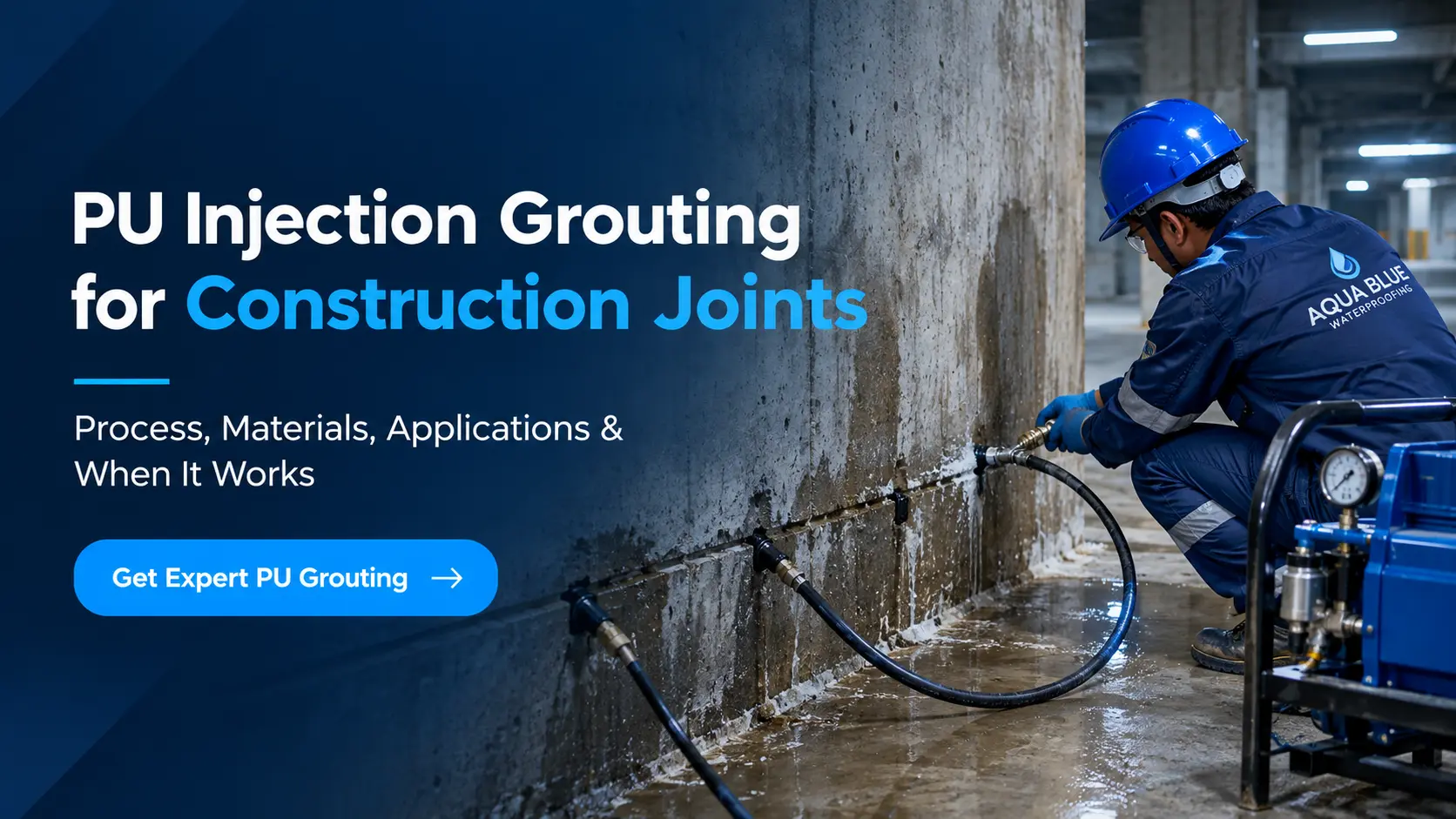
For active water leaks and deep concrete cracks, polyurethane (PU) grout is injected under high pressure. The polyurethane expands rapidly upon contact with moisture, completely sealing the void from the inside out.
Epoxy Injection
Engineers use high-strength epoxy resins for dry, structural cracks in concrete beams or columns. The epoxy cures to a strength greater than the concrete itself, effectively welding the fractured elements back together.
Polymer Mortar Repairs
Where concrete has spalled or broken away due to internal rust, the damaged section is chipped back, treated with anti-corrosion primers, and rebuilt using high-performance polymer mortars.
How Does Waterproofing Help Prevent Wall Cracks?
Wall crack repair and waterproofing are deeply intertwined. Without proper moisture protection, any structural fix will eventually fail.
-
Waterproofing External Walls: Applying elastomeric, UV-resistant coatings creates a seamless barrier that stops rain from entering porous external masonry.
-
Terrace Waterproofing: High-quality polyurethane or bitumen membranes on your roof stop water from pooling and draining down into your living spaces.
-
Crack Sealing and Protection: Sealing external cracks stops the freeze-thaw and wet-dry cycles that cause micro-fissures to grow.
-
Moisture Control: Keeping internal walls dry prevents damp patches, plaster decay, and chemical attacks on structural concrete.
Why Is a Professional Wall Crack Inspection in Bangalore Important?
An untargeted DIY patch only hides a problem temporarily. A professional inspection determines exactly why the crack formed in the first place. Technicians use advanced moisture meters, thermal imaging, and crack-width gauges to check if a crack is active or dormant. Catching underlying moisture leaks or structural shifts early keeps small repairs from turning into expensive foundation restructuring down the road.
Why Do Property Owners Choose Aqua Blue Waterproofing Bangalore?
-
Experience: Extensive experience providing durable wall crack repair and structural solutions across residential, commercial, and high-rise apartment projects.
-
Expertise: Deep engineering knowledge utilizing specialized epoxy, polyurethane injection, and structural reinforcement systems.
-
Trust: Comprehensive diagnostics with transparent assessments, providing clear insights into the root causes of building damage.
-
Local Knowledge: Thorough familiarity with Bangalore’s local architectural trends, soil variations, and intense seasonal monsoon patterns.
Frequently Asked Questions About Wall Crack Repair in Bangalore
Q1. What are the most common types of wall cracks?
A: The most common variations are fine hairline plaster cracks, vertical building settlement lines, diagonal structural brickwork cracks, and moisture-driven seepage fissures.
Q2. Are wall cracks dangerous?
A: Thin hairline cracks are usually safe and cosmetic. However, deep diagonal gaps, stair-step patterns, or horizontal lines broader than 5mm point to structural movement and require professional inspection.
Q3. Why do wall cracks increase during monsoon?
A: Sustained monsoon rain saturates bricks and mortar. The absorbed moisture causes masonry to swell and contract, opening up hidden joints and accelerating structural breakdown.
Q4. Can waterproofing stop wall cracks?
A: Yes. Waterproofing stops moisture from entering your walls, halting the wet-dry expansion cycles and internal rebar corrosion that cause masonry to fracture.
Q5. How do experts repair structural cracks?
A: Professionals use heavy-duty methods like high-pressure epoxy resin injections to structurally bond concrete back together, or polyurethane grouting to block active water pathways.
Q6.When should I call a professional for wall cracks?
A: You should call an expert immediately if you notice cracks expanding quickly, gaps wide enough to fit a coin, diagonal stair-step lines, or active water leakage.
Q7. Can wall cracks lead to water seepage?
A: Absolutely. Open wall cracks serve as direct entry paths for rainwater, allowing moisture to ruin interior paints, rot plaster, and encourage toxic mold growth.
Are You Ignoring Wall Cracks That Could Become Serious Problems?
Most structural problems start as minor, barely noticeable lines. Catching these warning signs early keeps small masonry fractures from developing into severe safety hazards or compromising your home’s value. With Bangalore’s unpredictable weather patterns and heavy monsoon seasons, securing your home with professional repair and waterproofing provides reliable, long-term safety.
Have you noticed new lines or damp patches forming on your property recently? Let us know what steps you are taking to protect your walls before the next heavy rains hit.
Don’t wait for minor plaster gaps to turn into high-stakes structural issues.
📞 Call Aqua Blue Waterproofing Today to book your precise, comprehensive on-site wall crack inspection.
📍 Visit Our Google Business Profile to browse direct customer reviews, view project photos, and secure your booking.

PRAVEEN P is the Founder of Aqua Blue Waterproofing and a Waterproofing Technical Specialist with over 16 years of industry experience. Since establishing the company in 2014, he has helped homeowners and businesses across Bangalore solve leakage and seepage issues through reliable, long-lasting waterproofing solutions and expert guidance.